The essentials
- Interior Alaska in January runs twenty degrees below a Norwegian coastal winter. The advice does not transfer.
- Restricted circulation takes your fingers and toes long before thin insulation does. Loose layers beat thick ones.
- Cotton holds sweat against the skin and stops insulating. It is the single most common serious mistake.
- Fingers together stay far warmer than fingers apart. Carry both if you need dexterity.
Why European advice does not transfer
Most husky-tour clothing guidance is written for Tromsø, Rovaniemi or Levi, where a cold January day is around minus ten and a very cold one is minus twenty. Fairbanks in January averages minus seventeen and a half by day and minus twenty-six and a half at night, and reaches minus forty in most winters.
That is not the same problem twice. It is a different problem. At minus ten, being underdressed is unpleasant. At minus thirty, being underdressed has a timescale attached to it.
The compensation is that Interior Alaska is dry and still. Without wind and without damp, a very low temperature is more manageable than the number suggests, which is why people who have experienced both often say minus thirty here feels easier than minus five in a coastal gale.
The principle: trapped air, not thickness
Insulation works by holding still air. Everything else follows from that. Several loose layers hold more air than one thick one; anything compressed holds none; anything tight both compresses the layer beneath it and restricts the blood supply that is doing half the work.
So the rule is layers with room in them. A base that moves sweat away from the skin, a mid layer that traps air, and an outer layer that stops wind. Nothing squeezing anything.
A common failure is boots one size too small once thick socks go in. The foot is then cold no matter what it is wrapped in, because the circulation has been cut off.
There is one more reason loose beats tight, and it is the reason mushers dress the way they do. A layer with room in it can be vented at the neck or the wrists when you start to overheat, and shed heat deliberately rather than through sweat. Once you are damp inside your own clothing at these temperatures, nothing you are wearing works properly again until you get indoors and dry out.
The cotton problem
Cotton absorbs moisture and holds it against the skin, and wet fabric conducts heat away roughly twenty times faster than dry fabric. In a mild climate that is a discomfort. At minus twenty-five it is the mechanism by which people get into real trouble.
This includes the parts nobody thinks about: cotton socks, cotton underwear, a cotton t-shirt under a technical jacket. Wool or synthetic against the skin, all the way down.
The counterintuitive part is that you will sweat. Walking to a vehicle in full winter gear generates heat, and that sweat has to go somewhere other than into a layer that will hold it.
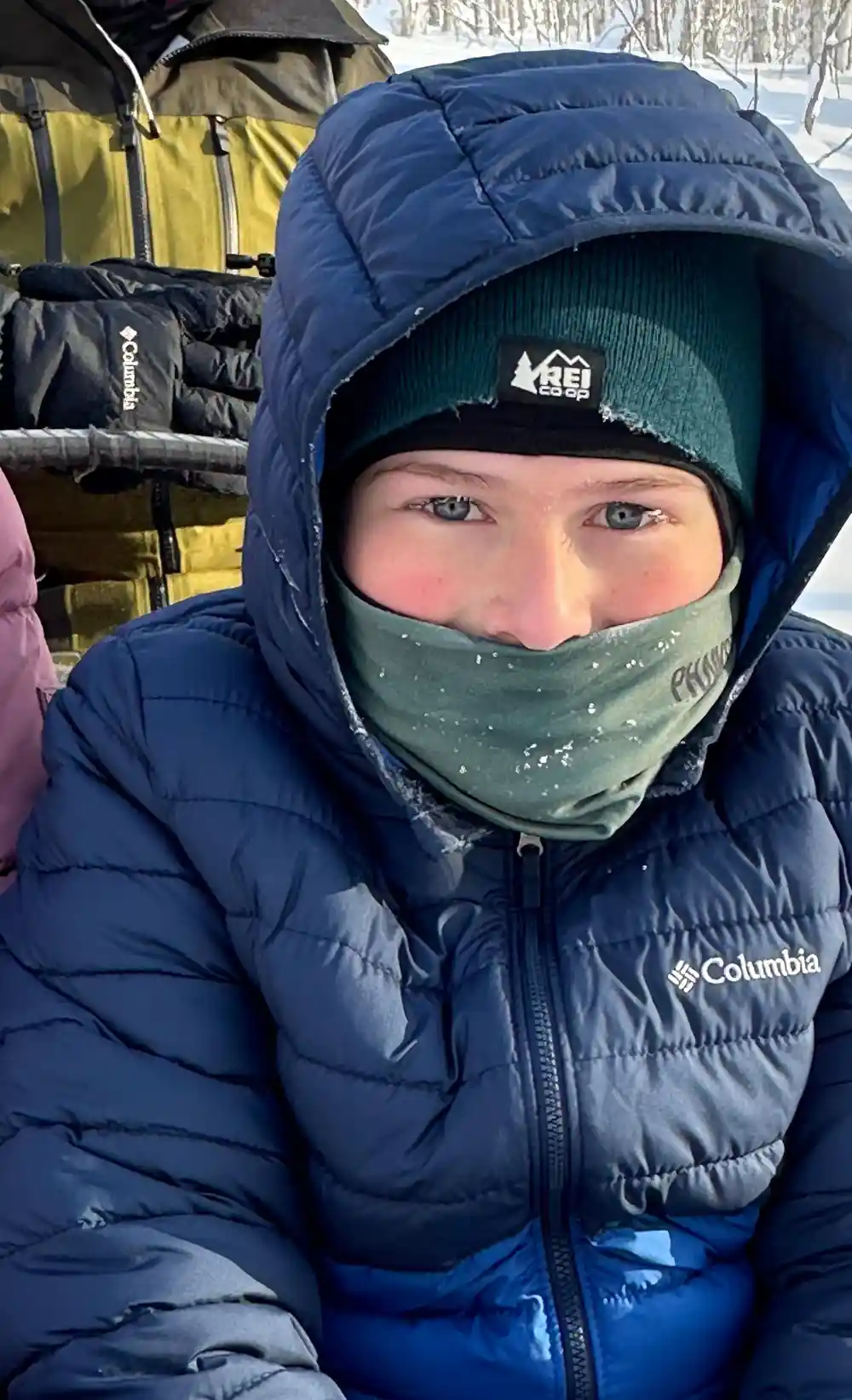
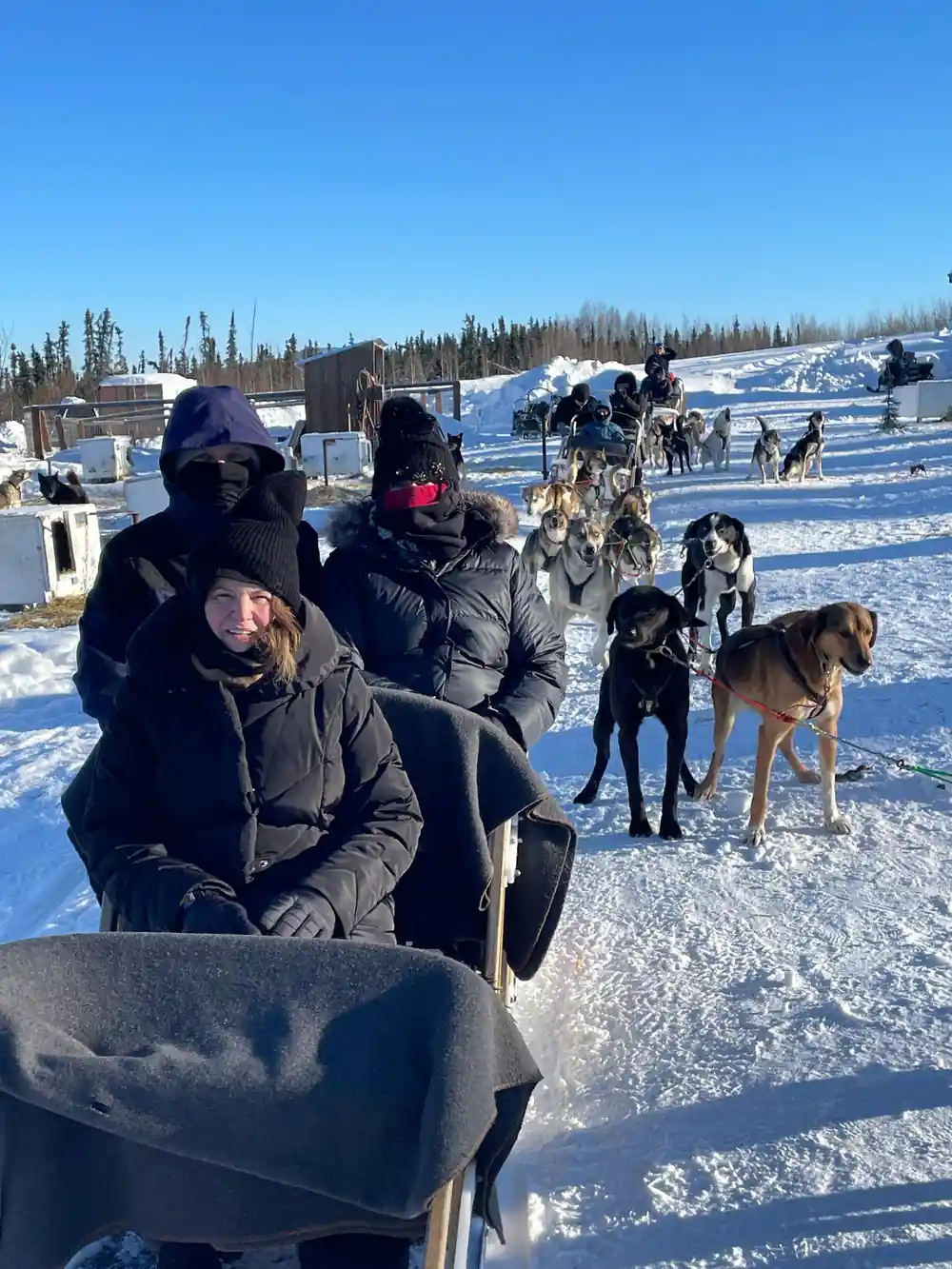
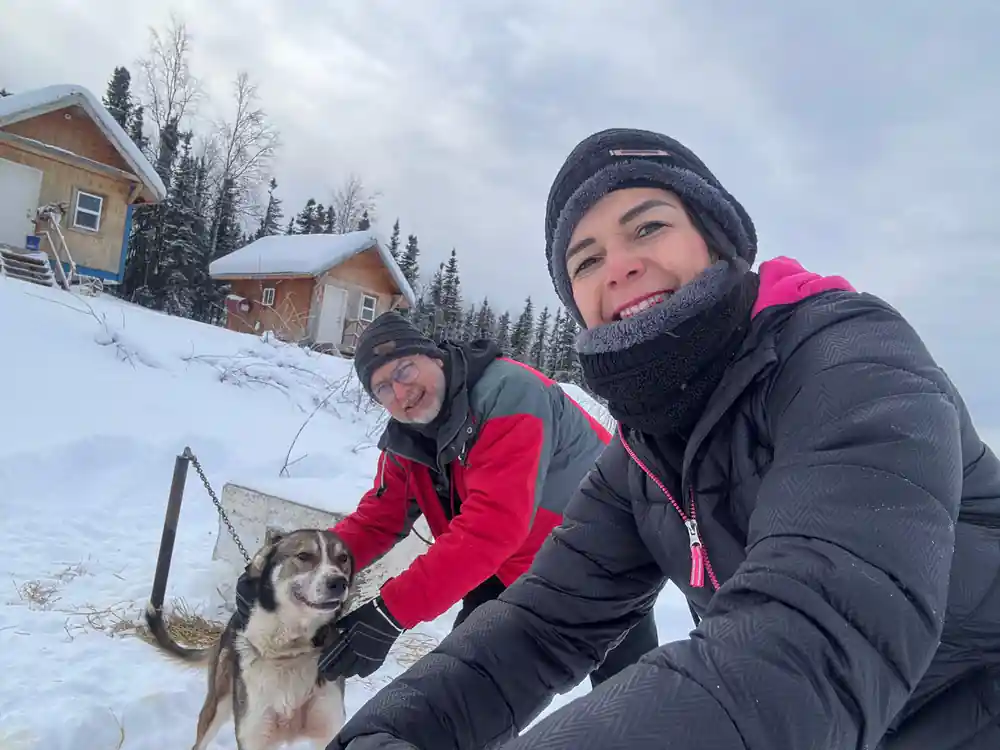
A rider dressed for it, with only the eyes showing
Extremities, which is where it actually goes wrong
Fingers, toes, ears, nose and cheekbones. That is the list, in roughly that order, and it is where every cold injury on a tour like this would begin.
Mittens beat gloves comfortably, because fingers warm one another. If you need dexterity for a camera, wear a thin liner glove inside a mitten and take the mitten off briefly rather than working bare-handed.
Boots need to be rated far colder than you expect and roomy enough for a thick sock. Ears need covering by something that will not blow off. And exposed skin on the face is on a clock at minus twenty-five, which is what a neck gaiter or balaclava is for.
What the operator provides
Check the listing rather than assuming. Some Alaskan operators provide an over-suit, boots and mittens; others expect you to arrive dressed. This tour is short and hotel-based, and the sensible assumption is that you dress for it yourself.
If gear is provided it goes over what you are wearing rather than instead of it, so the base and mid layers are still yours to get right.
And bring a spare pair of gloves or mitten liners in a pocket. Wet gloves stop insulating almost immediately, and a dry spare pair is the simplest insurance there is.
Cameras, phones and batteries
Lithium batteries lose capacity fast below about minus ten and can shut down entirely at minus twenty-five. A phone showing eighty per cent when you leave a warm room may be dead in twenty minutes.
Keep the device inside your jacket against your body and bring it out for shots. A cold one that has shut down is usually not dead, and will come back after a while against your chest.
Do not take a very cold camera straight into a warm room. Condensation forms on and inside it. Put it in a bag first and let it warm slowly.
The two mistakes almost everyone makes
The first is dressing for the terminal rather than for the door. People arrive from a warm flight in a fleece and discover what minus twenty-five does in the ninety seconds between the building and the shuttle.
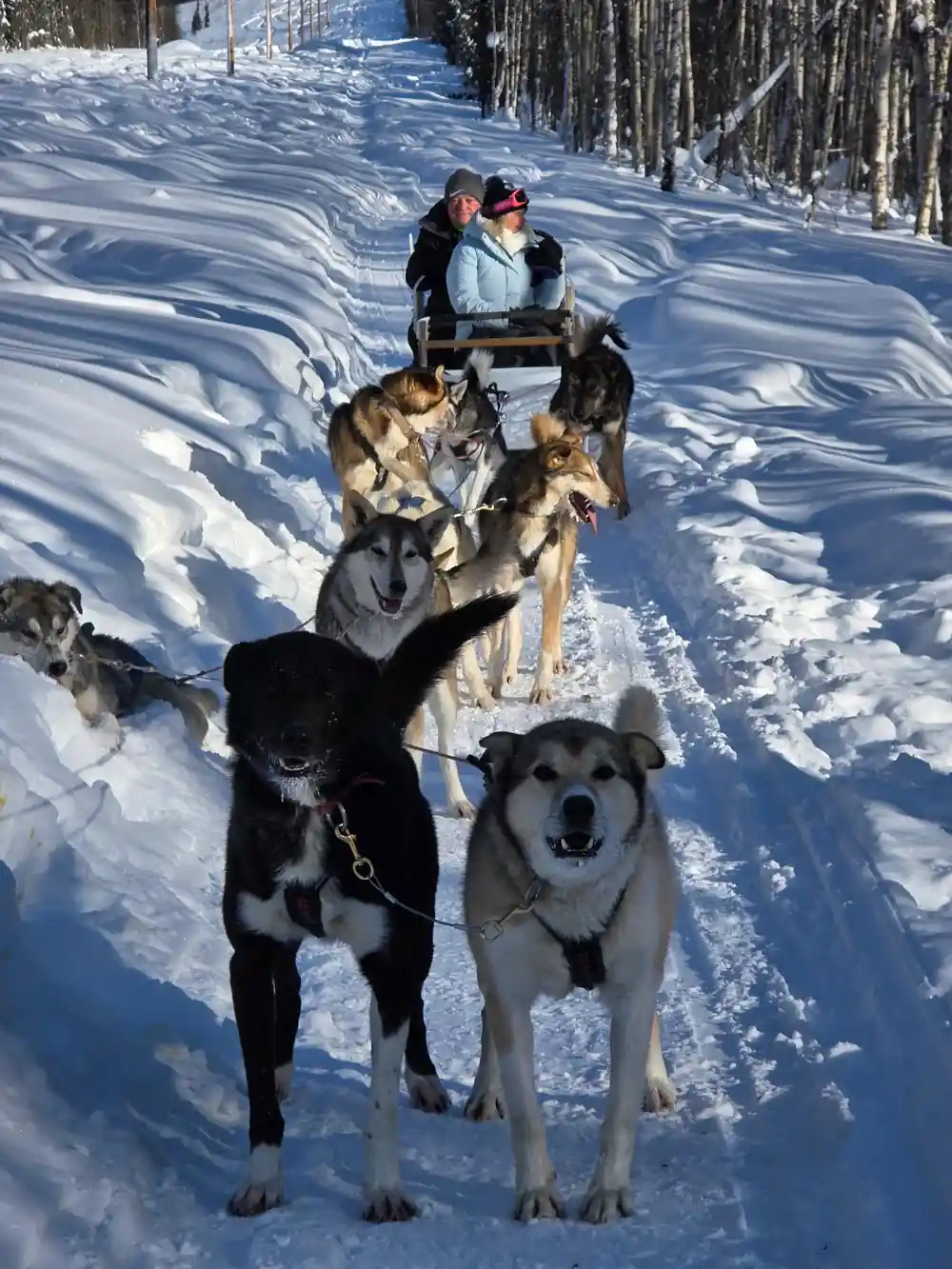
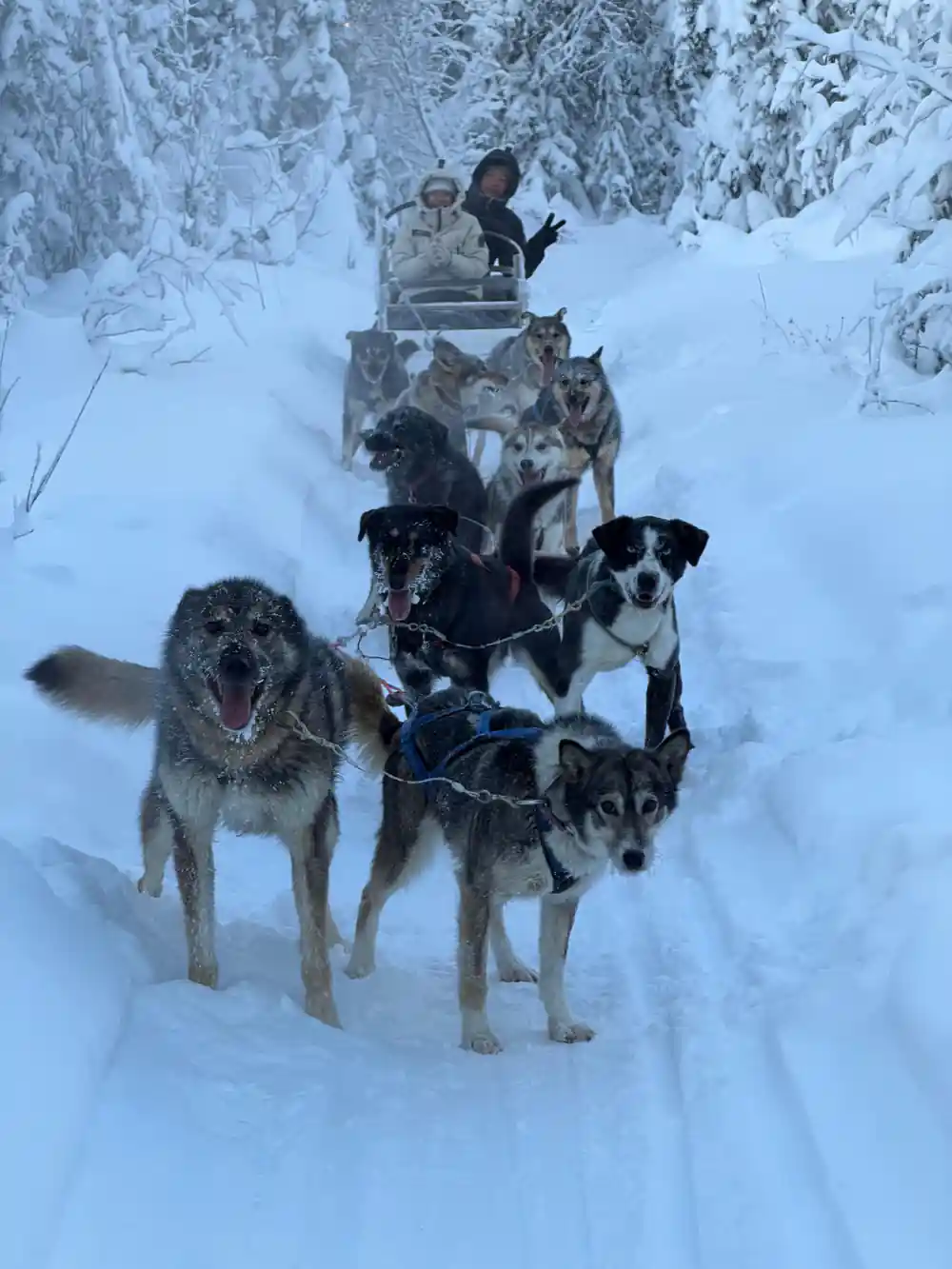
The second is dressing for movement rather than for stillness. You will be sitting on a sled generating almost no heat. What is comfortable while walking briskly will not be comfortable sitting still with air moving past you.
Both are solved the same way: put on more than feels reasonable indoors, and accept being slightly too warm for the first five minutes.
A third, smaller one is worth naming: people underdress children. A child sitting still in a sled has a larger surface area relative to their mass than the adult beside them, loses heat faster, and is markedly less likely to say anything about it until they are thoroughly miserable. Overdress them, and check on them.
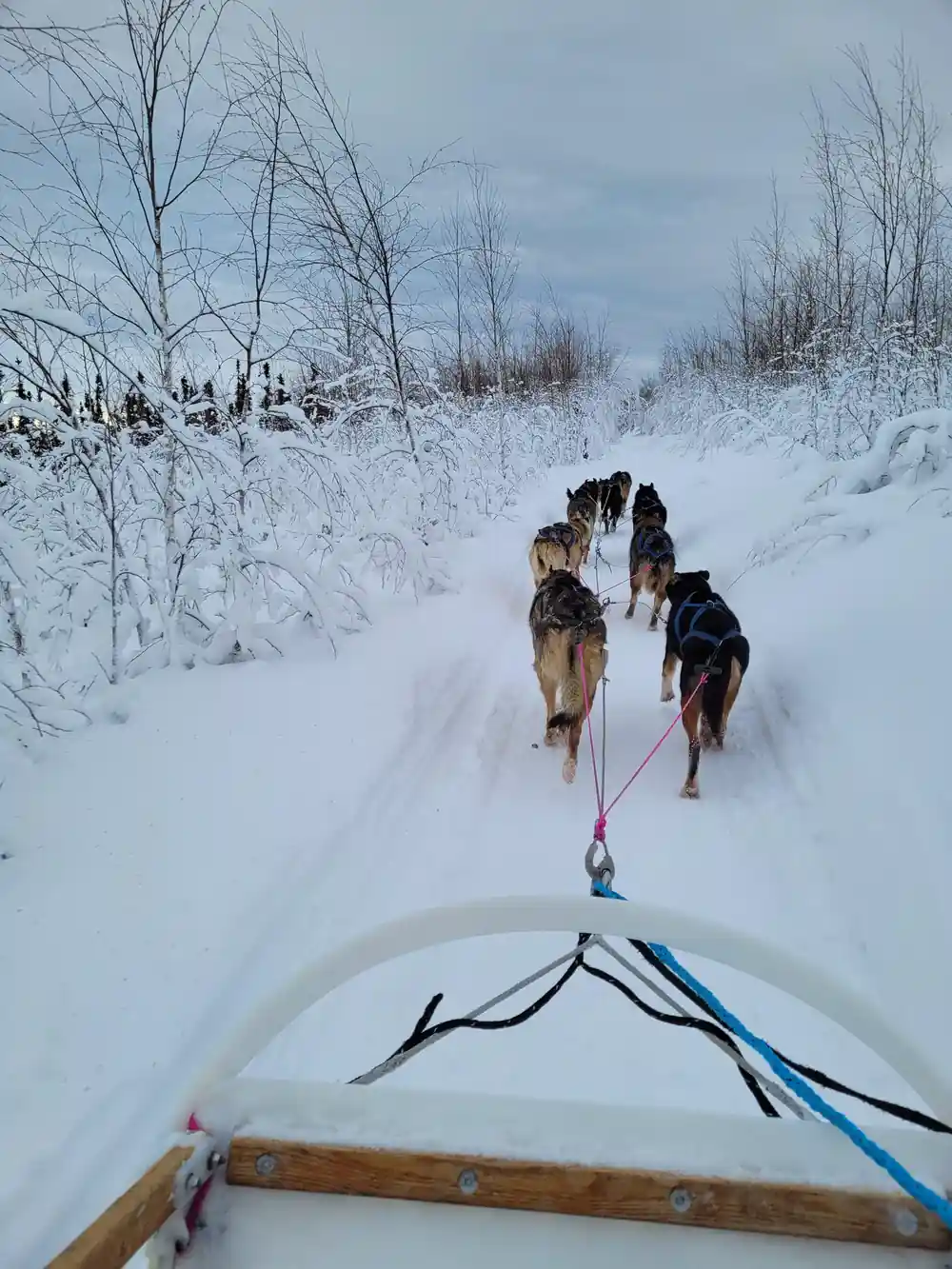
Dress for sitting still in it, not for walking about in it
from US$175Reserve now & pay later
Quick answers
How is Fairbanks cold different from Lapland?
What should go against the skin?
Mittens or gloves?
What about boots?
Do I need to cover my face?
Is gear provided?
Will my phone work?
What is the most common mistake?
Dressing, in order
Base layer: wool or synthetic
Against the skin, moving sweat away from it. Never cotton, including socks and underwear.
Mid layer: trapped air
Fleece or down with room in it. Several loose layers hold more air than one thick one.
Outer layer: wind and snow
A shell that blocks air movement. It does not need to be heavy, only sealed.
Extremities: mittens and boots
Mittens over gloves, boots rated far colder than you expect and roomy enough for a thick sock.
Face: cover it
A neck gaiter or balaclava. Exposed skin at minus twenty-five has a short tolerance.