The essentials
- Averaging minus seventeen and a half by day and minus twenty-six and a half at night, with December just behind it.
- January averages fourteen millimetres of precipitation and April eleven, which is less than a good many deserts.
- The ground holds snow for roughly seven months, which is why the sled season is as long as it is.
- July averages twenty-one degrees by day and Fairbanks has recorded well above thirty.
The shape of a Fairbanks year
The figures here come from the Goldstream Creek station, five kilometres from town, and they describe one of the largest annual temperature swings of any inhabited place on earth. January averages minus seventeen and a half by day. July averages plus twenty-one. That is a spread of nearly forty degrees between the means, before you get anywhere near the extremes.
The winter half of that year runs from October, when the daily maximum first stays below freezing, through to April, when it climbs back above. Inside that window the ground holds snow and sleds run.
The summer half is short, warm and startling to anyone who has only seen Fairbanks in photographs of snow. It is a boreal continental climate rather than a maritime Arctic one, and continental means extremes at both ends.
The core of winter: December, January, February
December averages minus sixteen point nine by day and minus twenty-four point nine at night. January drops to minus seventeen and a half and minus twenty-six and a half, making it the coldest month by a clear margin. February begins the recovery at minus thirteen and minus twenty-five.
Those are thirty-year averages and they conceal the days that Fairbanks is famous for. Minus forty happens in most winters, usually in a still, clear, high-pressure spell that can sit for a week. At that temperature Celsius and Fahrenheit converge, which is a piece of trivia every visitor learns and nobody forgets.
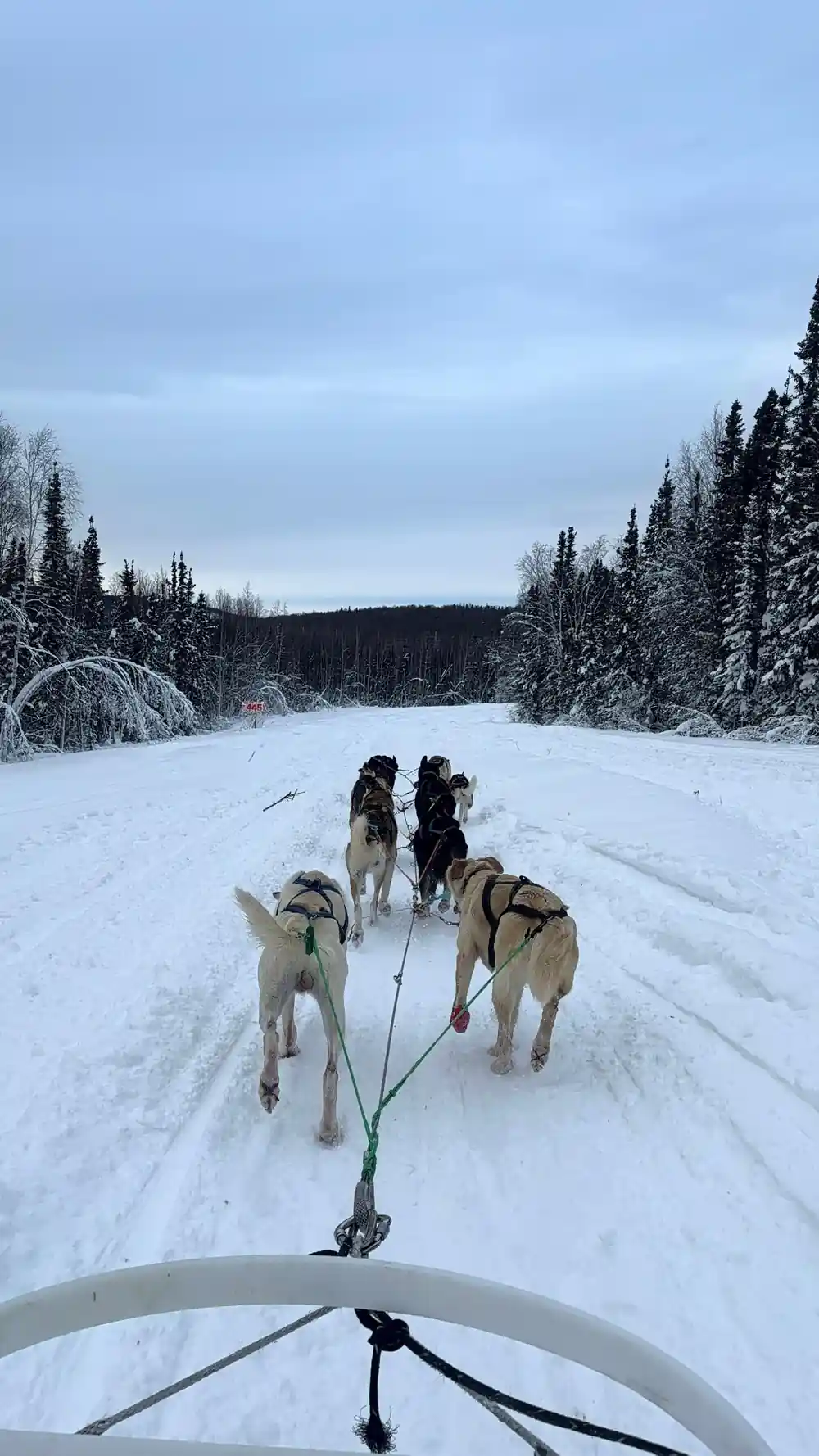
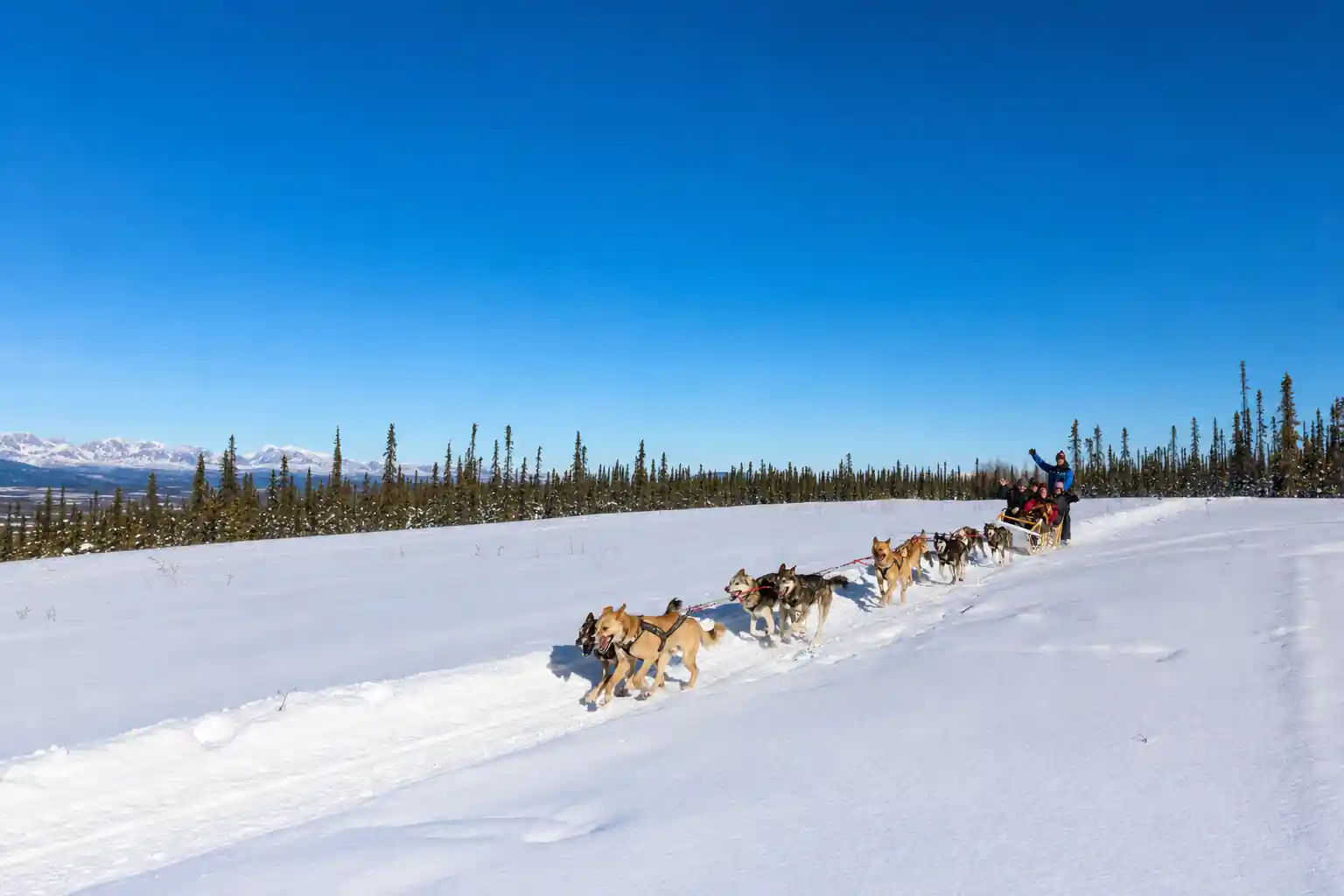
The tour runs through this. Operators do not generally cancel for cold alone, though extreme spells can change what a given day looks like, and the dogs are more comfortable in it than any of their passengers.
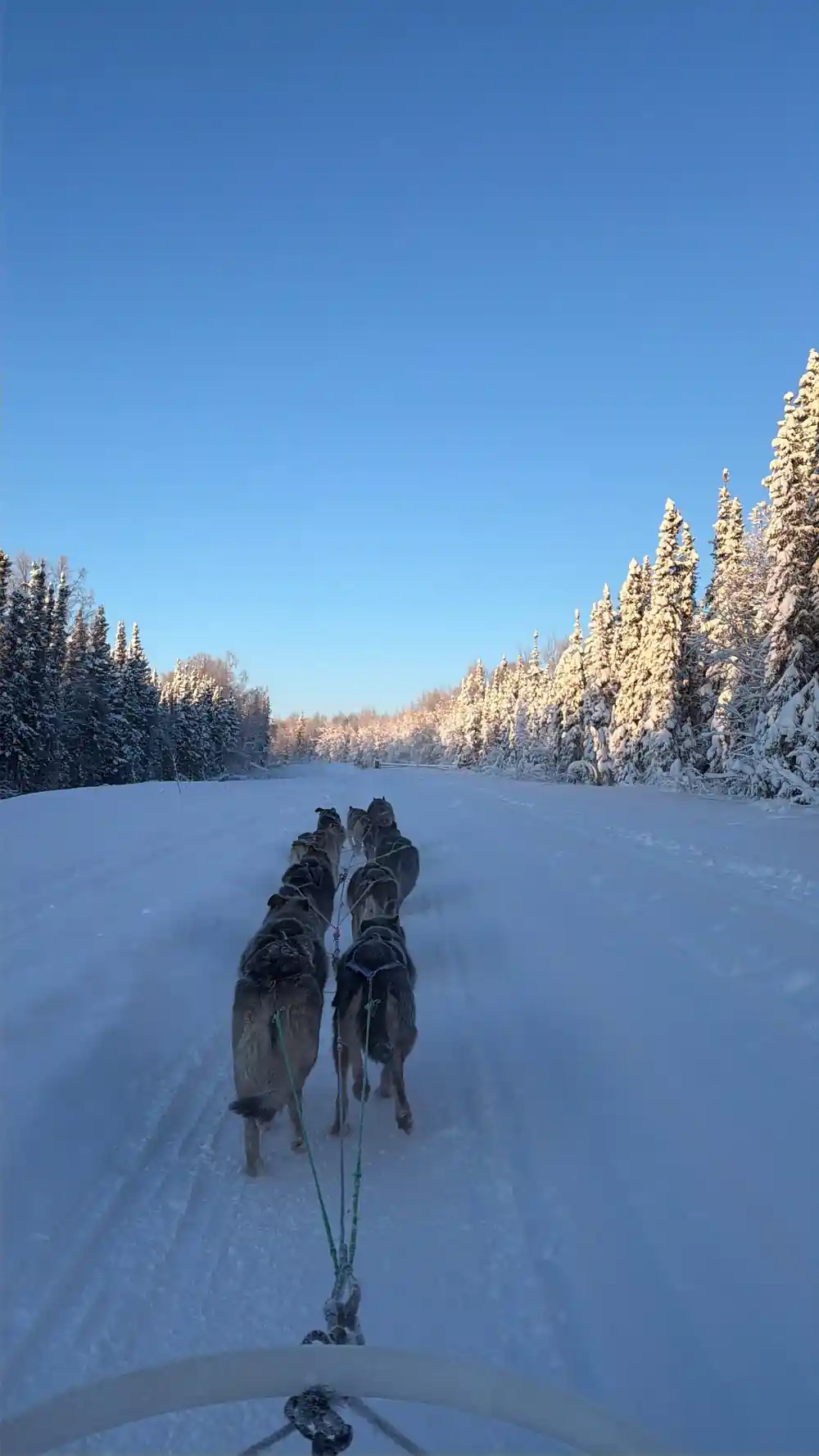
Hoar frost on black spruce, which is what a dry Interior winter produces
The dry winter nobody expects
January averages fourteen millimetres of precipitation. April averages eleven. March averages fourteen. For comparison, that is a lower monthly figure than large parts of the Sahara receive in their wettest months.
The reason is temperature. Cold air holds very little moisture, so the coldest weeks in Fairbanks are also the clearest and driest ones. Snow accumulates not because a great deal falls but because none of it ever melts.
Two consequences follow. The snowpack is dry and squeaky rather than wet and heavy, which is excellent for a sled. And the clear skies that come with the cold are why this is one of the best aurora locations in the world.
The shoulders: October, November, March, April
October averages plus one point six by day and minus nine point four at night, so the ground is freezing but the snow is not yet reliable. November settles it at minus eleven and minus twenty, and by the end of that month the season is generally under way.
At the other end, March averages minus three point four by day with a full winter of snow still on the ground and eleven hours of daylight in the middle of the month. It is the best month here for most visitors and it is not close.
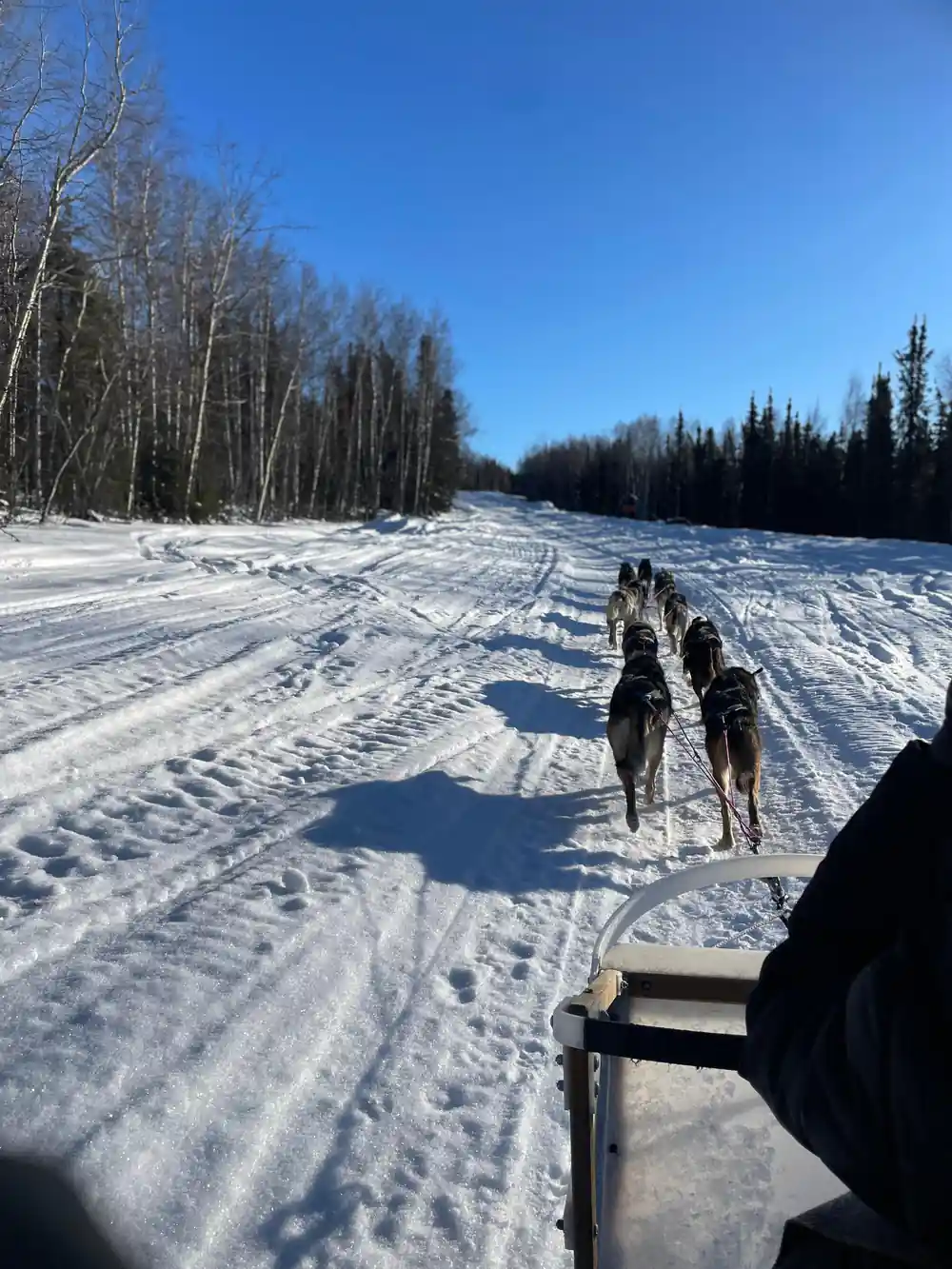
April brings the daily maximum up to plus five point nine, which softens trails in the afternoon while the nights still freeze them hard. The season winds down through it.
-26.4 C
The January overnight average at Goldstream Creek. Minus forty is reached in most winters, and at that point the Celsius and Fahrenheit scales read the same number.
What the numbers do to a person on a sled
The forecast describes standing in a town. You will be sitting still on a moving sled, generating no heat and with air moving past you, and that changes the arithmetic considerably.
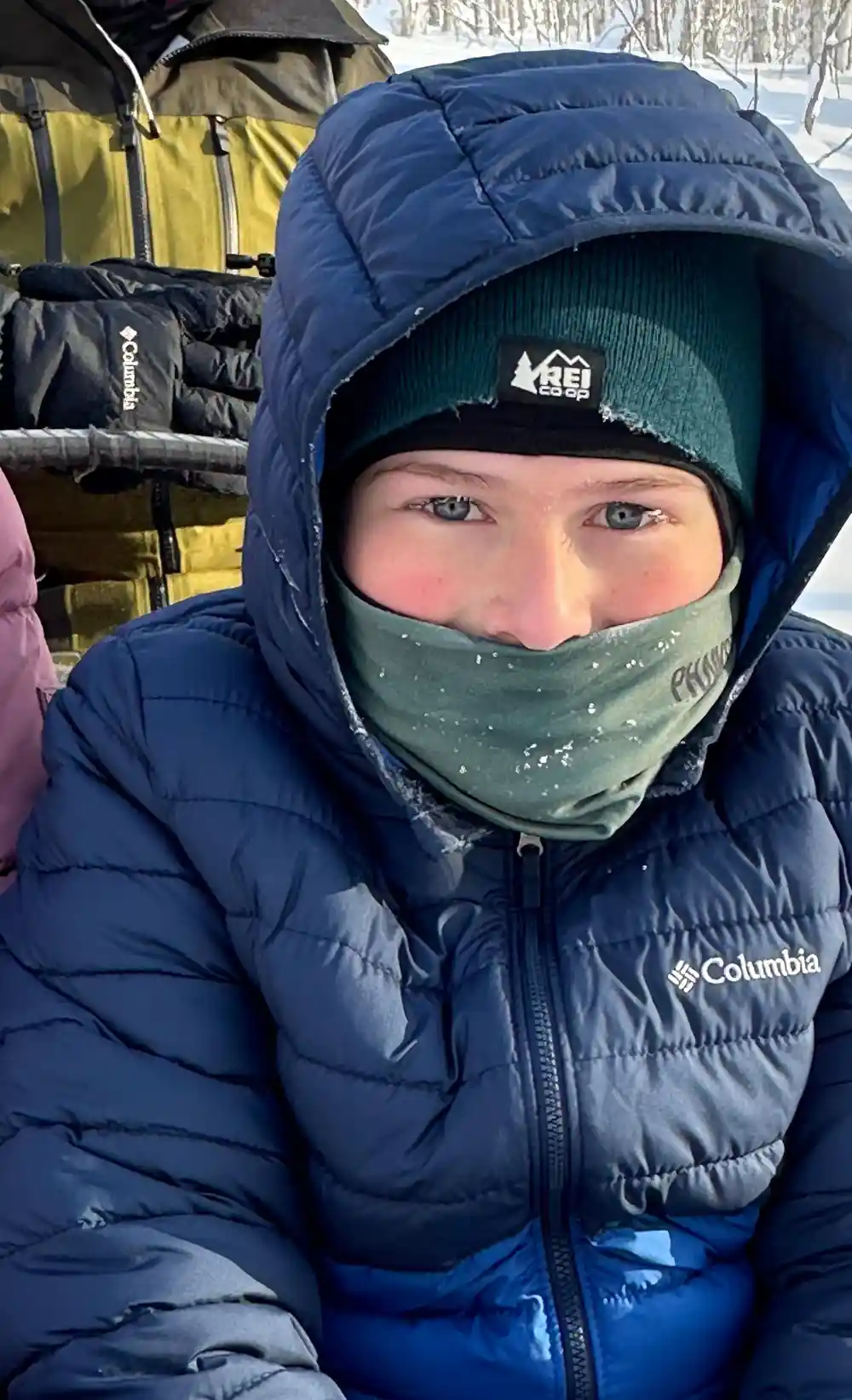
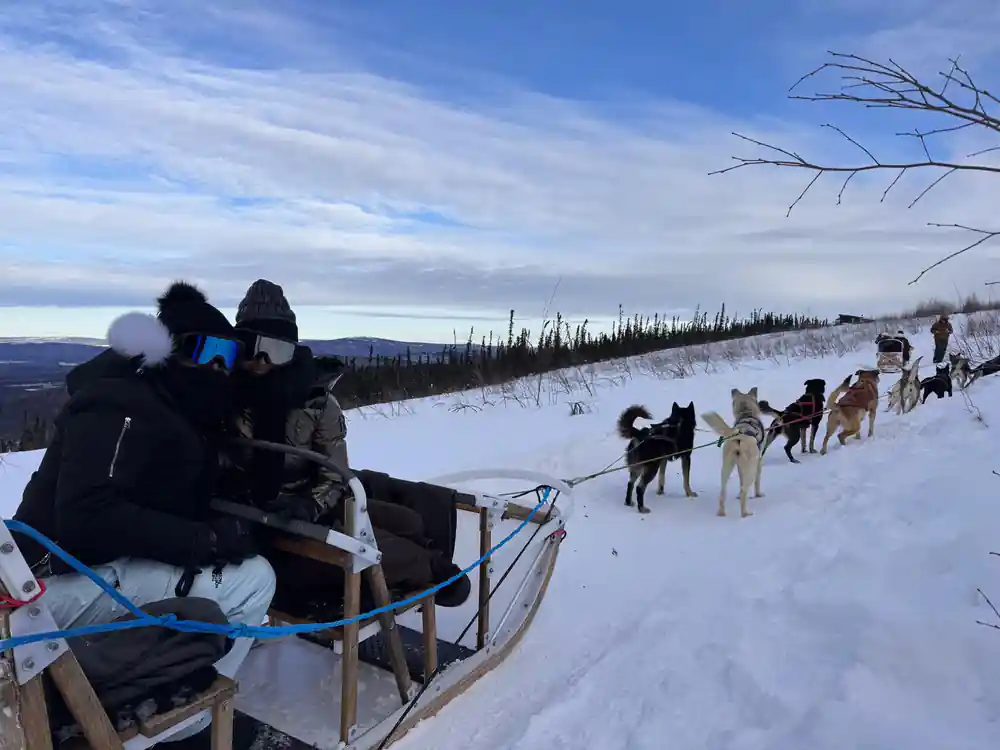
What suffers is the extremities and the face. Fingers, toes, the nose and the cheekbones are where cold injury begins, and at minus twenty-five exposed skin has a genuinely short tolerance. Nothing about a guided one-hour ride is dangerous; everything about it is uncomfortable if you have dressed for the number rather than for the activity.
The one mercy is stillness. Interior Alaska sits in a basin and its winters are notably windless, so minus thirty here often feels more bearable than a windy minus ten on a coast.
Summer, and why it matters to a sled tour
July averages twenty-one point two degrees by day and Fairbanks regularly exceeds twenty-five. August is the wettest month at ninety-five millimetres. The forest is green, the rivers run, and there is not a sled in sight.
This is worth knowing because visitors ask for dog sledding in July and the answer is a firm no from any operator worth booking. Sled dogs cannot work in that heat, and no honest kennel runs a sled on bare ground.
What kennels do instead is train on wheeled carts in the cool of autumn, which is a real and interesting thing to watch but is not what a sled tour sells.
Choosing a month
For snow and reasonable light together, March. For the deepest, hardest, most photogenic version of Interior Alaska, January, and accept that you will see it in twilight. For a compromise with the aurora season at its best, late February.
Avoid the very edges unless you are flexible. Early November and late April both depend on the year, and a trip built around a single activity at either end is a trip that may not get it.
And read the numbers as a floor rather than a ceiling. The average is not the day you will get, and Fairbanks is a place where the tails of the distribution are long.
The season runs on snow, and the snow runs from November
from US$175Reserve now & pay later