The essentials
- The Alaskan husky is not a recognised breed and has never been bred to look like anything in particular.
- Whether it pulls well over distance. Everything about the animal follows from that single criterion.
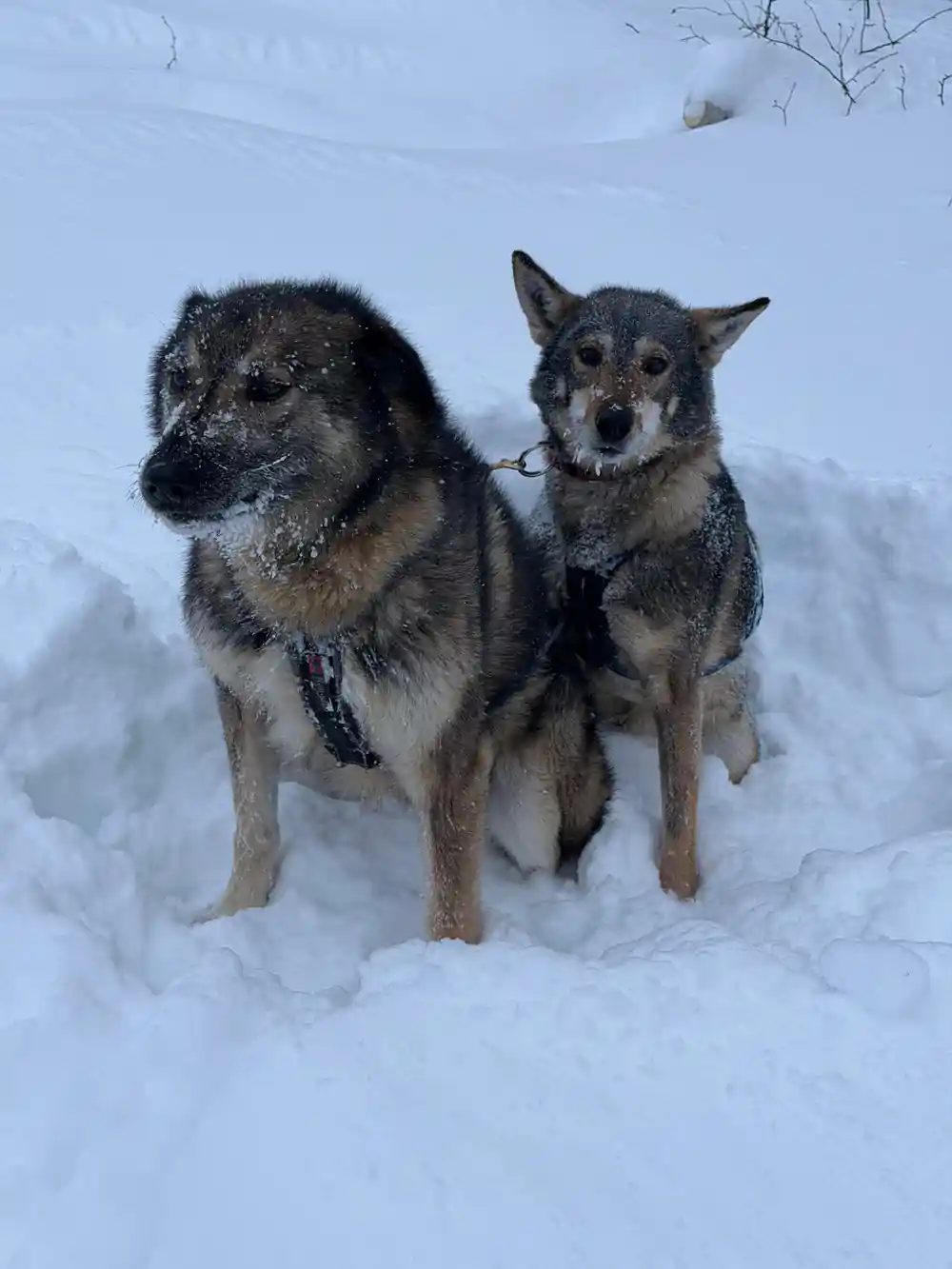
- The uniform grey and white dog with pale eyes is a Siberian husky, a separate registered breed and generally the slower of the two.
- A double coat, compact feet and a metabolism that copes with temperatures that would be dangerous for most dogs.
A breed that is not a breed
The most famous sled dog in the world is not a breed. The Alaskan husky has no written standard, no registry, no show class and no defined appearance, and none of that is an oversight or a gap waiting to be filled. It is the deliberate consequence of how the animal was made.
A breed standard is a description of what a dog should look like, maintained by an organisation, and dogs are bred towards it. The Alaskan husky was bred towards a job instead. If crossing in a pointer produced a faster team, mushers crossed in a pointer. If a village dog held a line well in a storm, it went into the pool.
What exists now is a working population rather than a breed: enormously varied in appearance, remarkably consistent in what it is for.
What it is selected for
Pulling, over distance, in cold, repeatedly, without breaking down. That is the whole specification and every characteristic of the animal traces back to it.
The practical result is a dog that is smaller and leaner than most people expect, often around twenty to twenty-five kilos, with a deep chest, tight feet and an appetite that is difficult to comprehend. A racing sled dog in work burns through an amount of food that would make a Labrador ill.
Temperament is selected too, and just as hard. A dog that fights in harness, sulks, or will not eat on the trail is no use however fast it is. What you meet in a kennel yard is the product of generations of selection for animals that are enthusiastic, tolerant of one another and easy to handle.
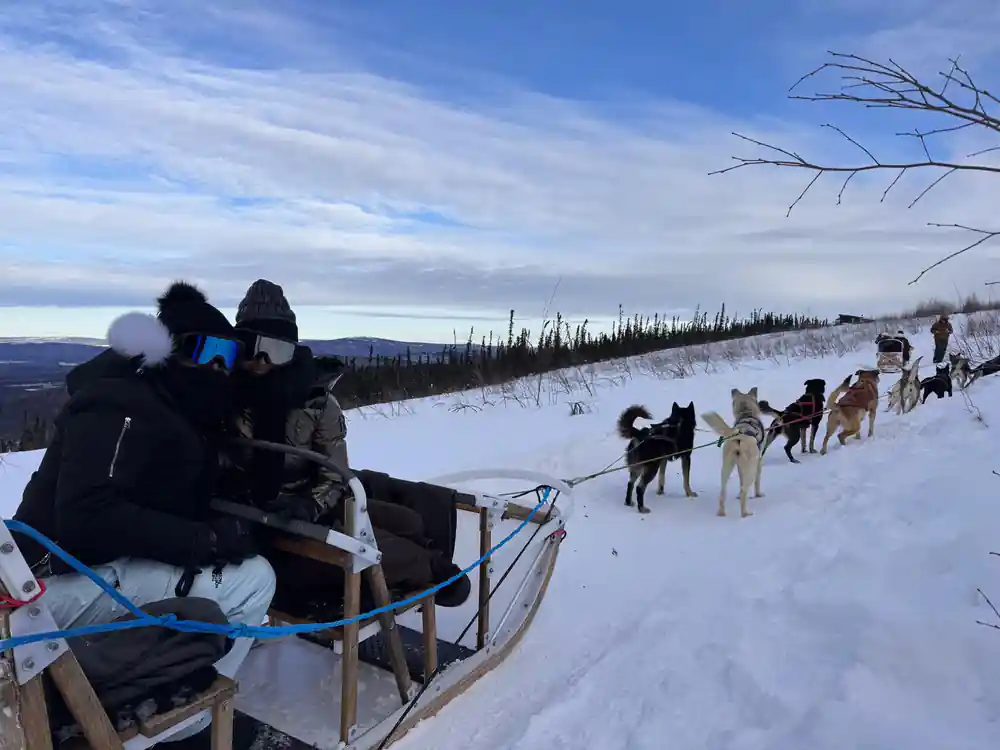
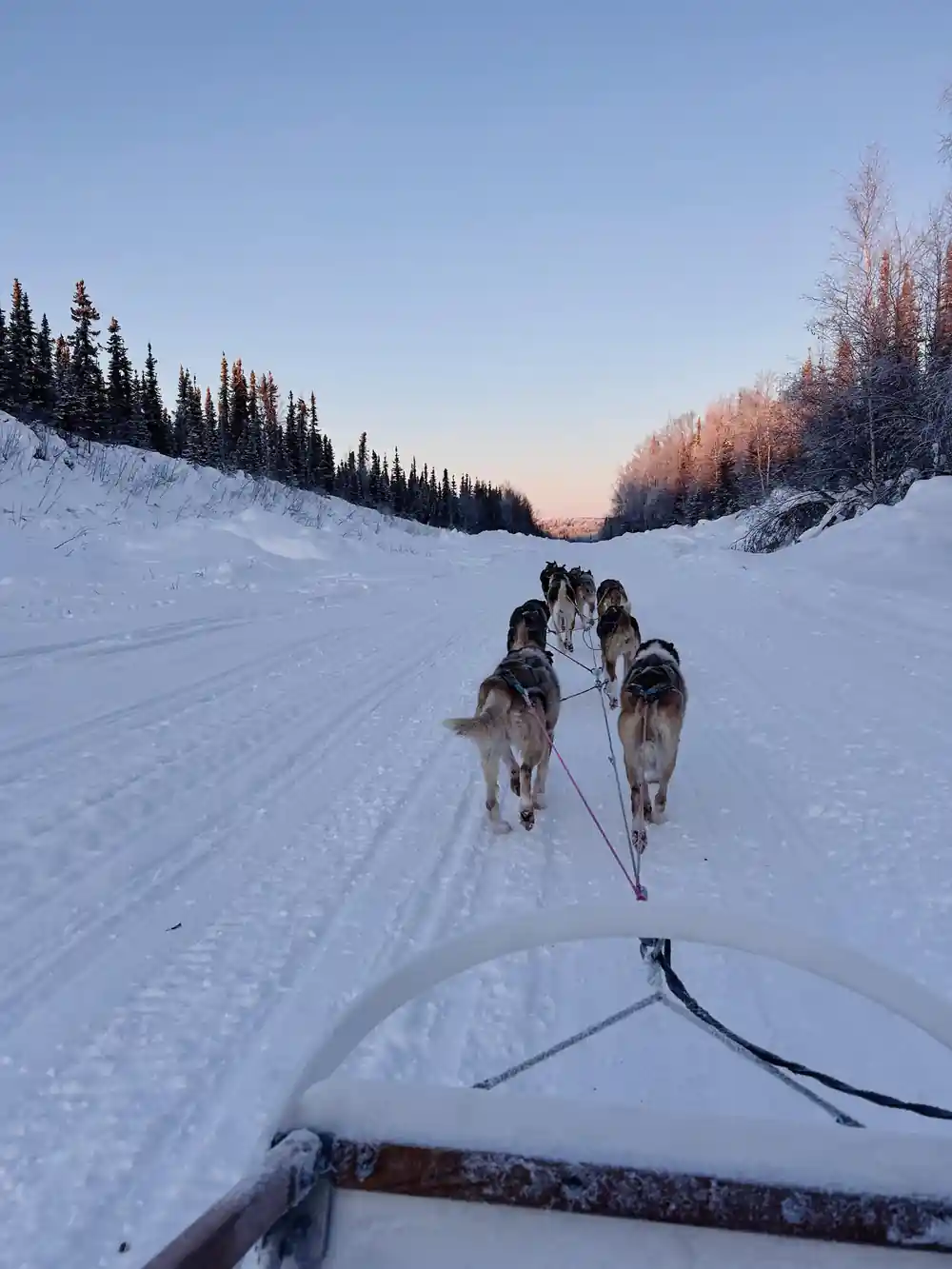
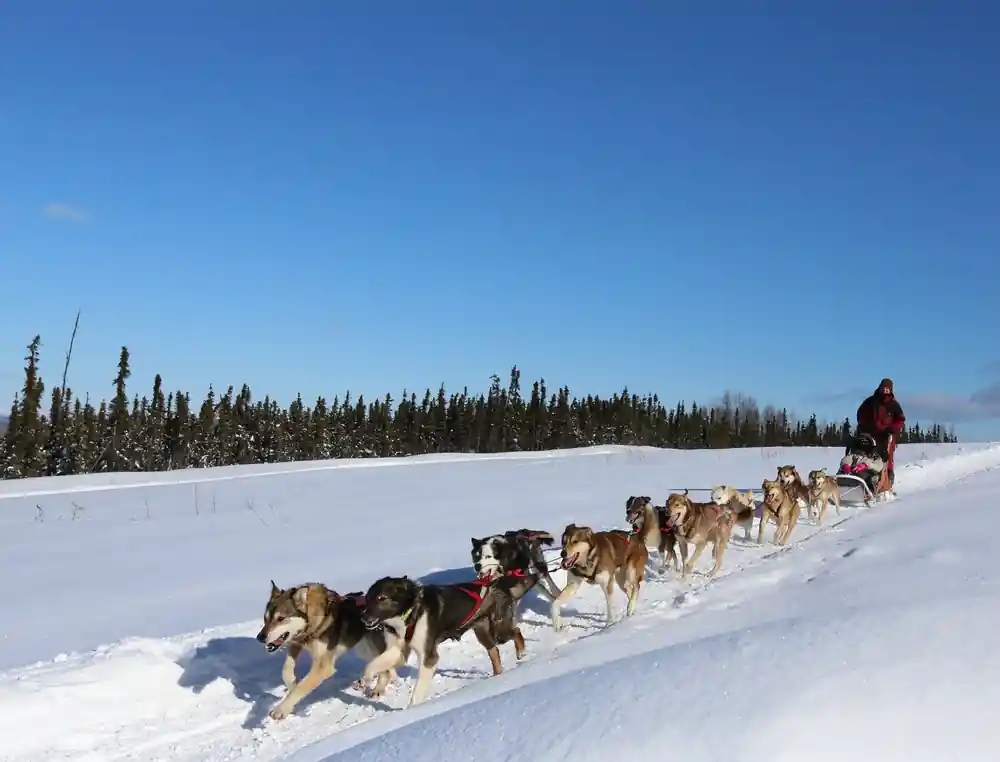
A team in harness, close enough to see that no two of the dogs match
Against the Siberian husky
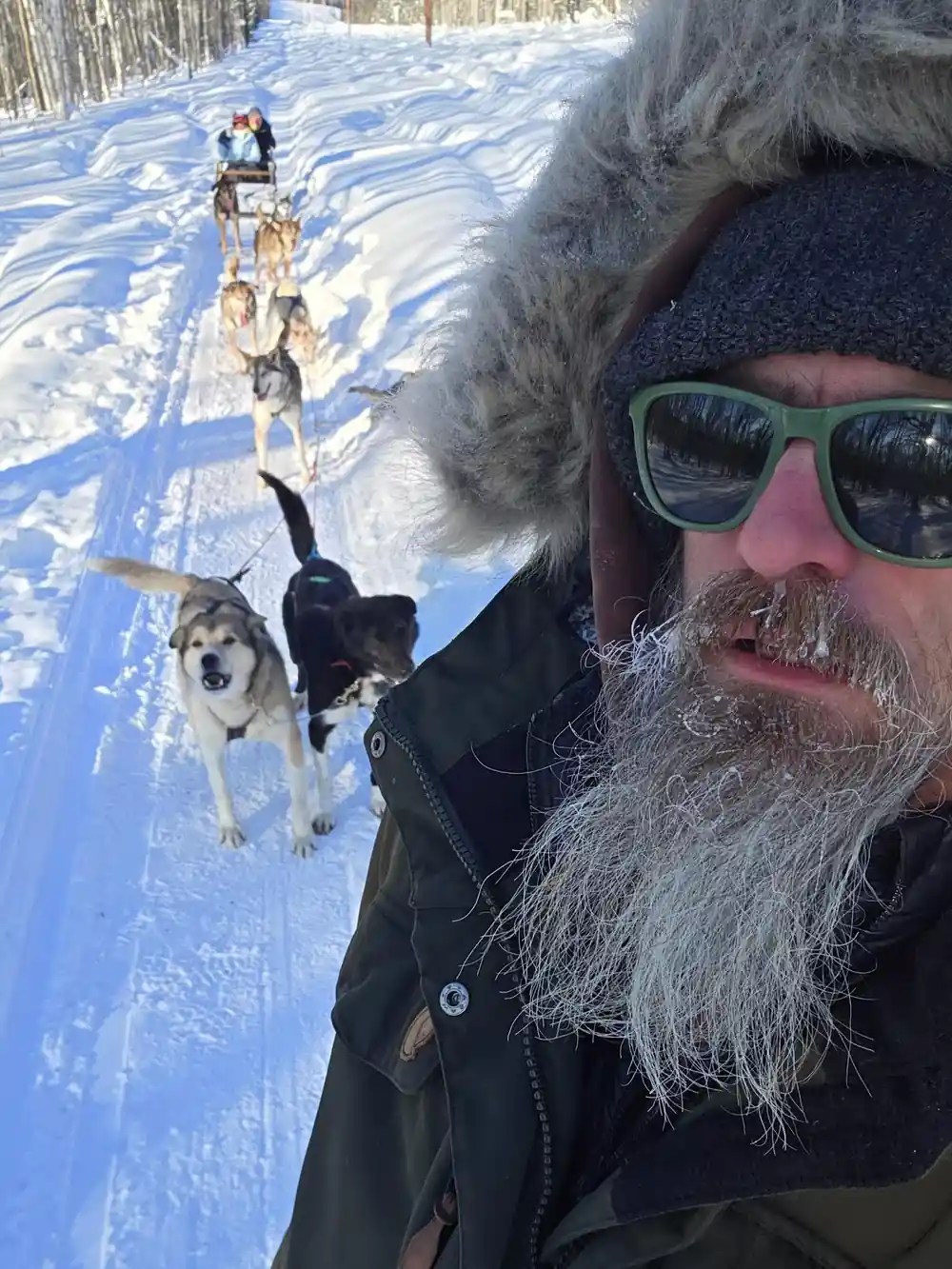
The Siberian is the dog in the picture: a registered breed with a standard, a dense symmetrical coat, a defined size range and, often, the pale blue eyes. It came from working dogs kept by the Chukchi of north-eastern Siberia, reached Alaska in the early twentieth century, and was formalised from there.
It is a genuine working dog and it remains one. It is also, generally, slower than an Alaskan over a long distance, and competitive distance racing is dominated by Alaskans for that reason.
A visitor who arrives expecting a line of matching blue-eyed dogs and finds a mismatched assortment of brown and black and patchy animals has met the difference. The mismatched ones are the specialists.
How a team is put together
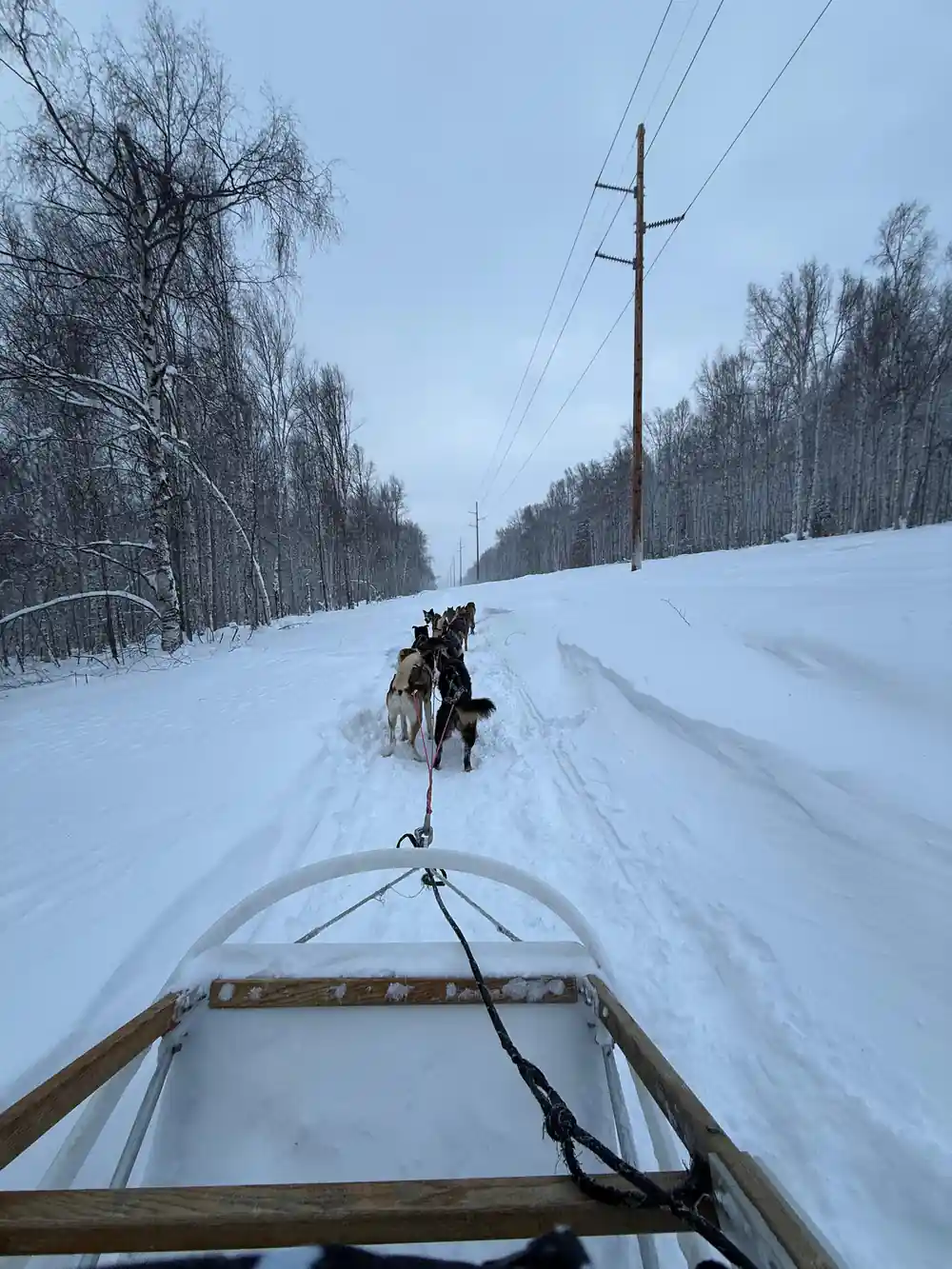
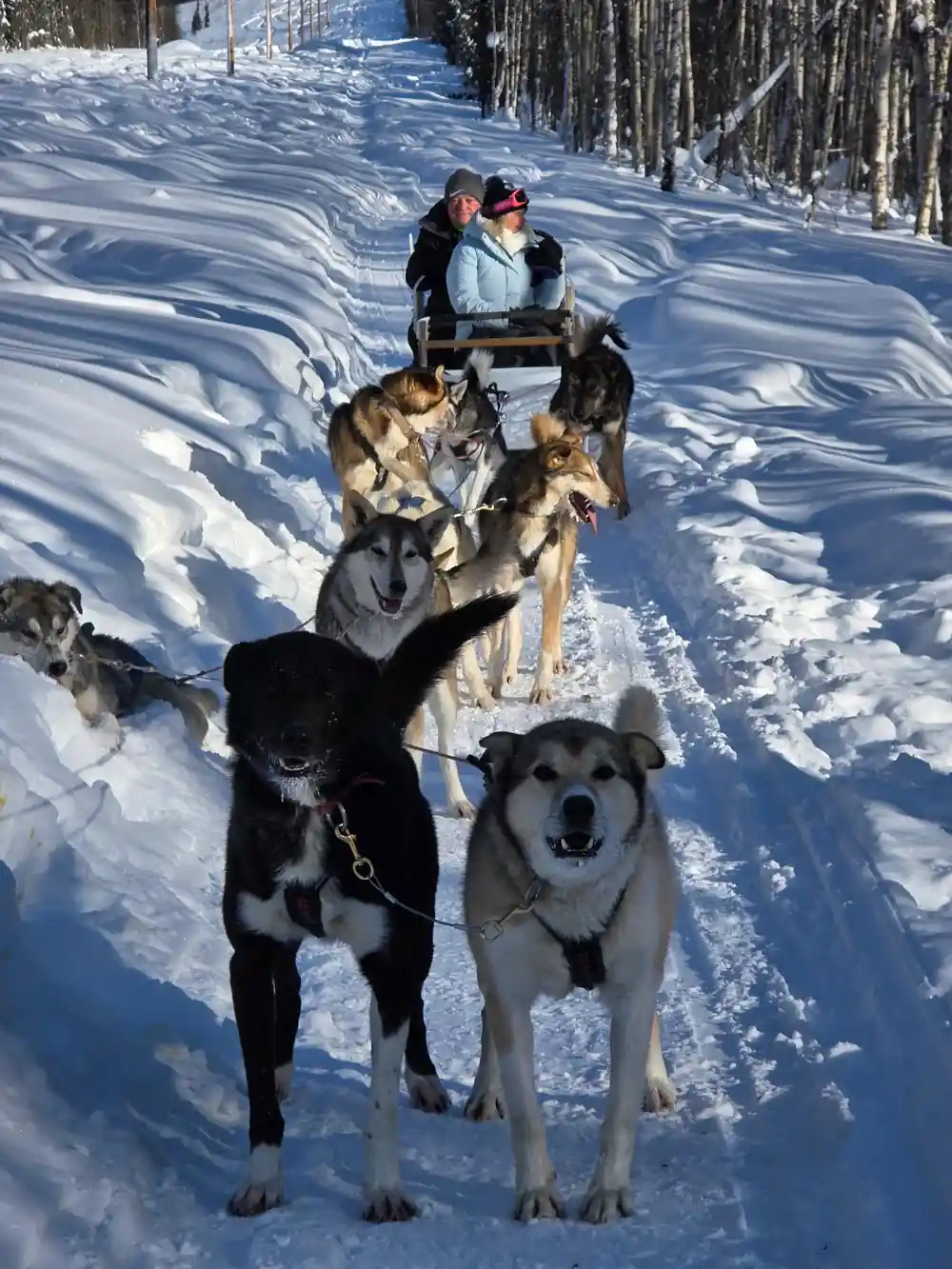
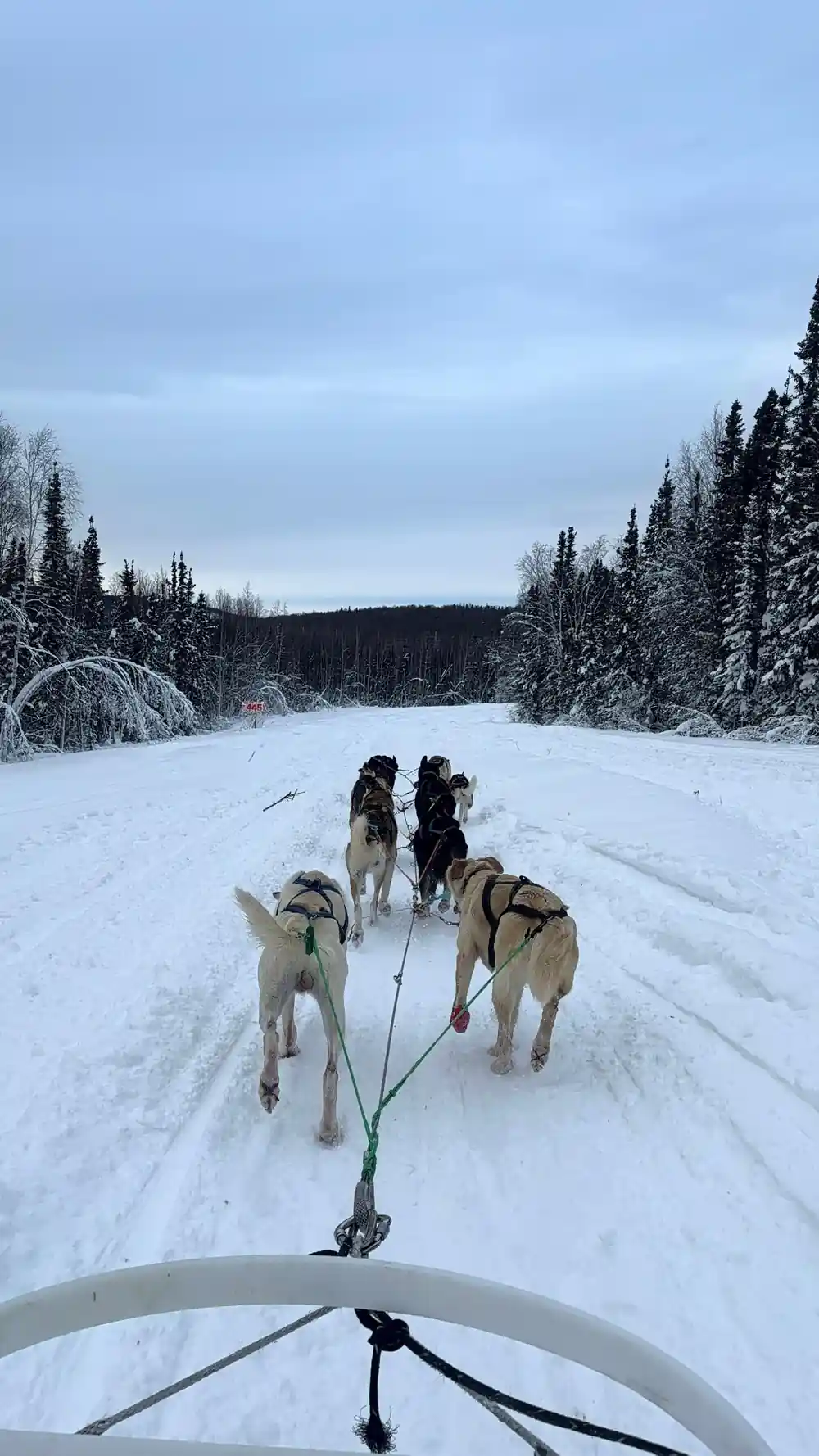
Dogs run in pairs along a central gangline with the sled at the back. At the front are the leaders, which take commands and set the line. Behind them are the swing dogs, which carry a turn through the rest of the team. At the rear are the wheel dogs, closest to the sled and taking the most direct load, usually the heaviest animals in the string.
Everything between is team. That is where most of the power comes from and where most dogs spend their careers.
Lead is not seniority and it is not dominance. It goes to dogs that listen, hold a line and keep their heads when something goes wrong on the trail, and plenty of excellent dogs never do it. Mushers will tell you a good leader is the rarest thing in a kennel.
Coping with minus forty
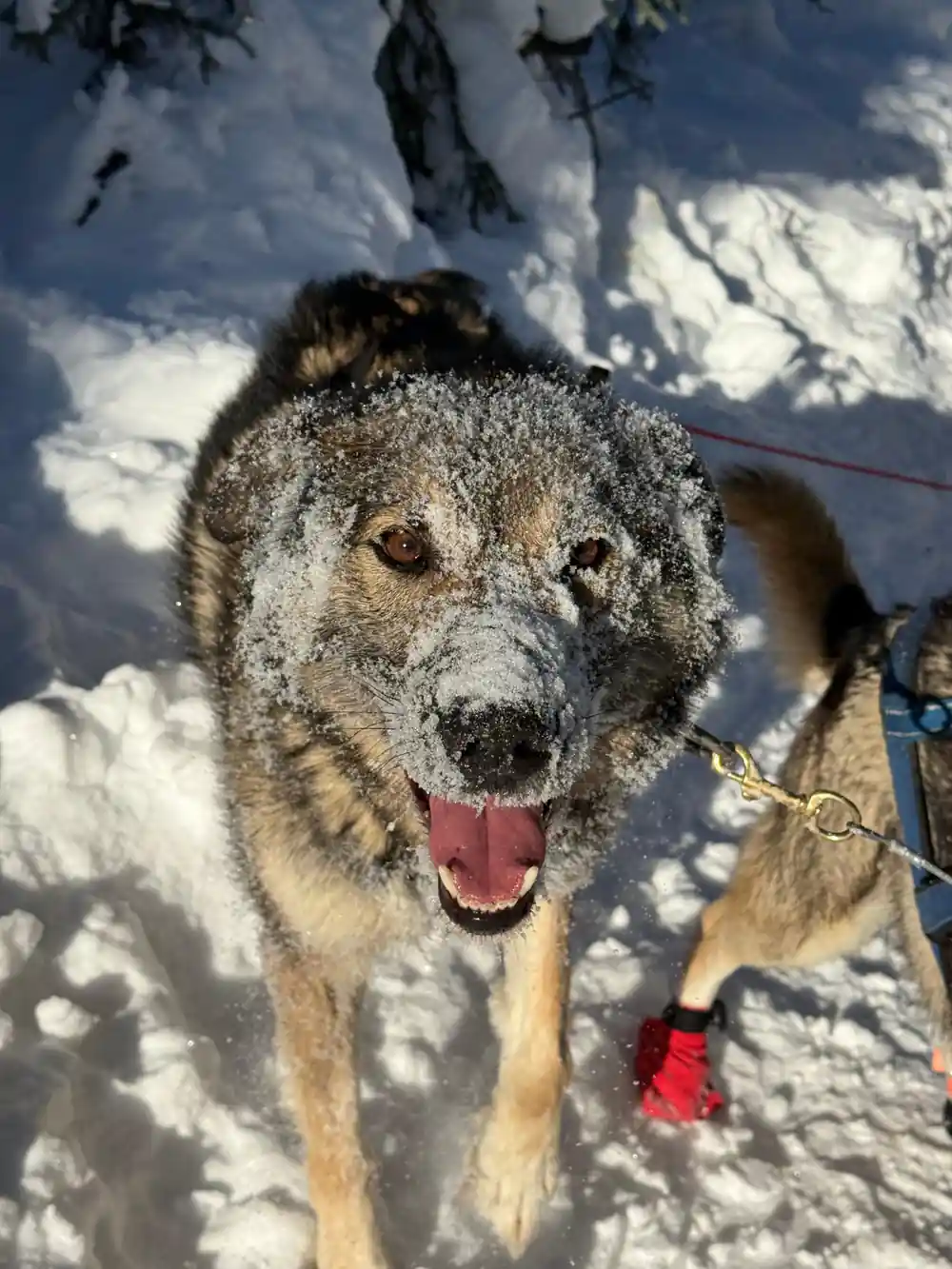
The coat is a double one: a dense insulating undercoat with longer, coarser guard hair over it that sheds snow. Air trapped in the undercoat does the work, which is why a sled dog can sleep outside in a temperature that would kill most breeds and wake with snow on it, unmelted, because so little heat is escaping.
The feet are the vulnerable part, and it is the reason for booties. Not because the pads are soft, but because ice can build between the toes on a long run and because a trail with a crust can cut.
Metabolically these dogs run hot and eat enormously, and much of the food in a working kennel goes in as fat. Water matters as much: a working team is given warm, meat-flavoured water so the dogs drink enough, because dehydration in dry Arctic air is the real risk rather than cold.
Living with people
The kennel arrangement surprises visitors: dogs on individual tethers beside individual houses, on straw, rather than loose in a group. It is the standard for working kennels and the reasoning is practical. Each dog gets its own food, its own bedding and its own space without competition, and any dog can be reached and handled without managing a pack.
They are not pets and they are not wild. They are working animals that are also extremely sociable, which is why the walk round a yard before a ride is enjoyable rather than intimidating.
The question worth asking any kennel is what happens at the end. A sled dog runs for a limited number of seasons and then does not, and how an operation handles that is the most informative thing about it.
What it means on the trail
Once you know the difference, the line in front of the sled becomes readable. The heavy pair at the back are doing the hauling. The two at the front are the ones the musher is talking to. The mismatched, unphotogenic animal in the middle is very probably the strongest runner there.
It also explains what you are hearing. A kennel that screams before a run and goes silent the moment it moves is a kennel of animals doing the thing they were made for, which is not a sentimental observation but a functional one.
Ask the guide which dogs are which. It takes a minute and it converts a row of dogs into a working machine you can follow.
A line of dogs that do not match, and pull like a machine
from US$175Reserve now & pay later