









What an hour of dog sledding in Fairbanks involves
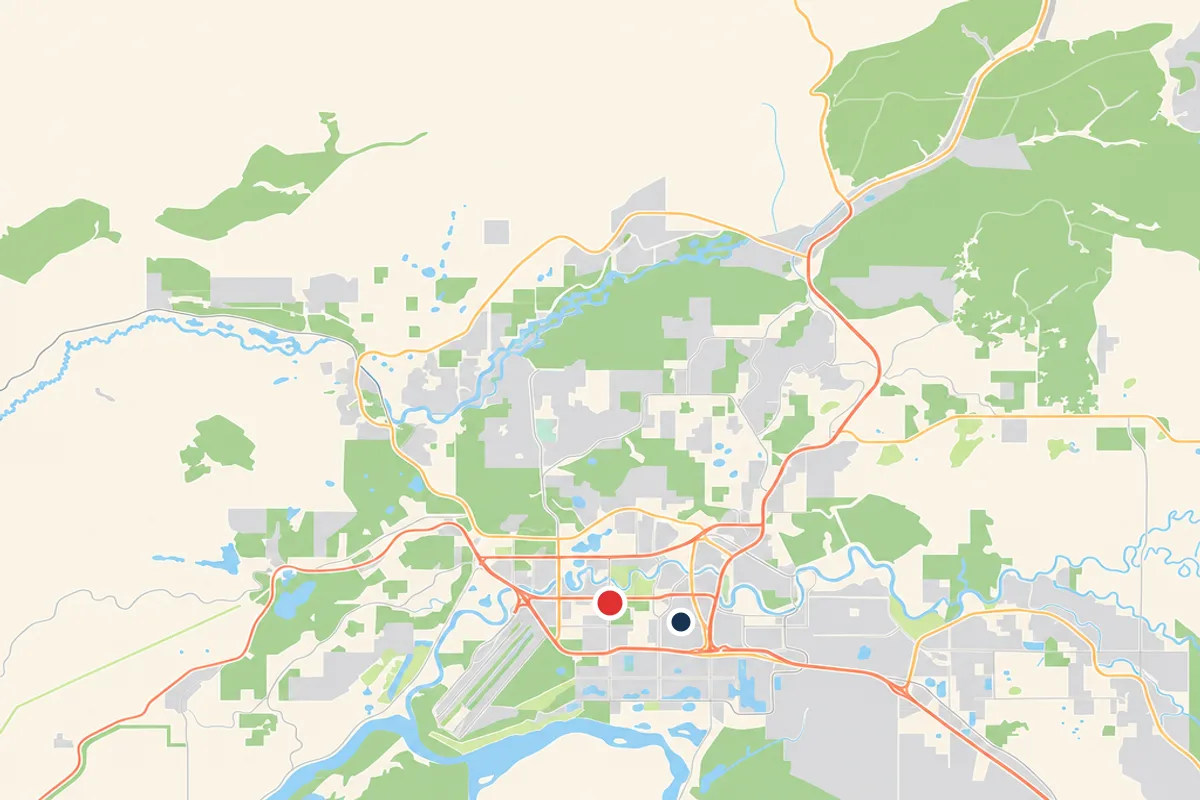
The booking is one hour and it starts at your hotel. A vehicle collects you, drives out of town to the kennel, and brings you back afterwards, which in a place where January nights reach minus twenty-six and most visitors have no car is a larger part of the value than it first appears.
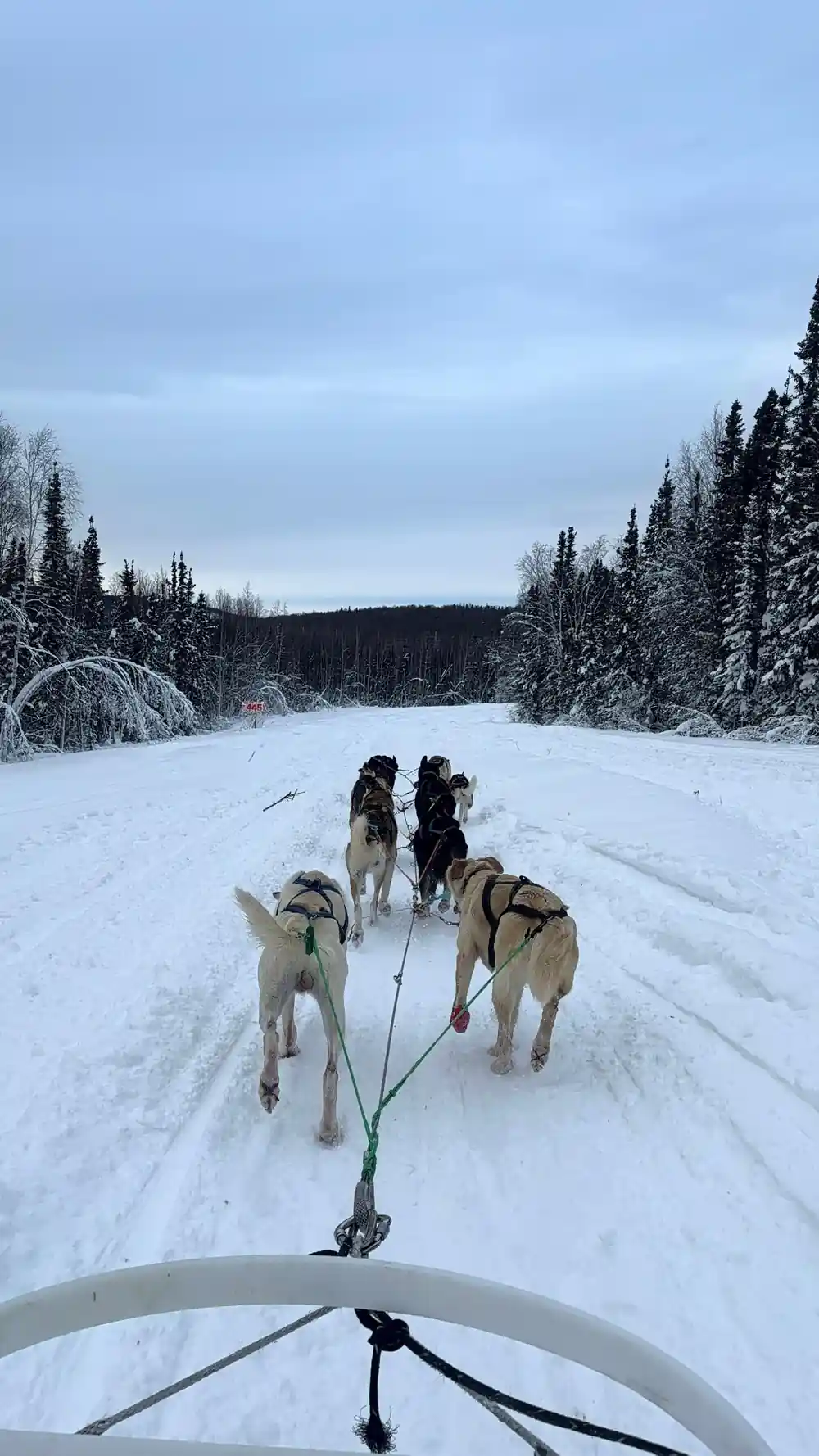
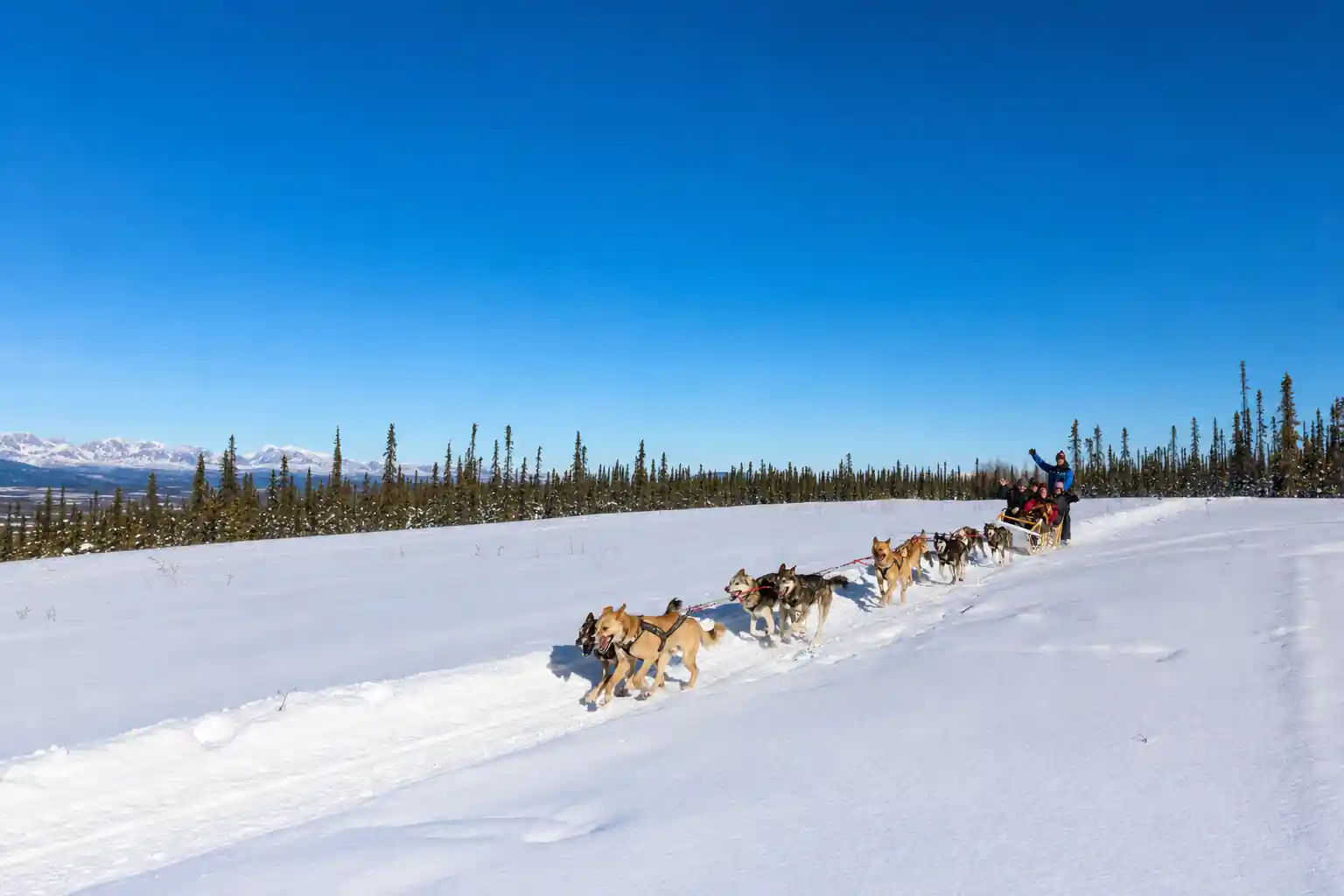
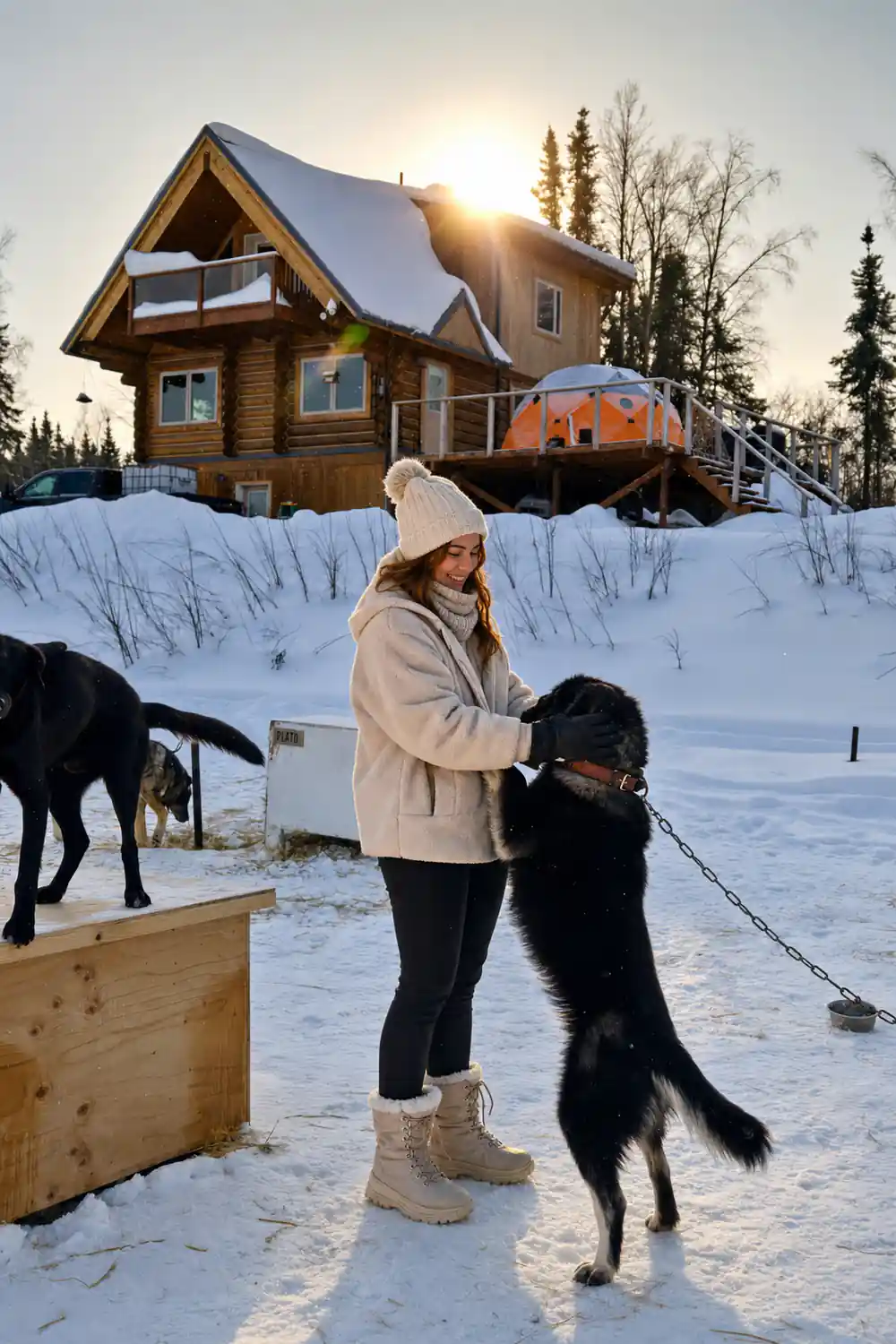
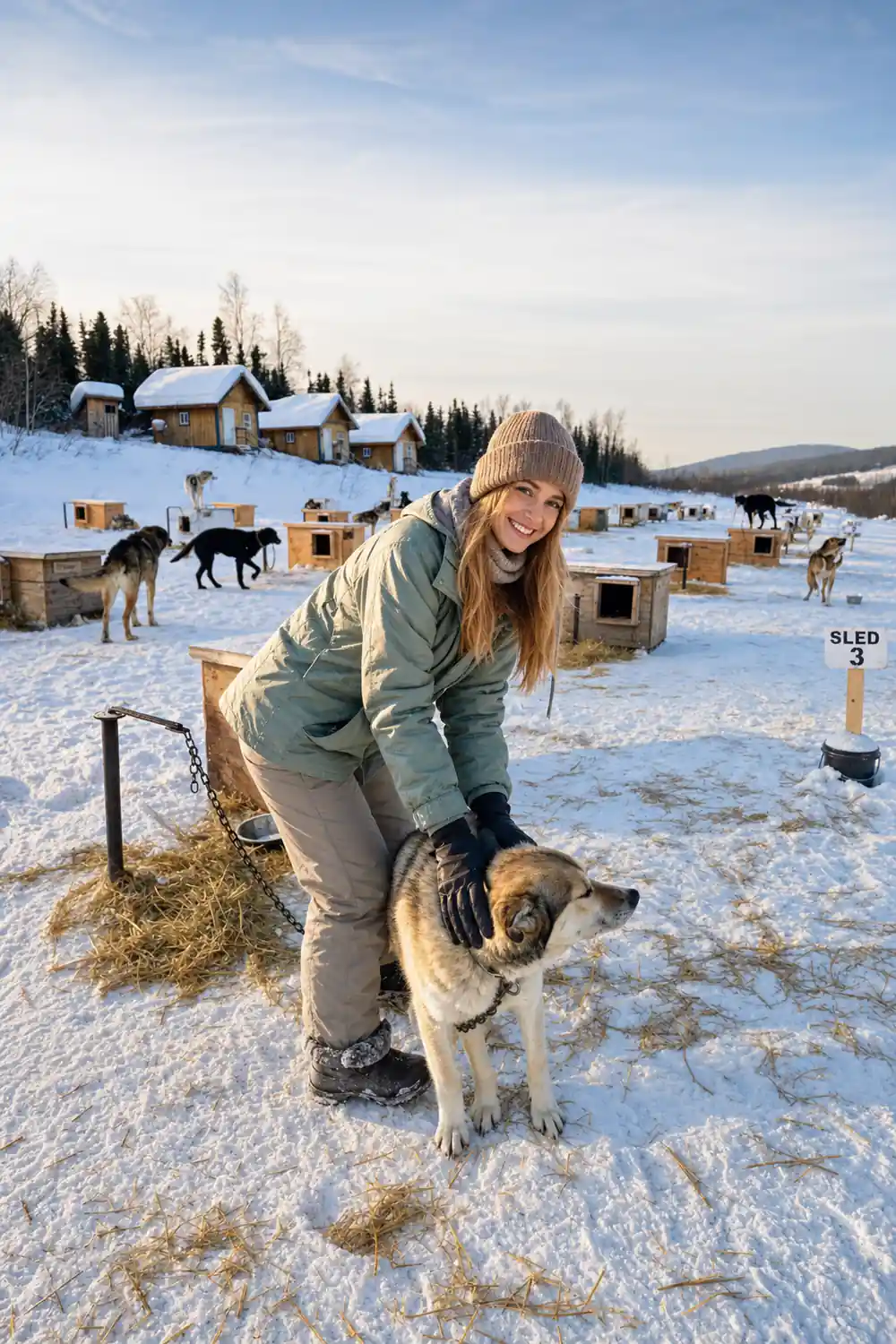
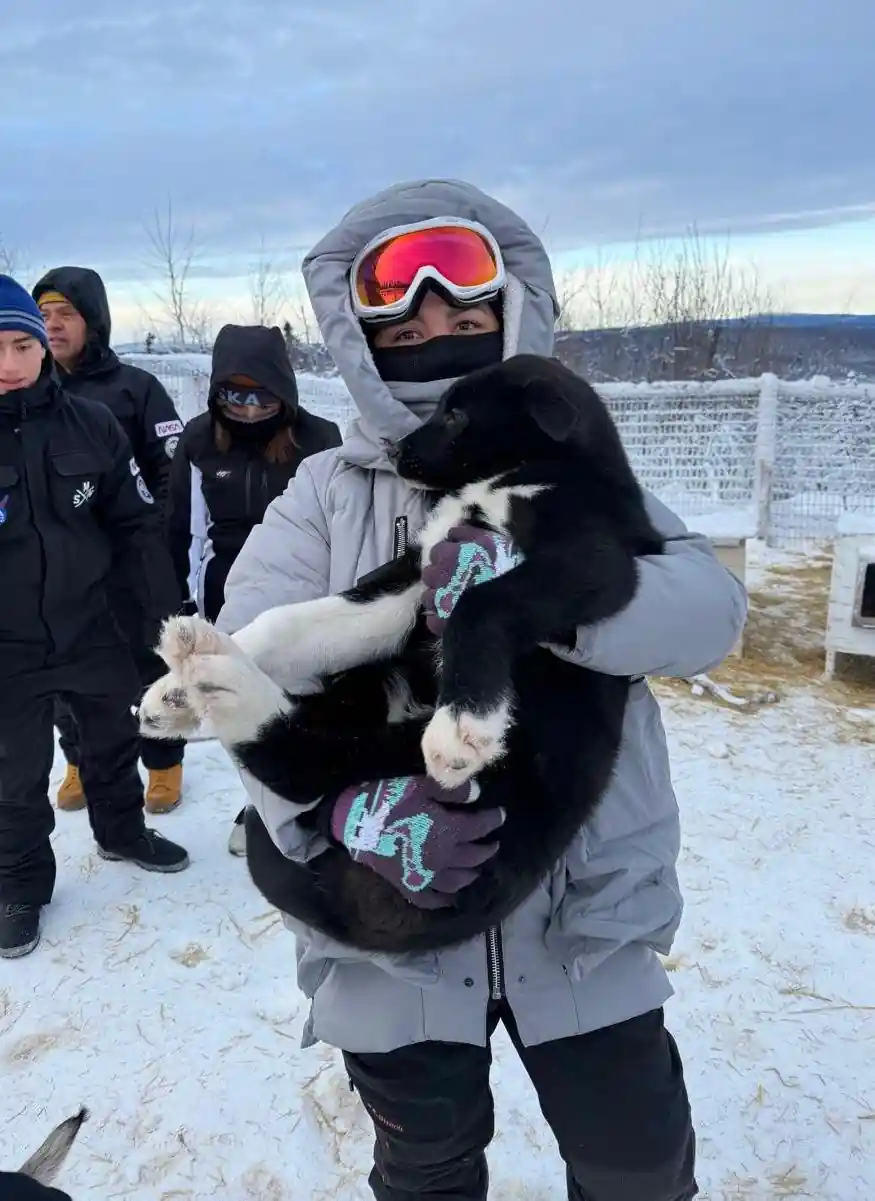
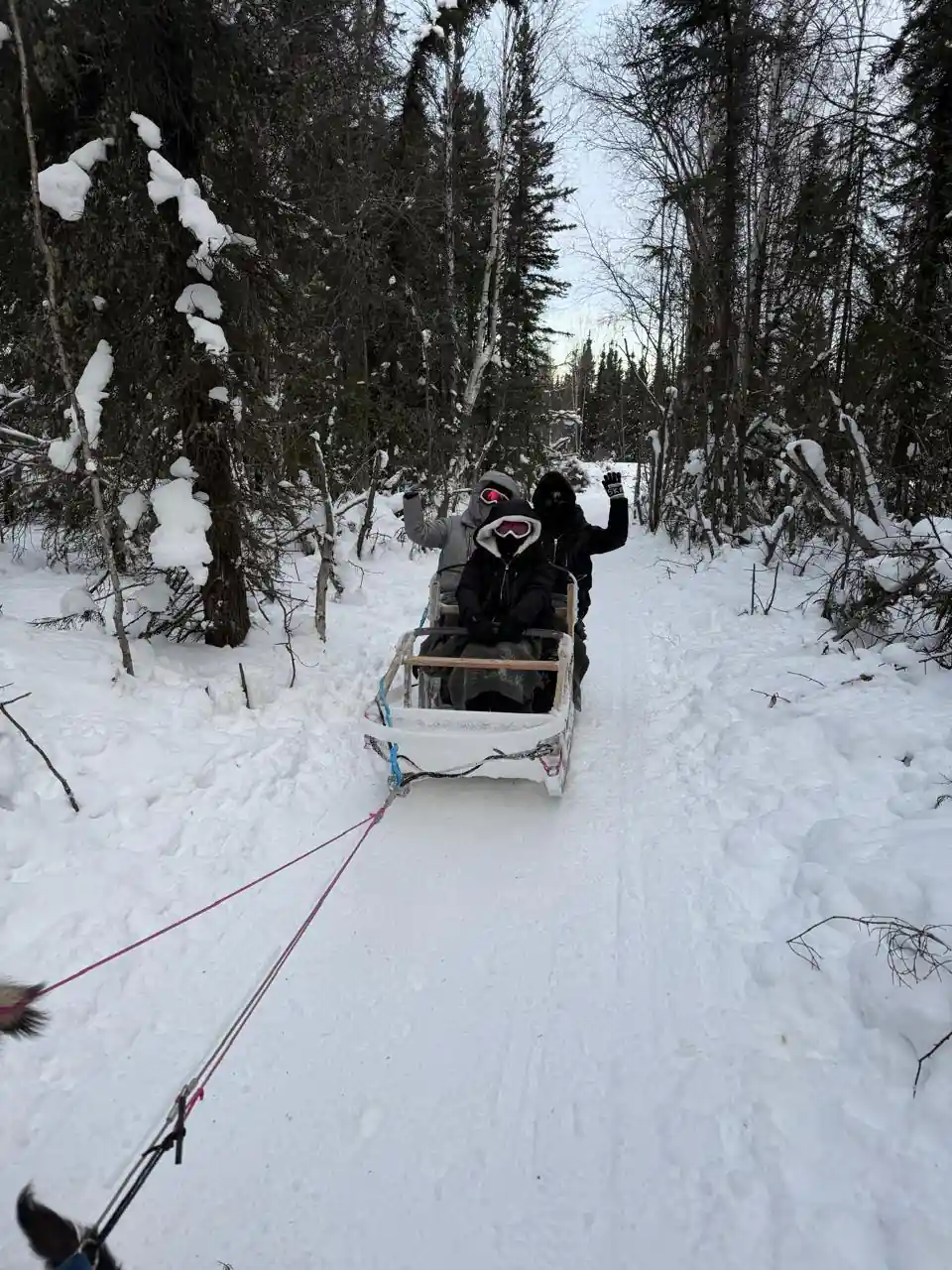
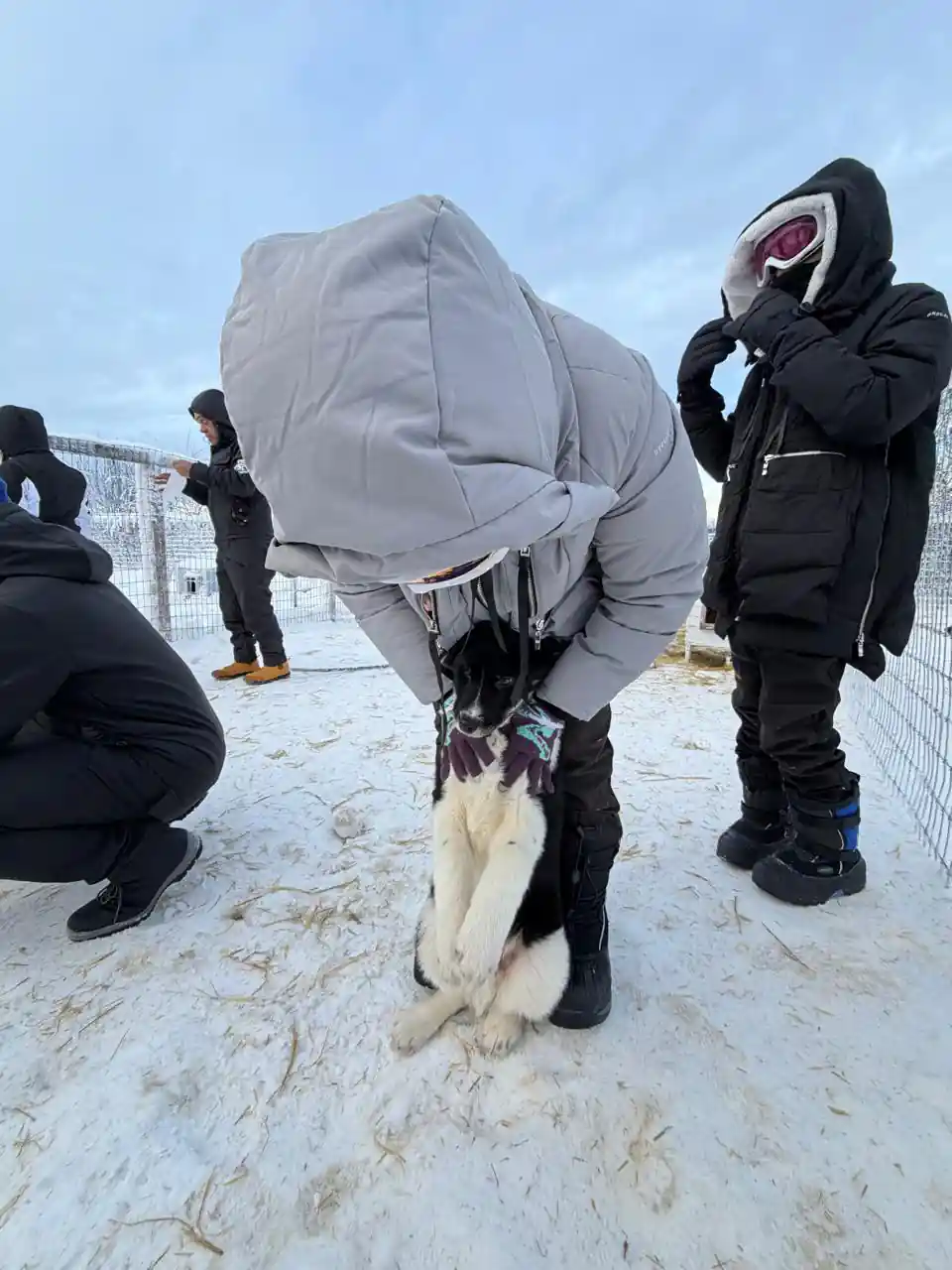
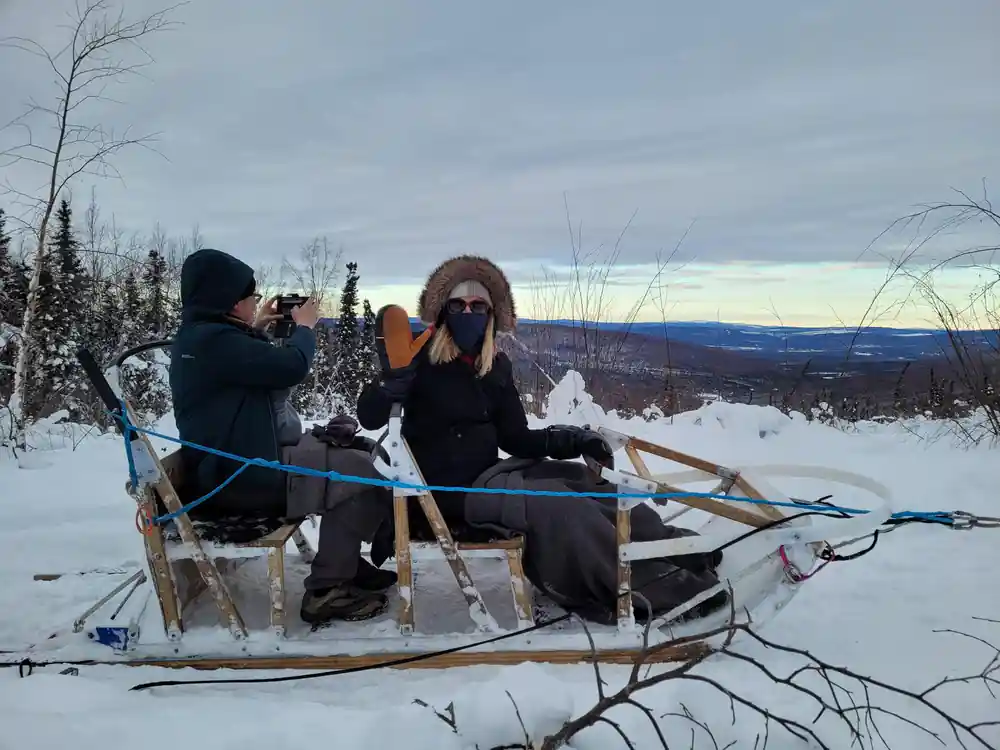
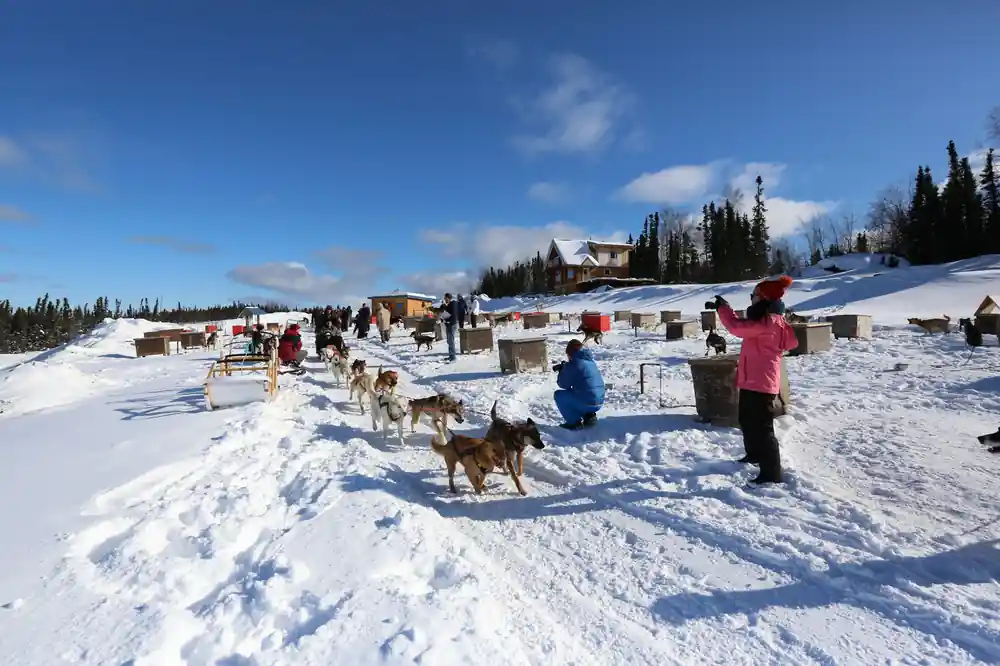
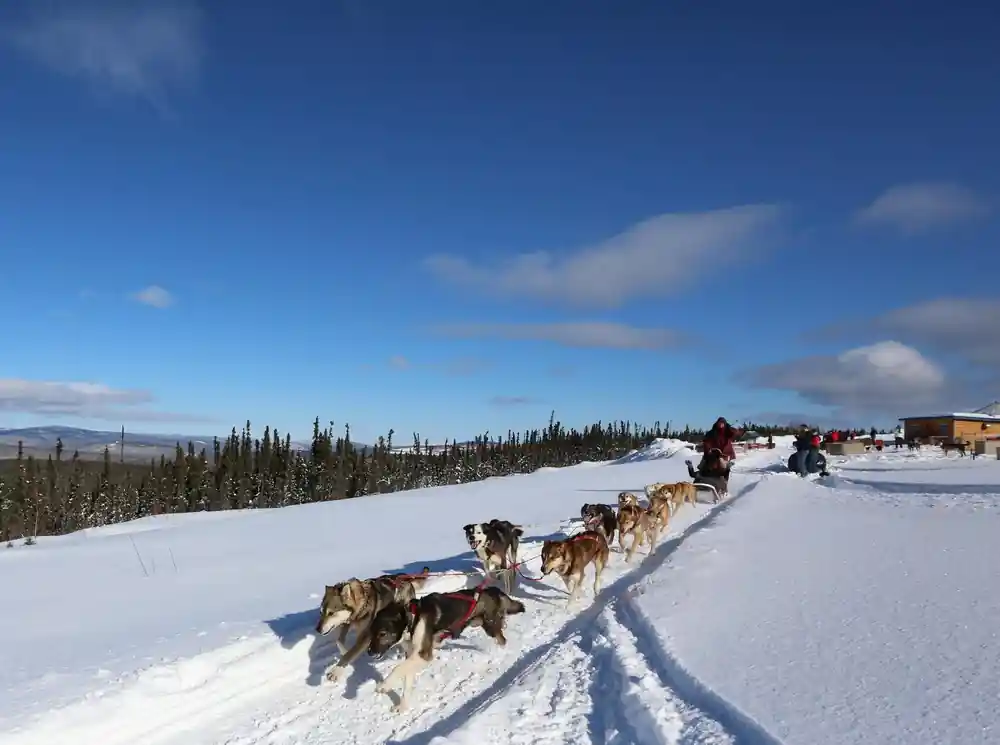
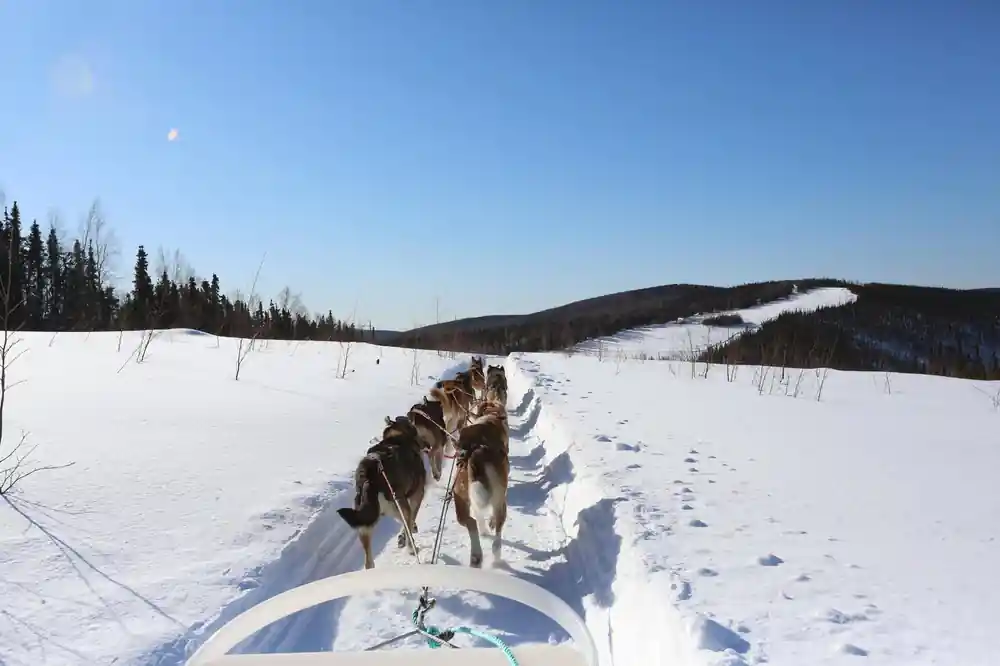
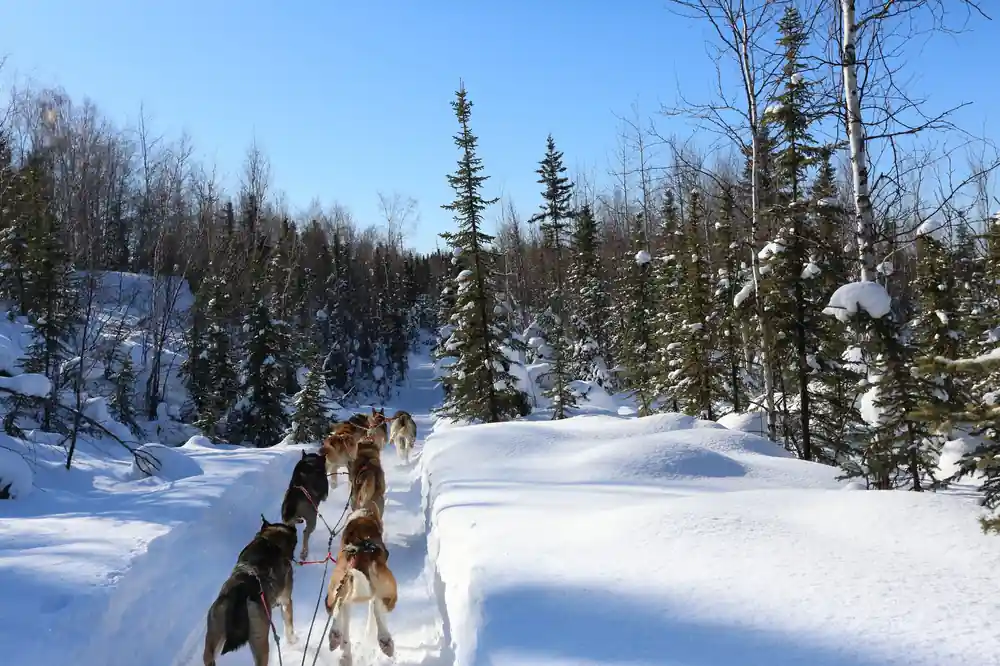
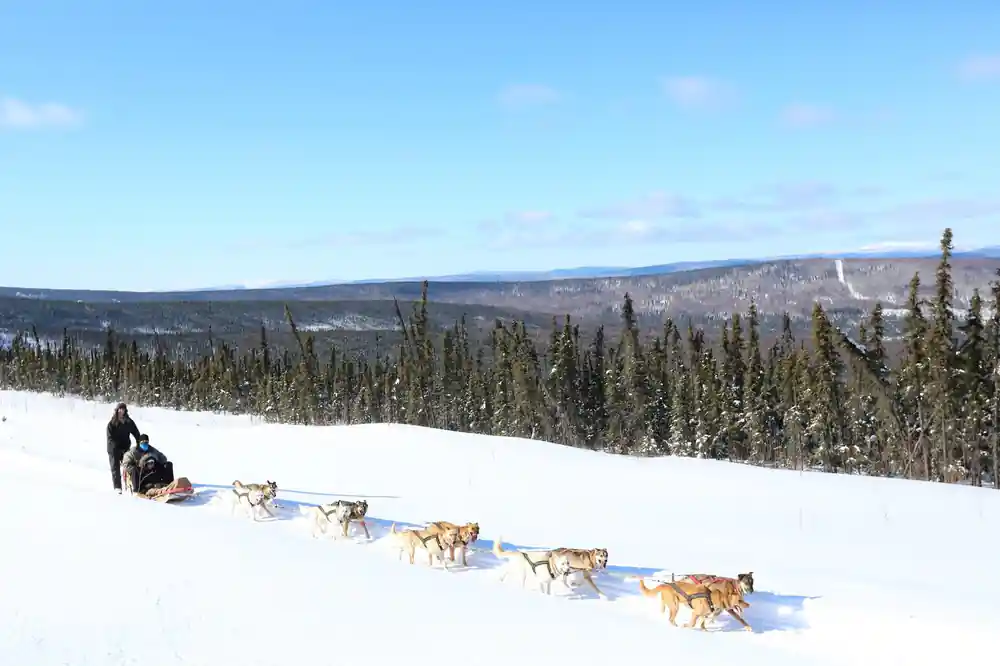
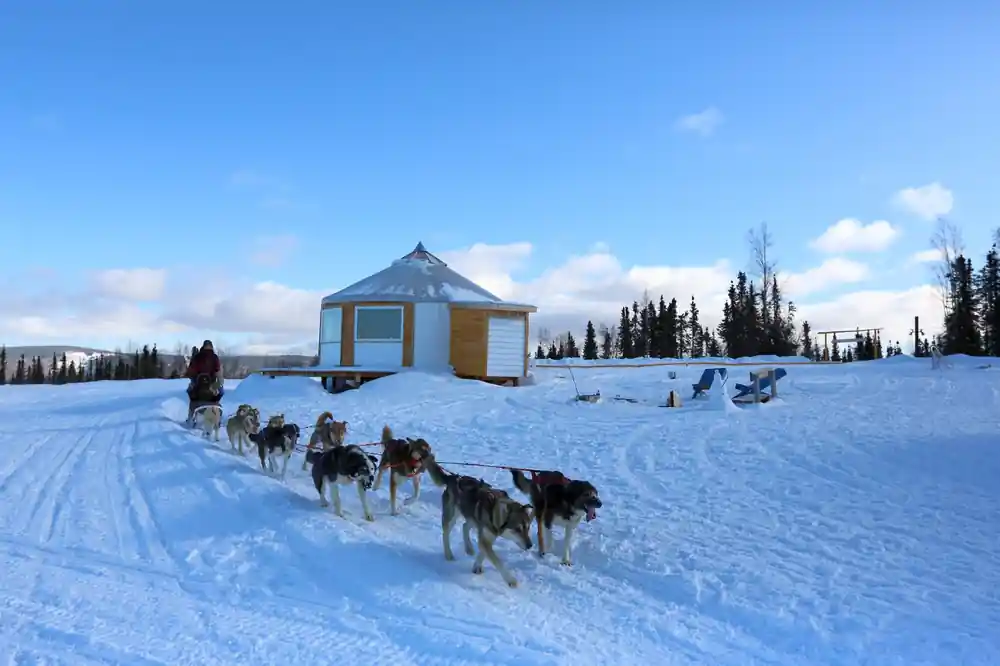
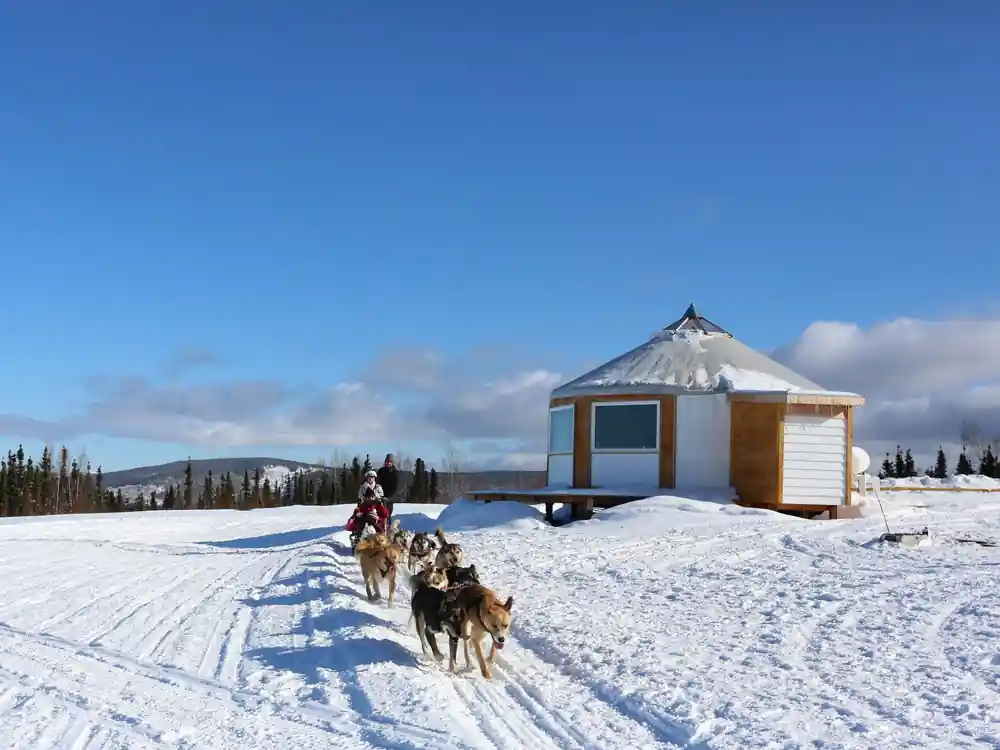
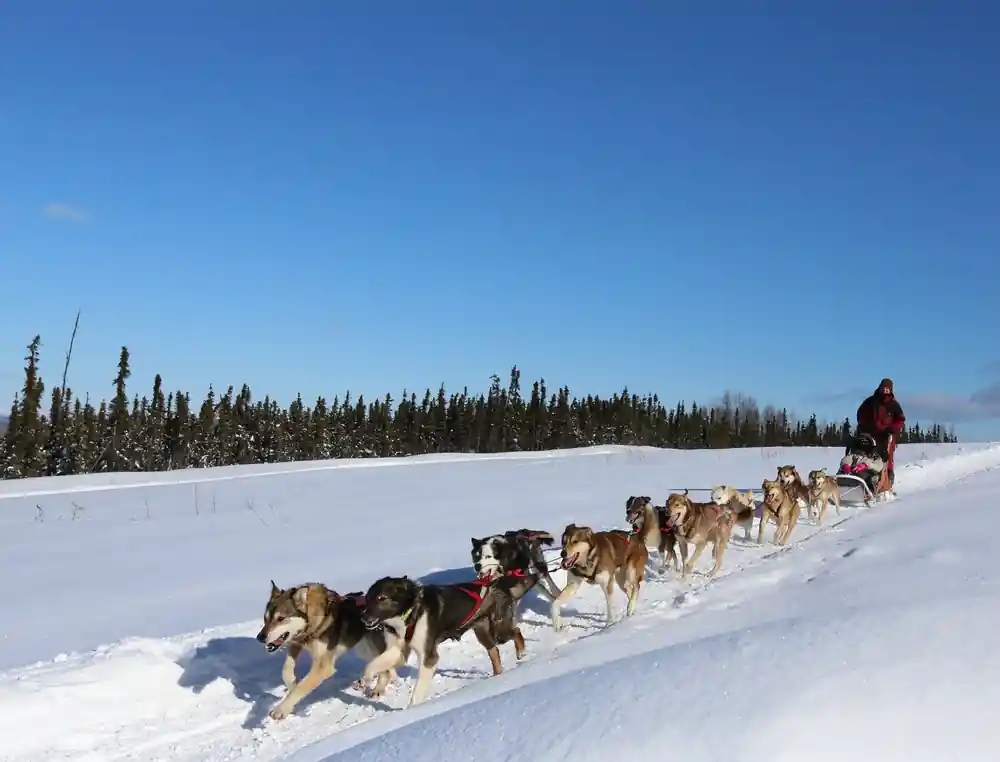
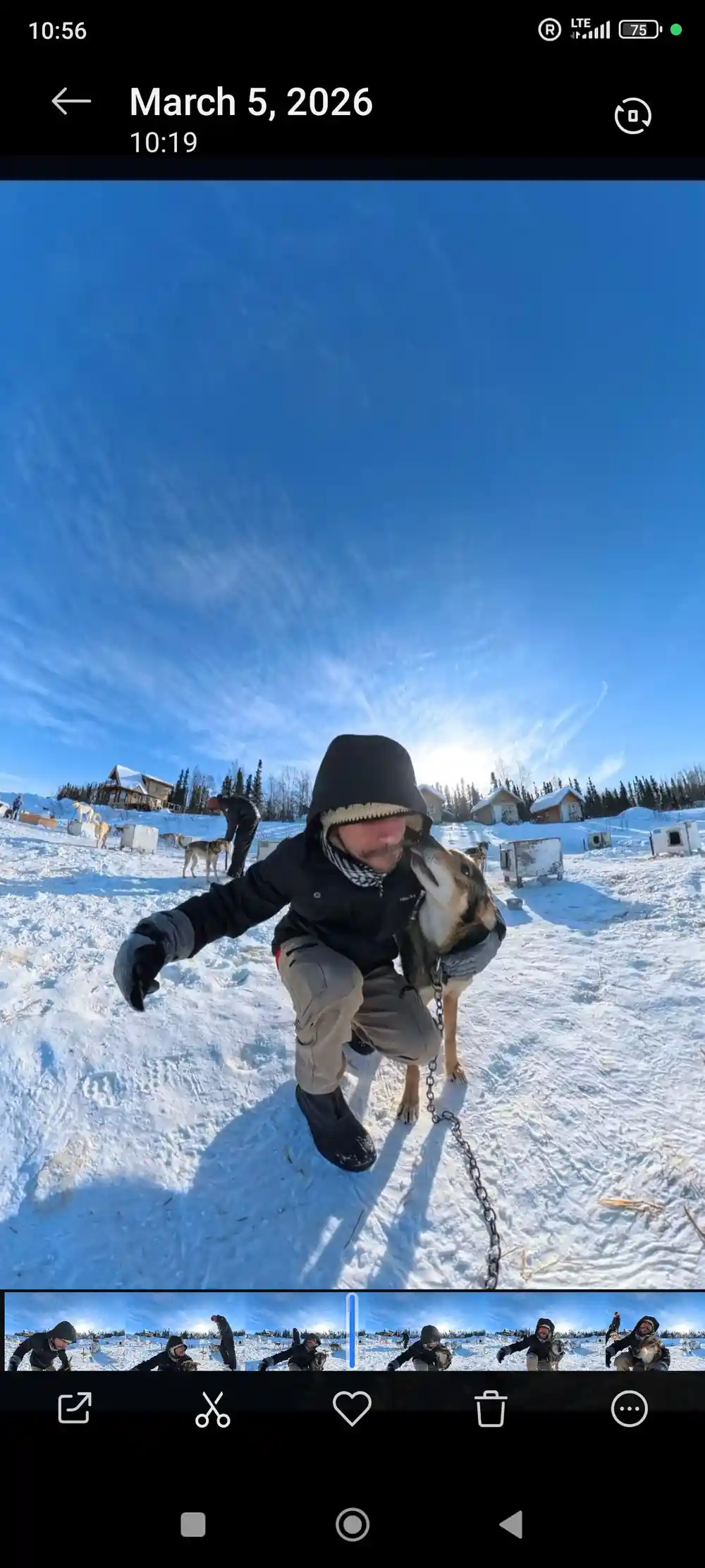
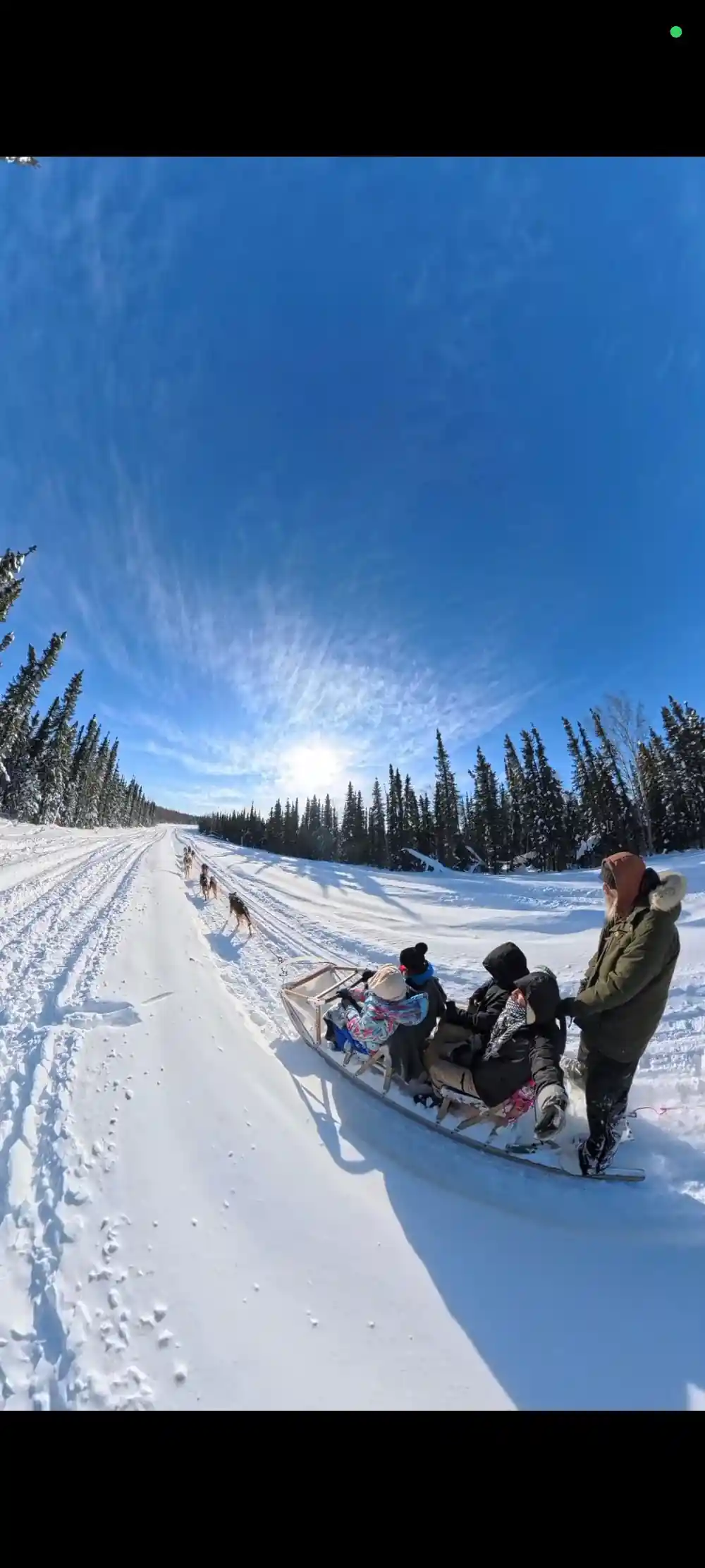
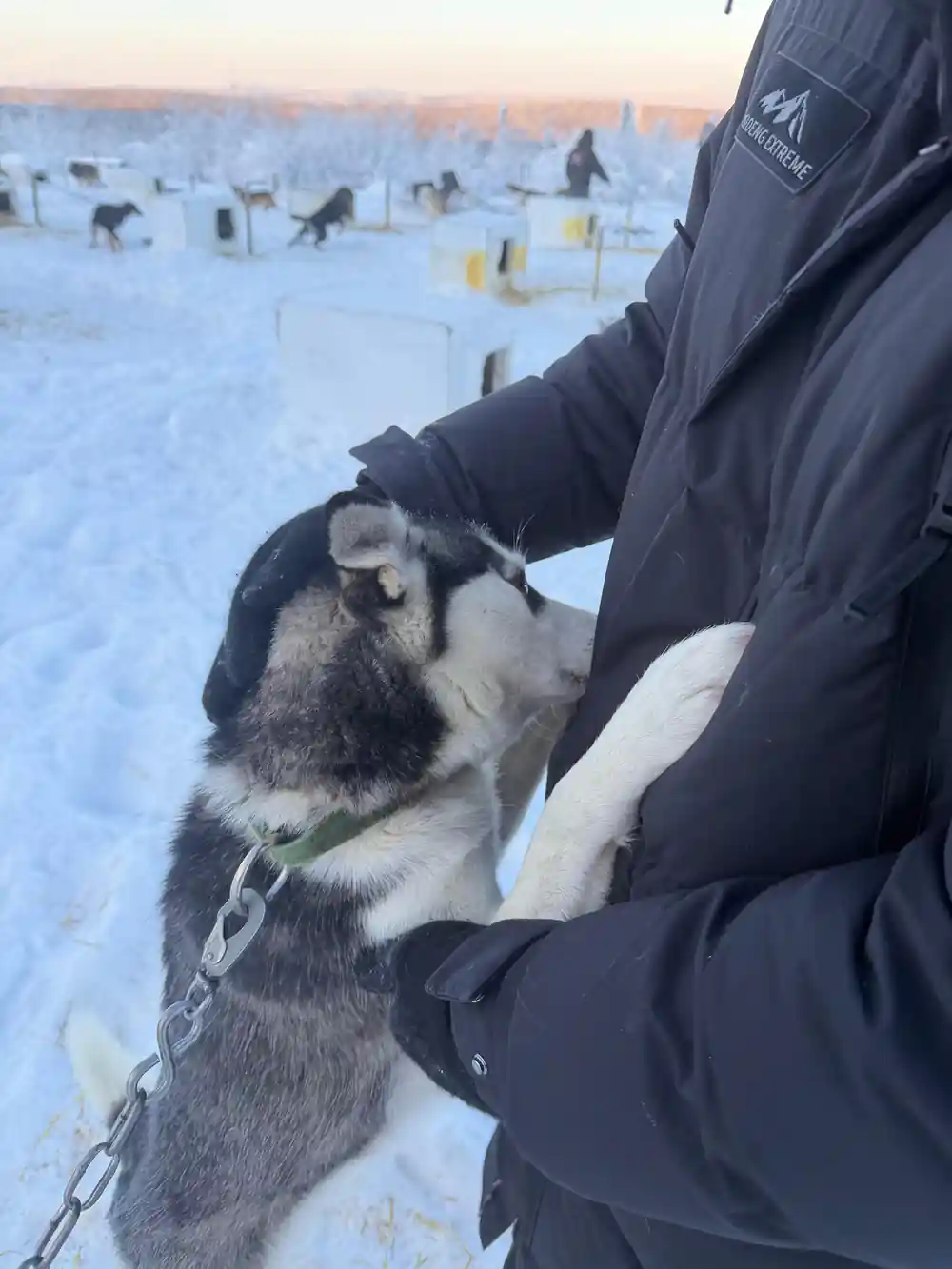
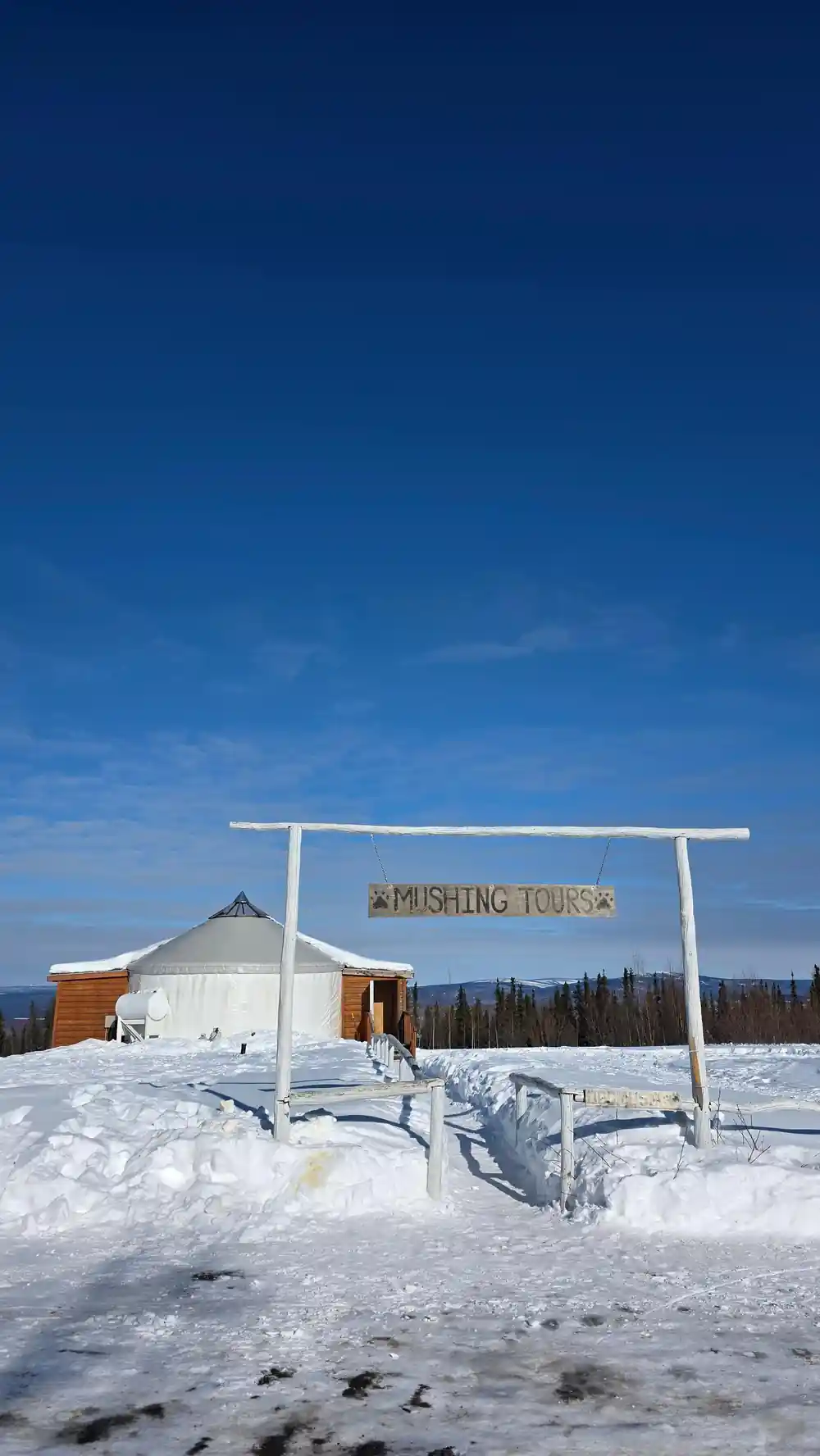
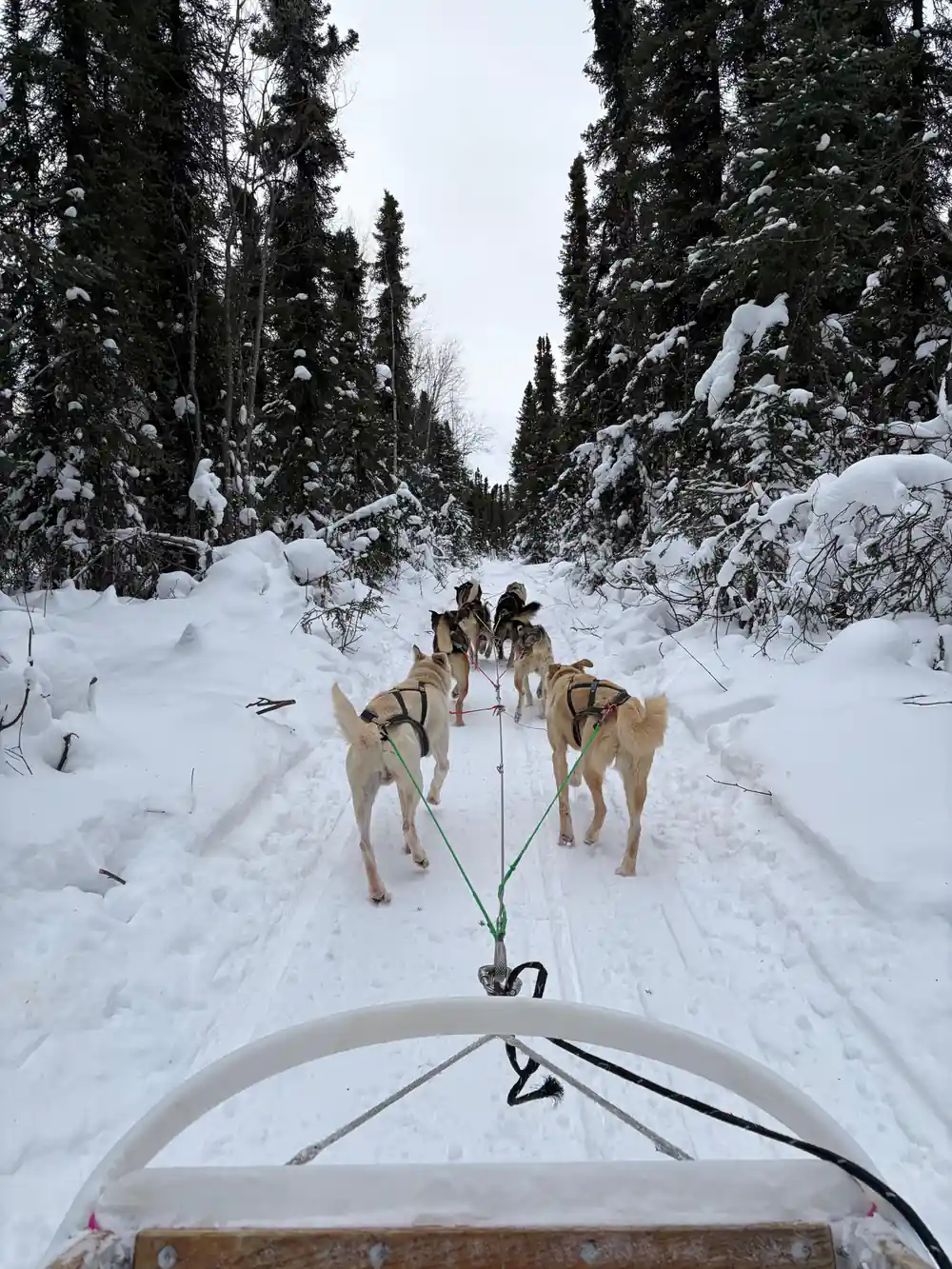
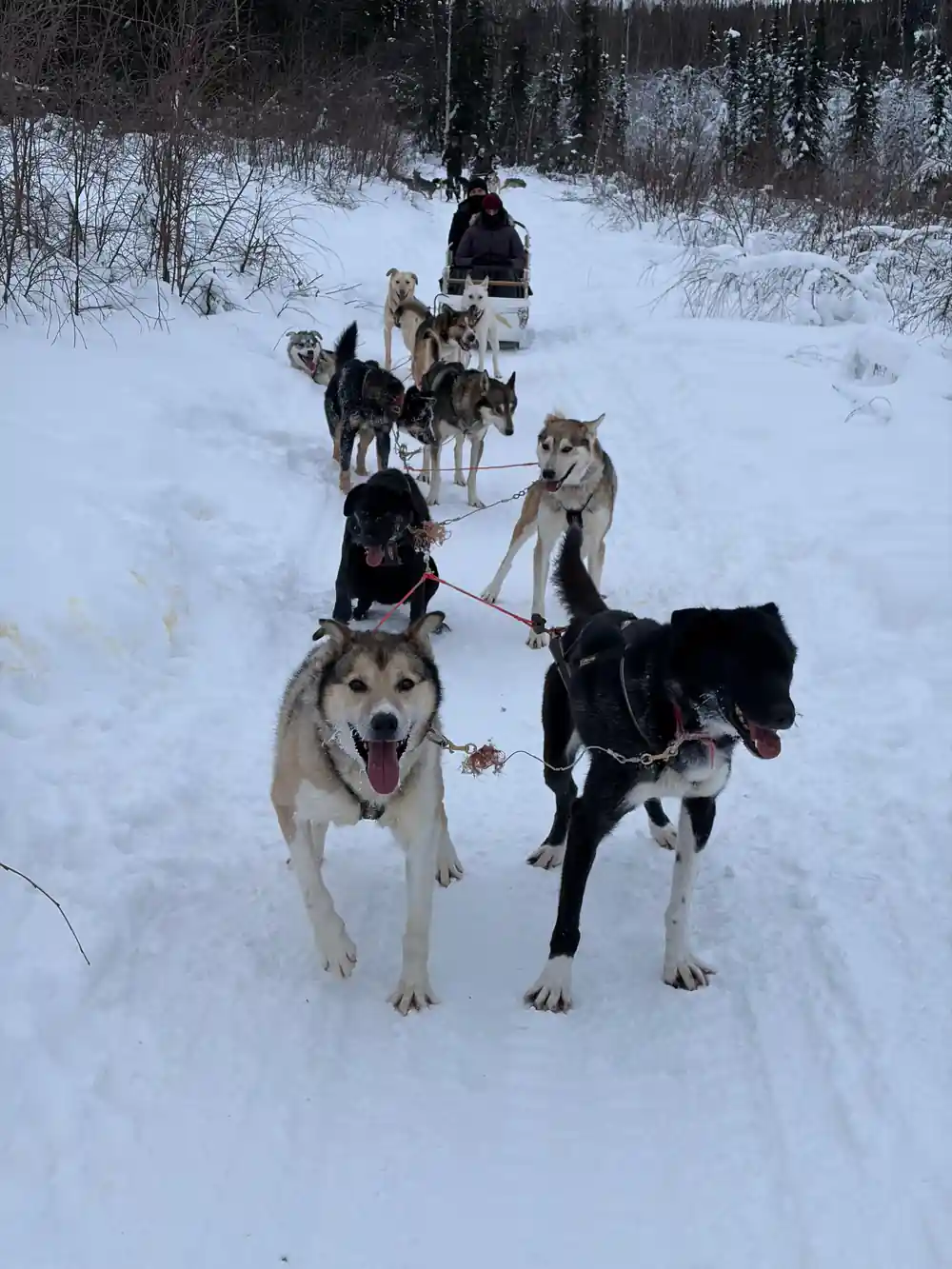
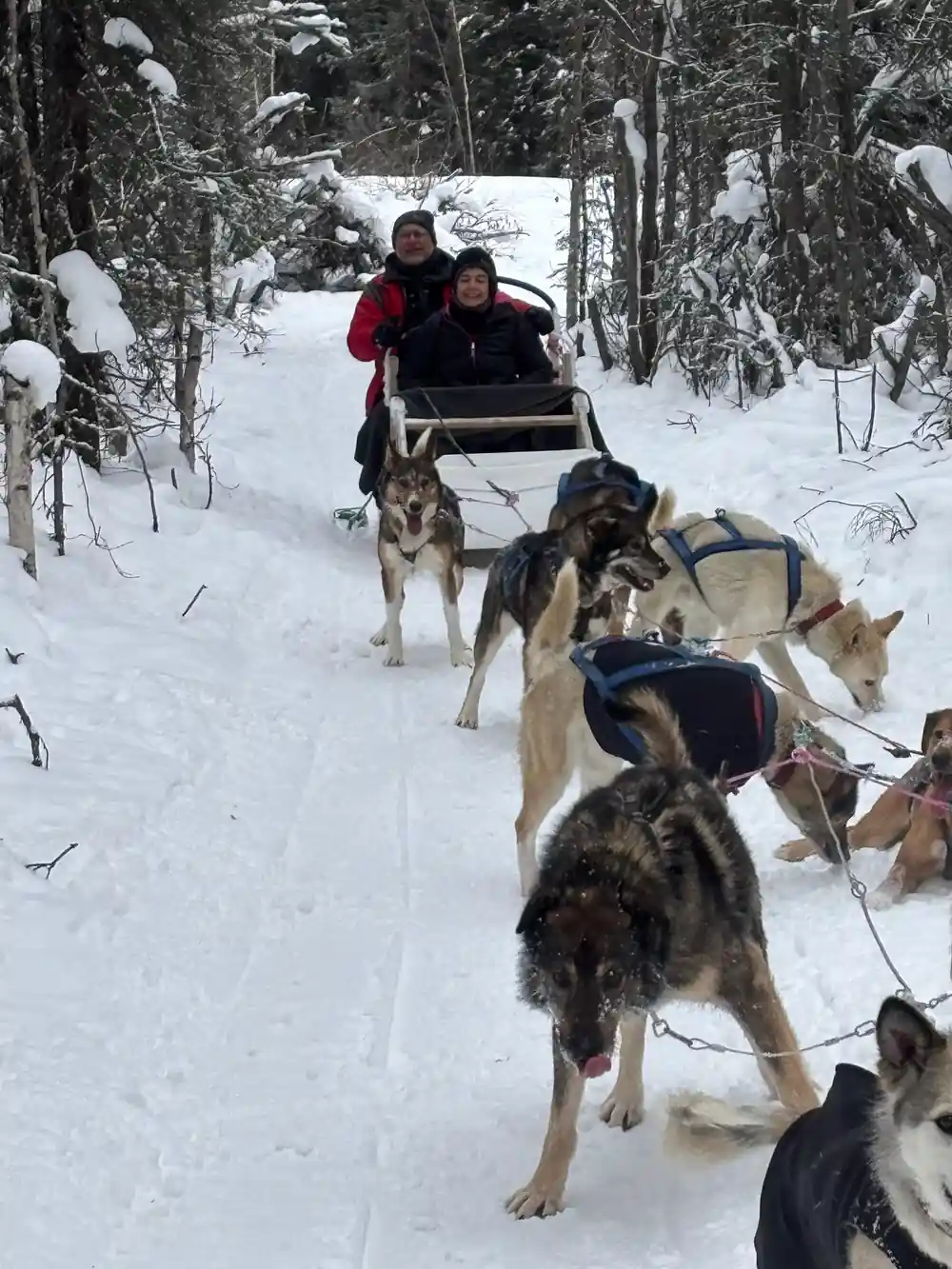
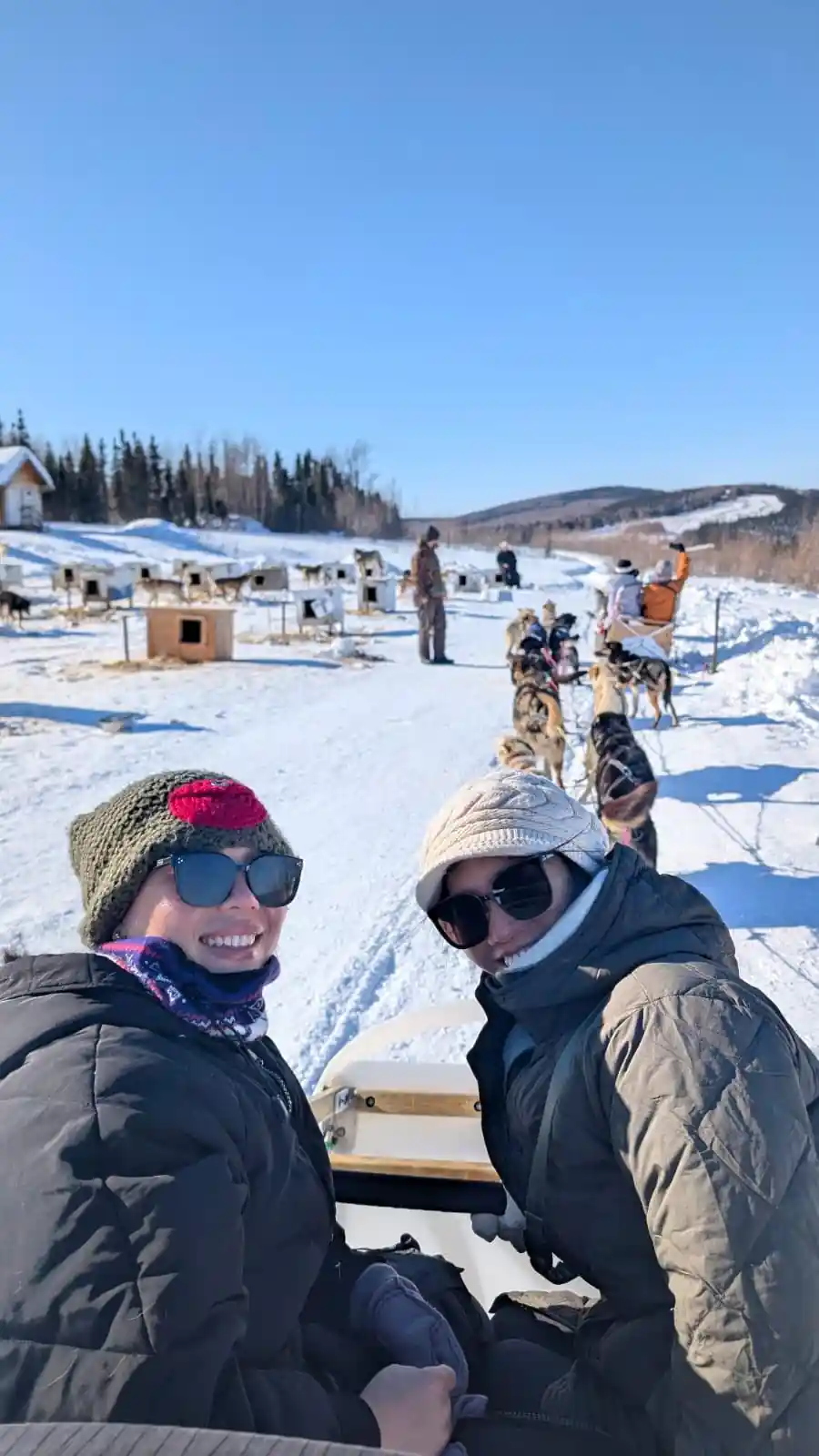
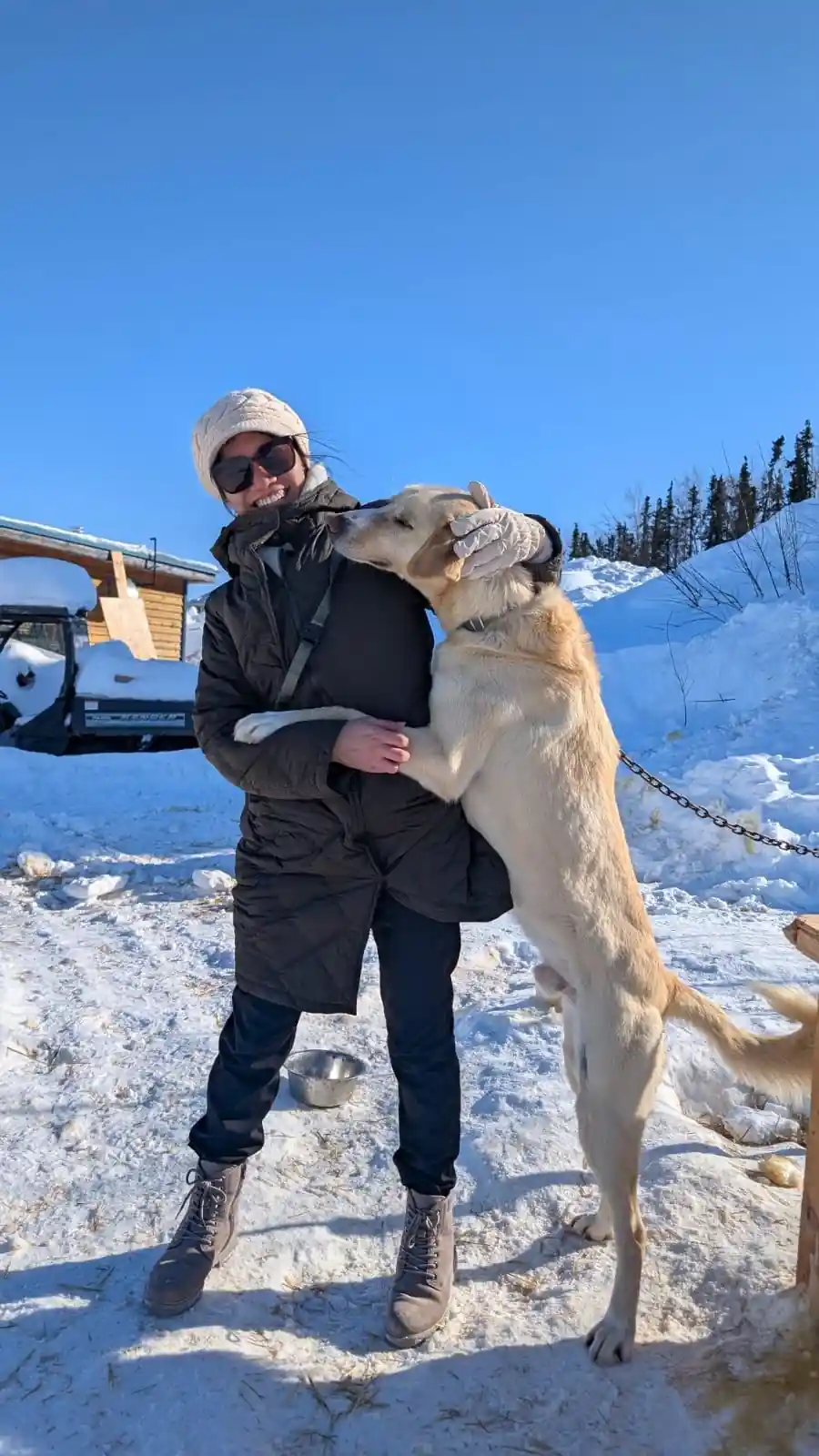
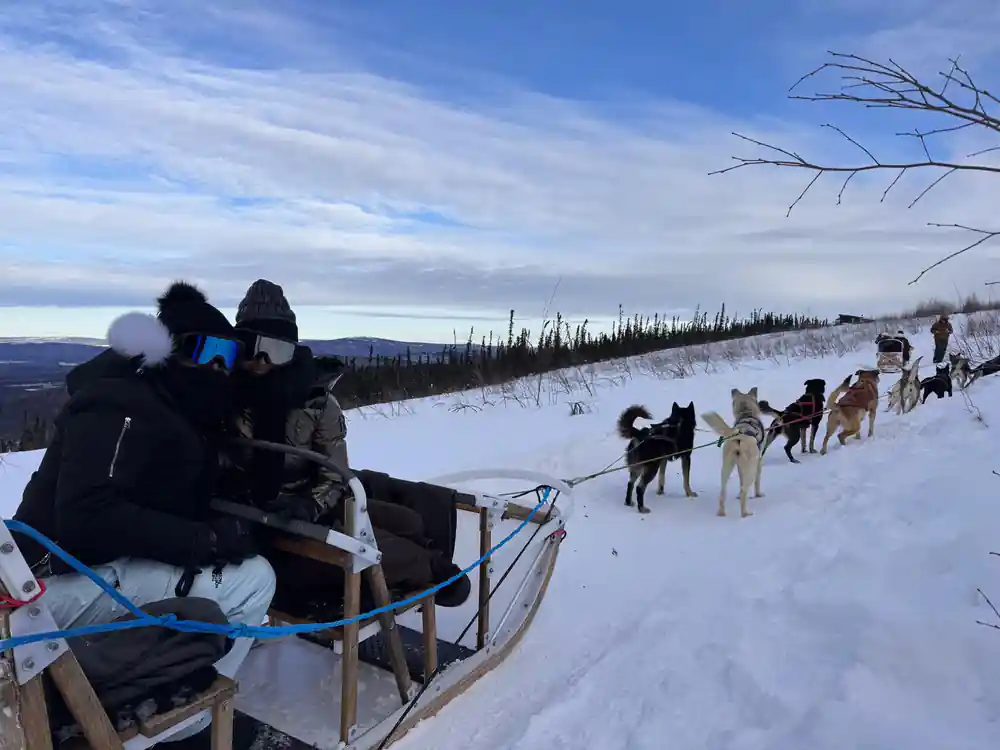
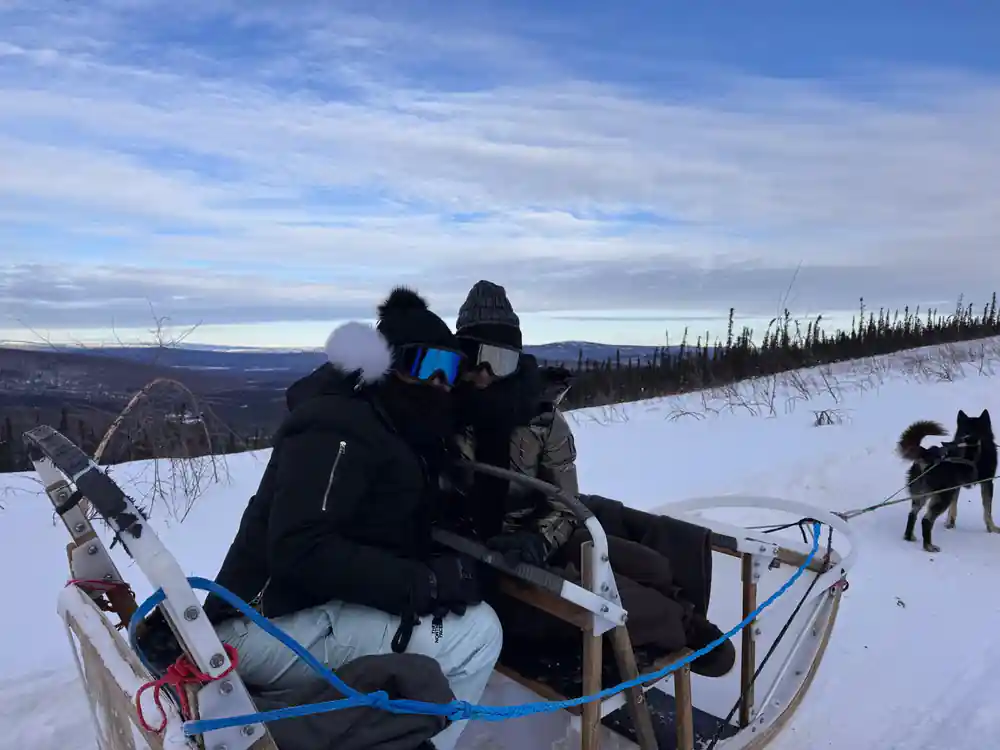
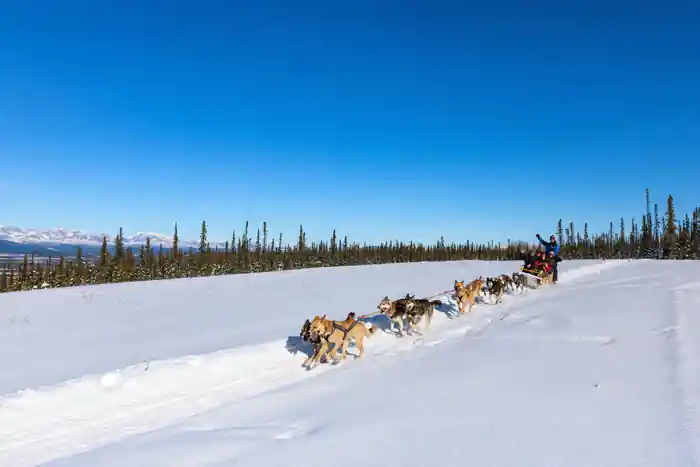
At the kennel you meet the team, get a briefing, and go out on the trail behind a working line of Alaskan huskies. The ride is the middle of the hour rather than all of it, and it is followed by a heated yurt with cocoa, coffee or tea, which after even a short time in that air is a functional necessity rather than a nicety.
It is a taste rather than an expedition, and the operator is straightforward about that. What it buys you is a genuine sled run in genuine Interior Alaska winter with no logistics of your own.
The dogs, and why they are not the huskies you picture
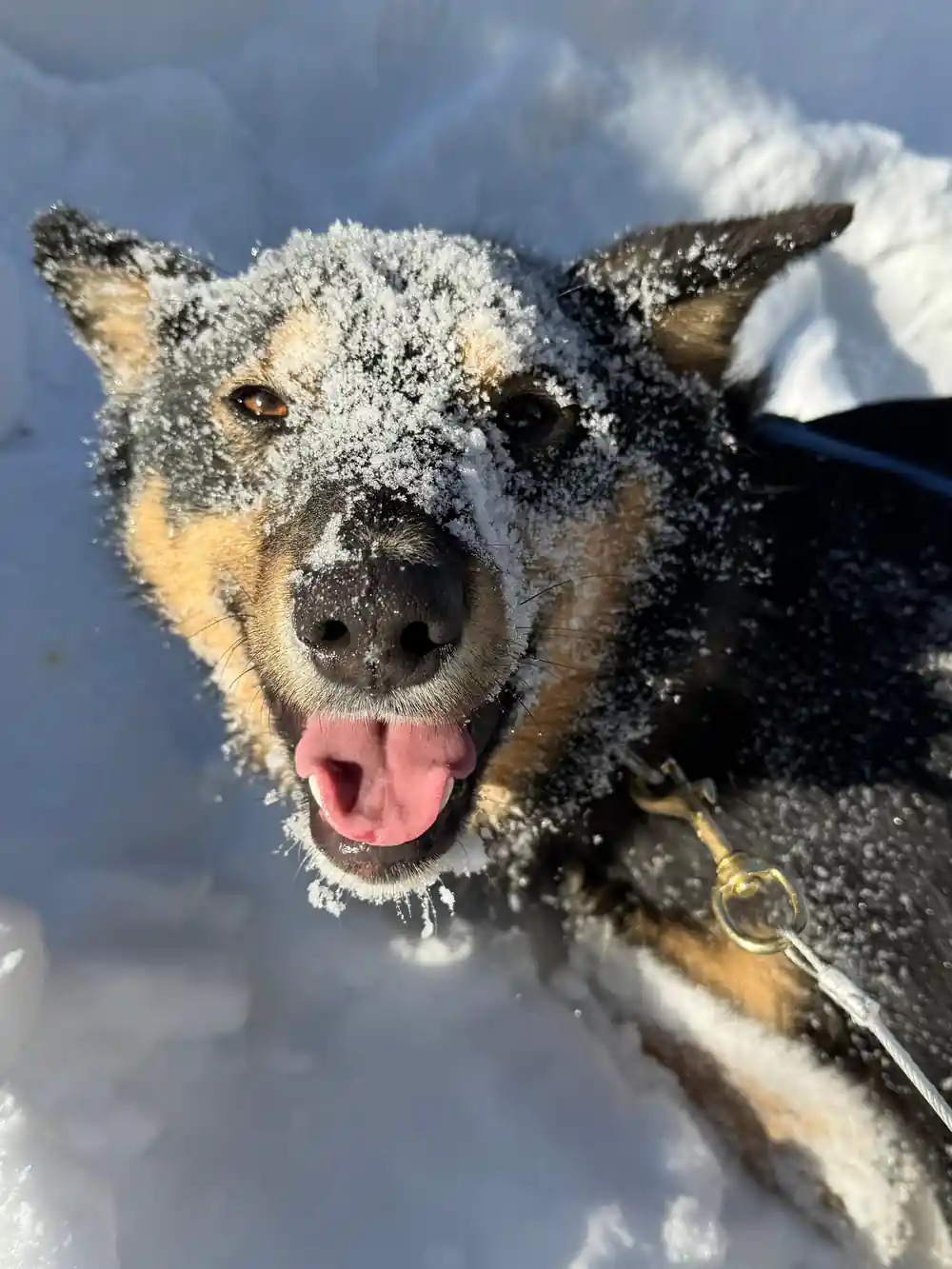
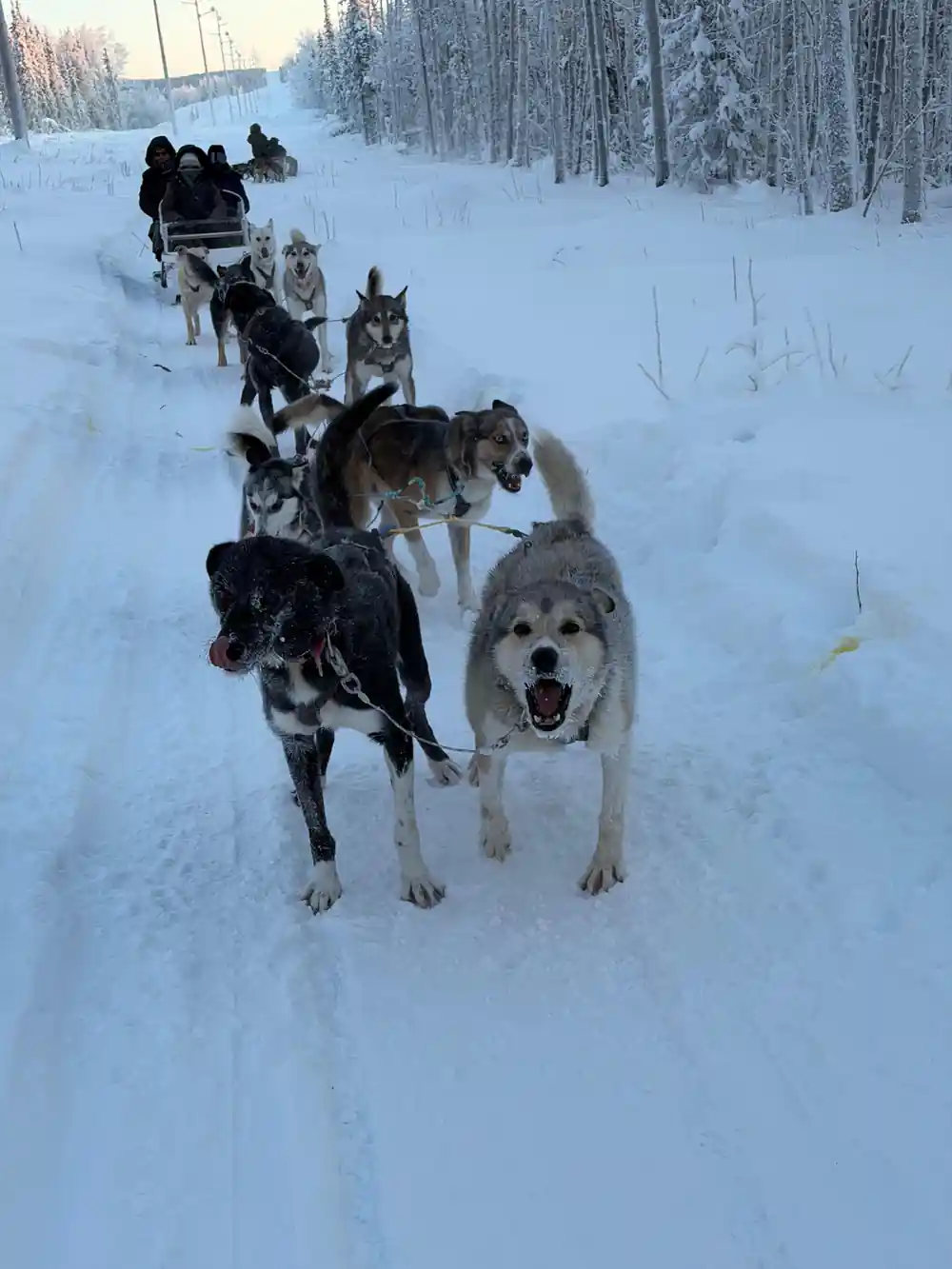
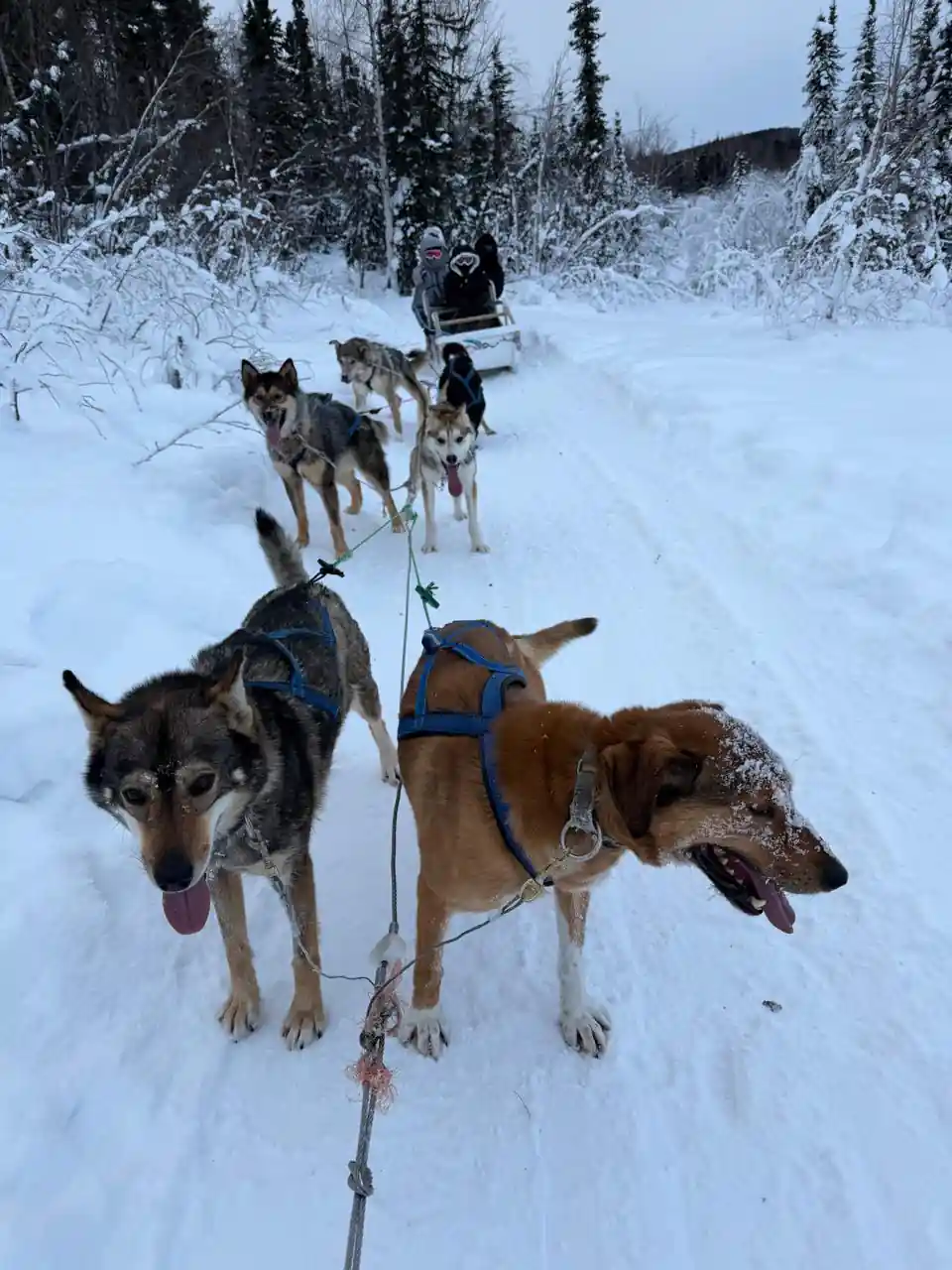
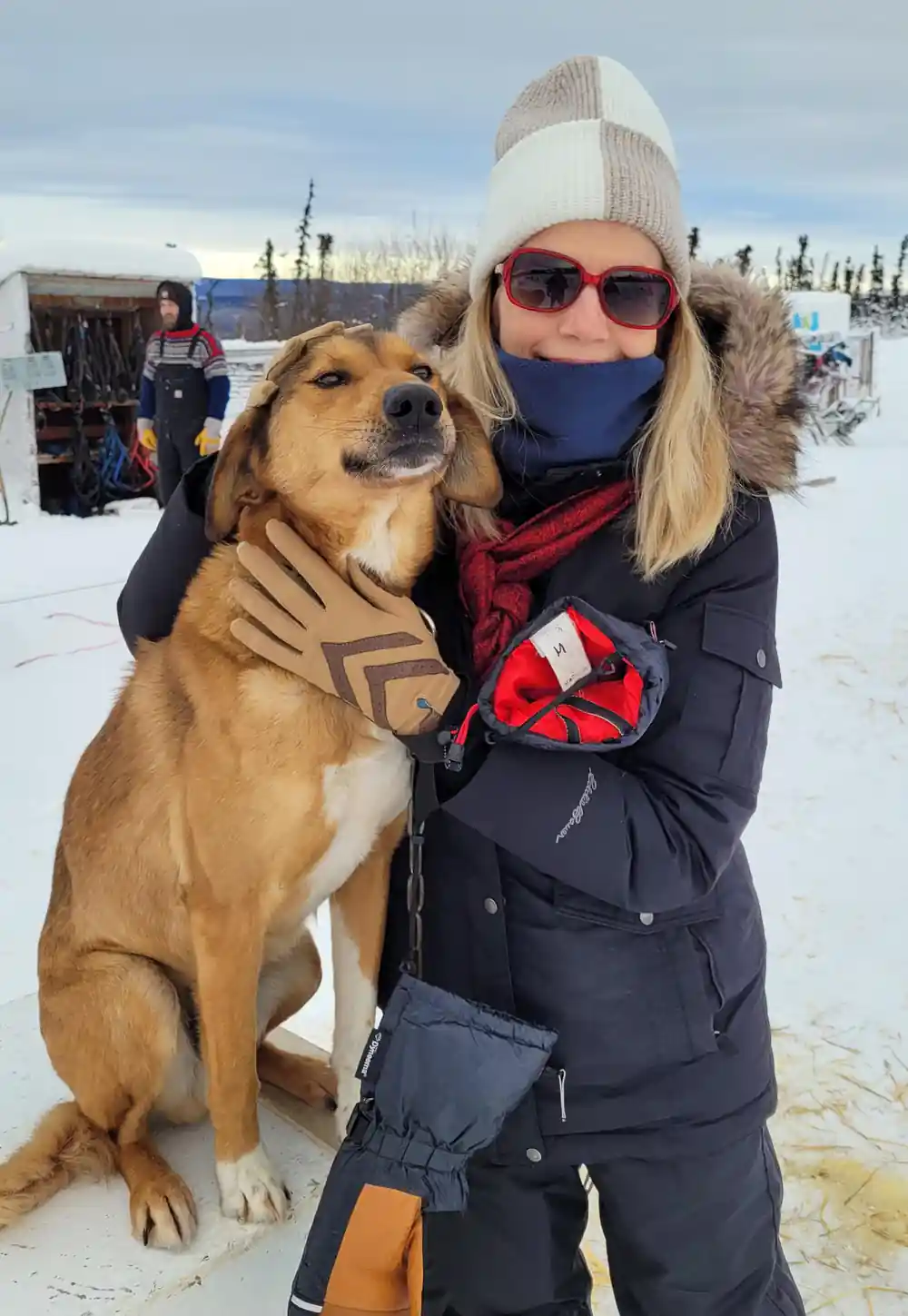
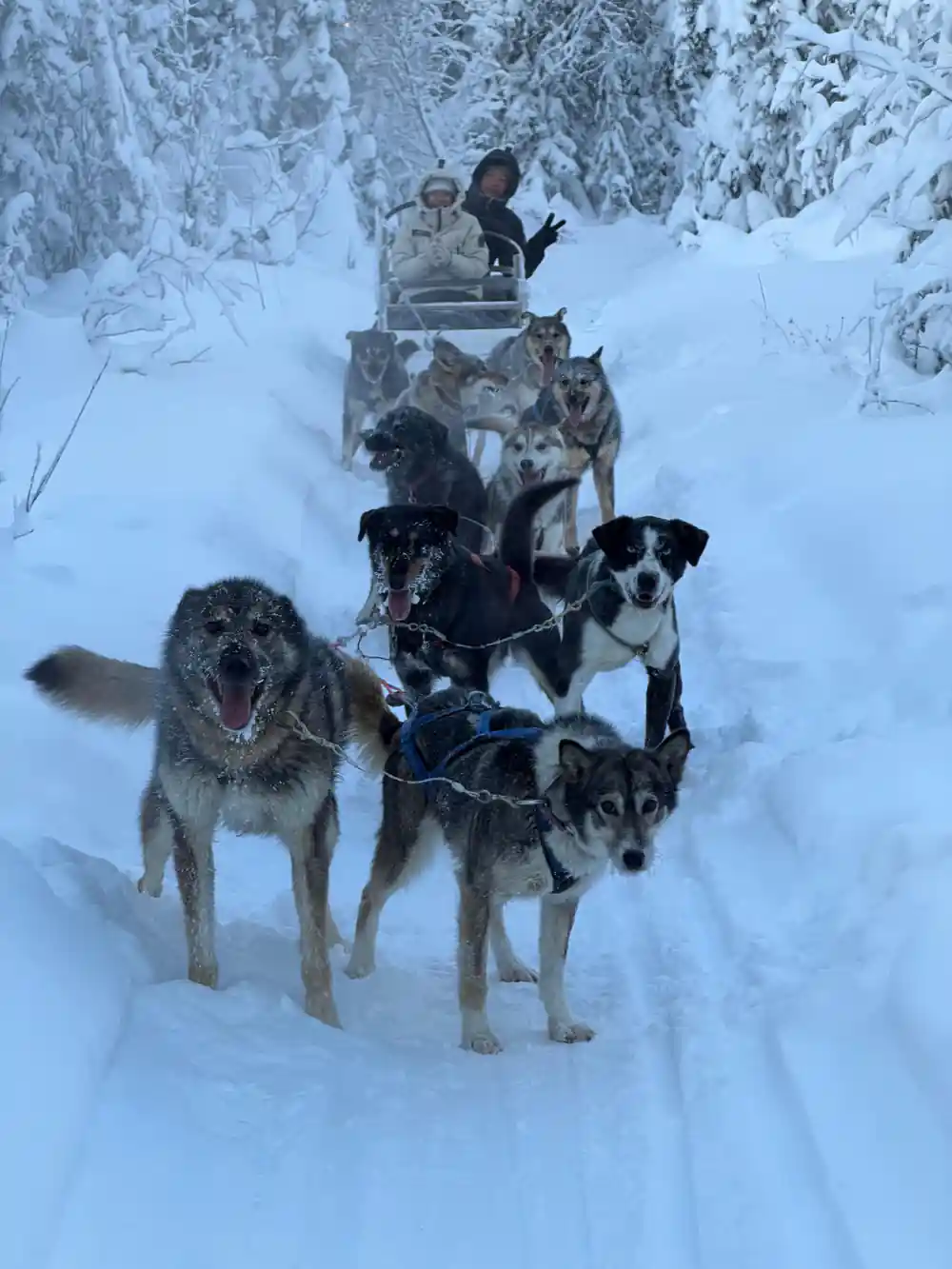
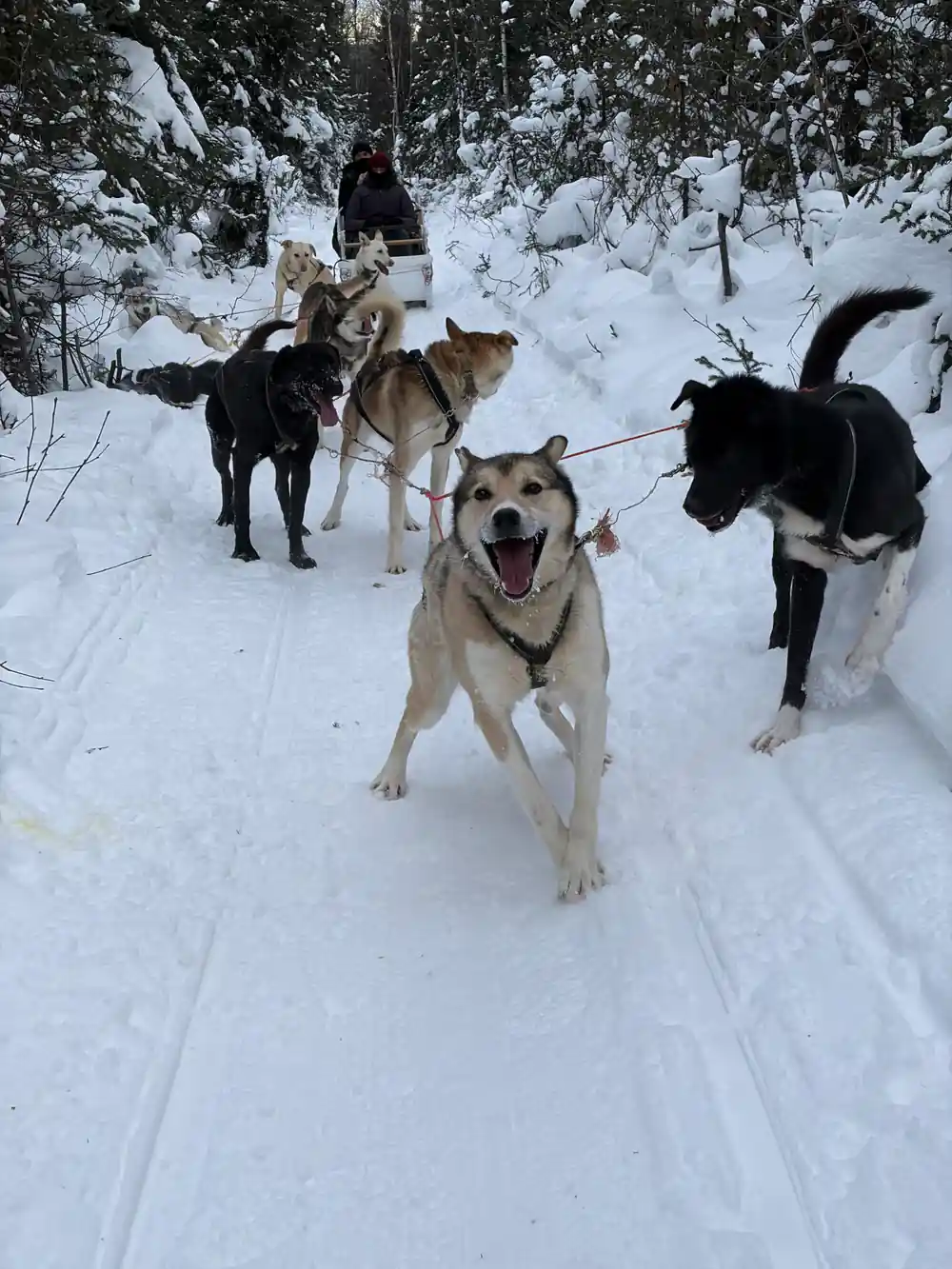
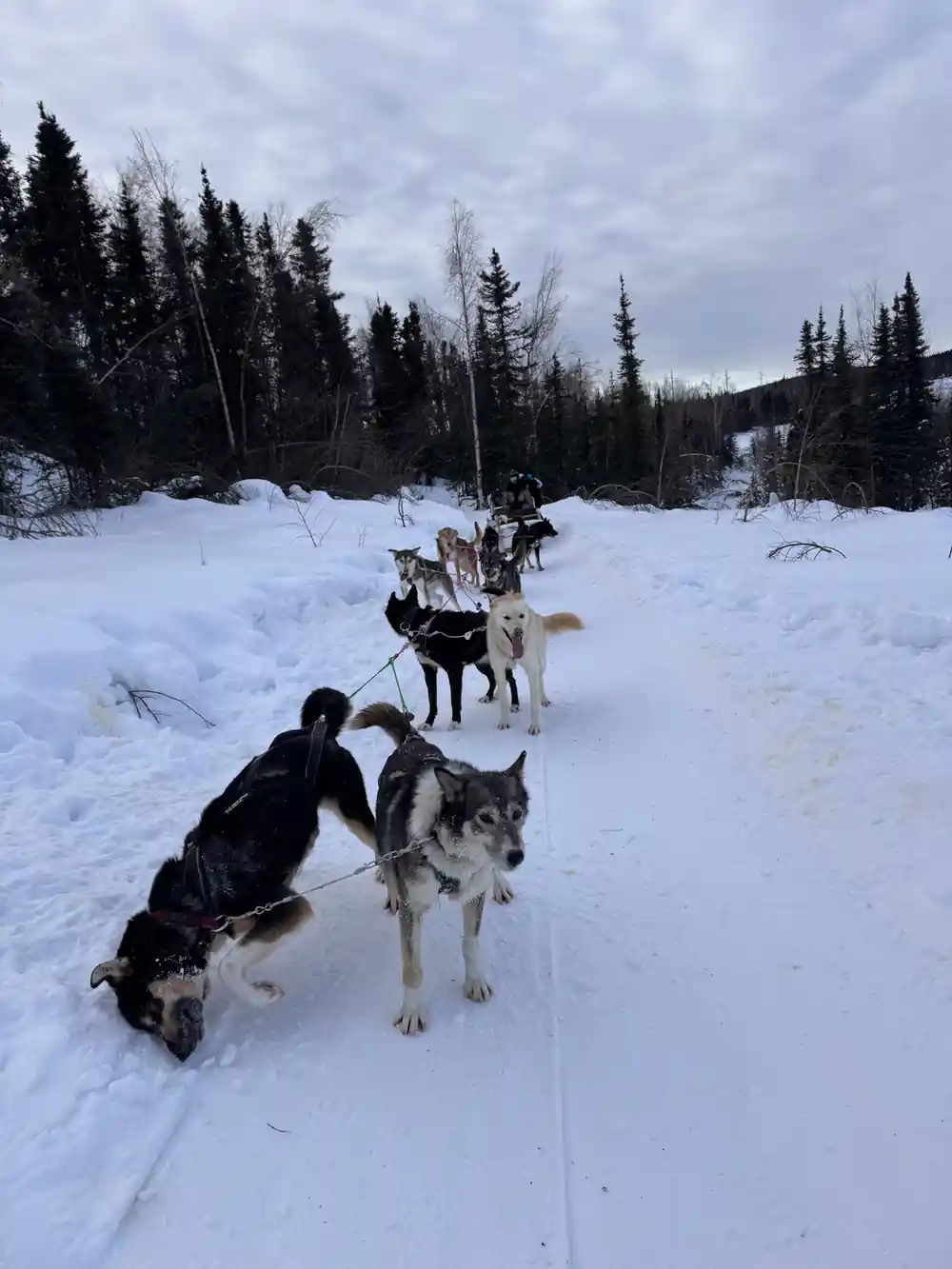
The animals in front of the sled are Alaskan huskies, and that phrase does not mean what most people assume. There is no such breed in the formal sense. There is no standard, no registry and no show class, because the Alaskan husky was never bred to look like anything.
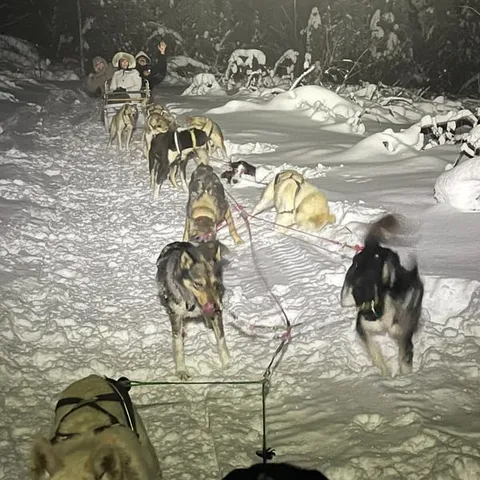
It was bred to pull. Across generations, mushers crossed whatever improved a team over distance, and the resulting population varies enormously in appearance and hardly at all in purpose. The uniform grey-and-white, blue-eyed dog people expect is a Siberian husky, a separate registered breed, and it is generally the slower of the two.
This matters on the trail because a line of Alaskan huskies looks like a collection of mismatched dogs and performs like a machine. The one that looks least like a postcard is frequently the best runner in the team.
Twilight, and what the light does here
Fairbanks sits at 64.9 degrees north, which is a hundred and eighty kilometres short of the Arctic Circle. That distinction matters: there is no true polar night here and no true midnight sun. The sun rises every day of the year, and it sets every day of the year.
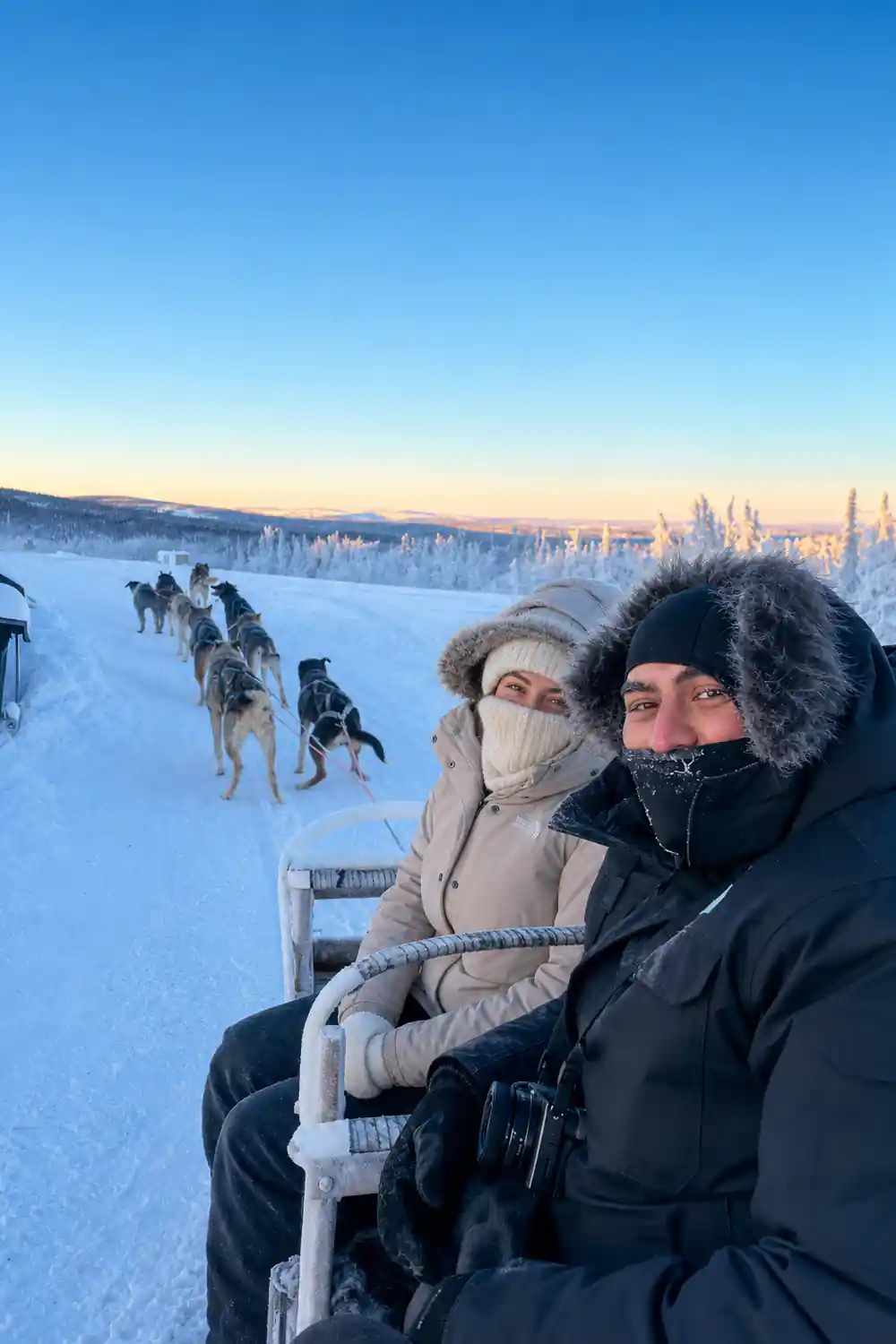
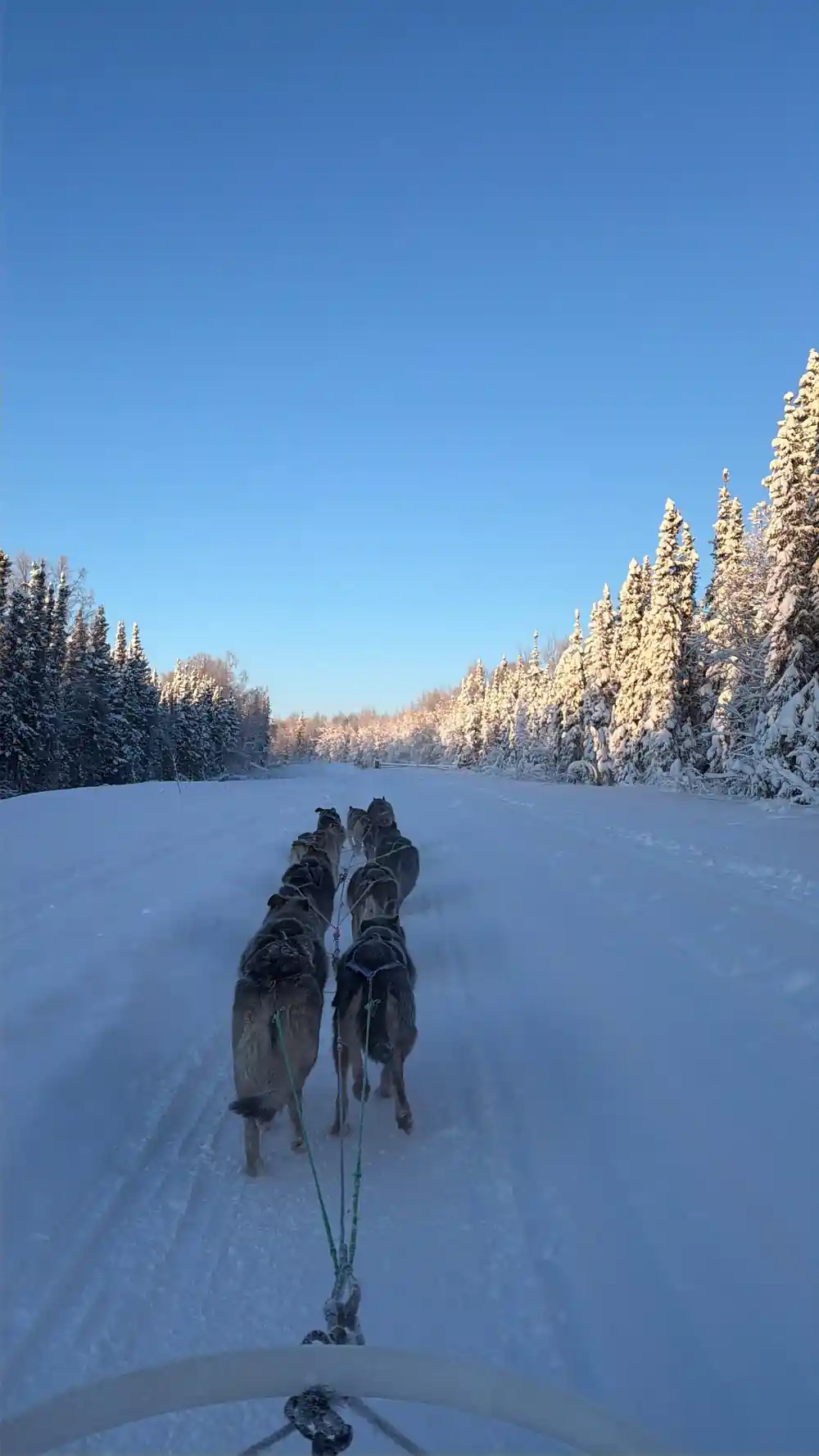
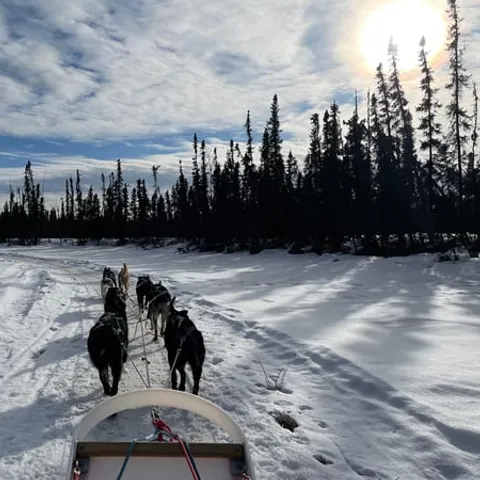
What it does instead is skim. In mid-December there are about three hours between sunrise and sunset, and either side of that is a long, low, blue twilight that lasts far longer than the daylight does. Rides in that season happen largely in it.
It is the best light Interior Alaska has. Snow under a sun sitting just below the horizon goes a deep saturated blue, the spruce stand black against it, and the whole thing looks nothing like a photograph taken at noon anywhere further south.
The cold, and what it actually does
January is the coldest month, averaging minus seventeen and a half by day and minus twenty-six and a half at night at the nearest station. Those are thirty-year means, not extremes; Fairbanks reaches minus forty in most winters and the record is a good deal lower than that.
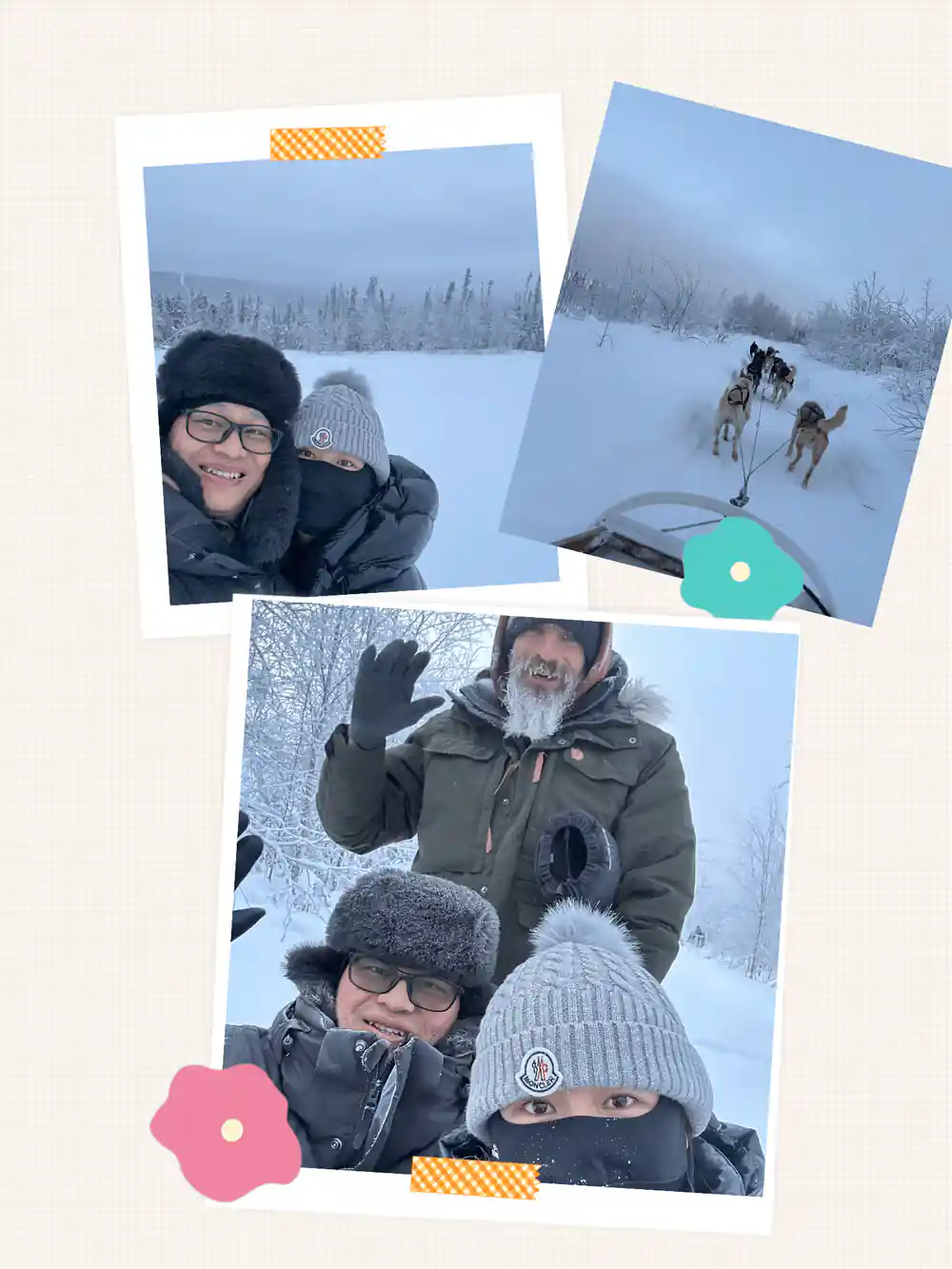
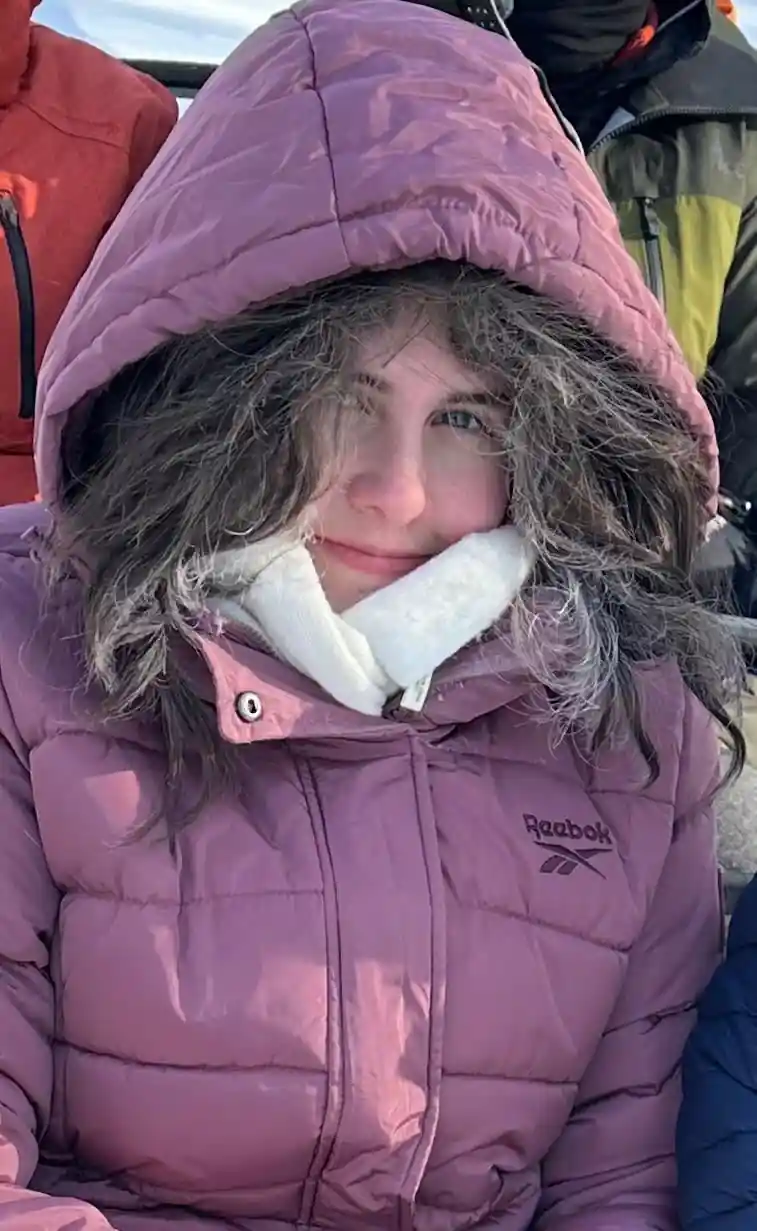
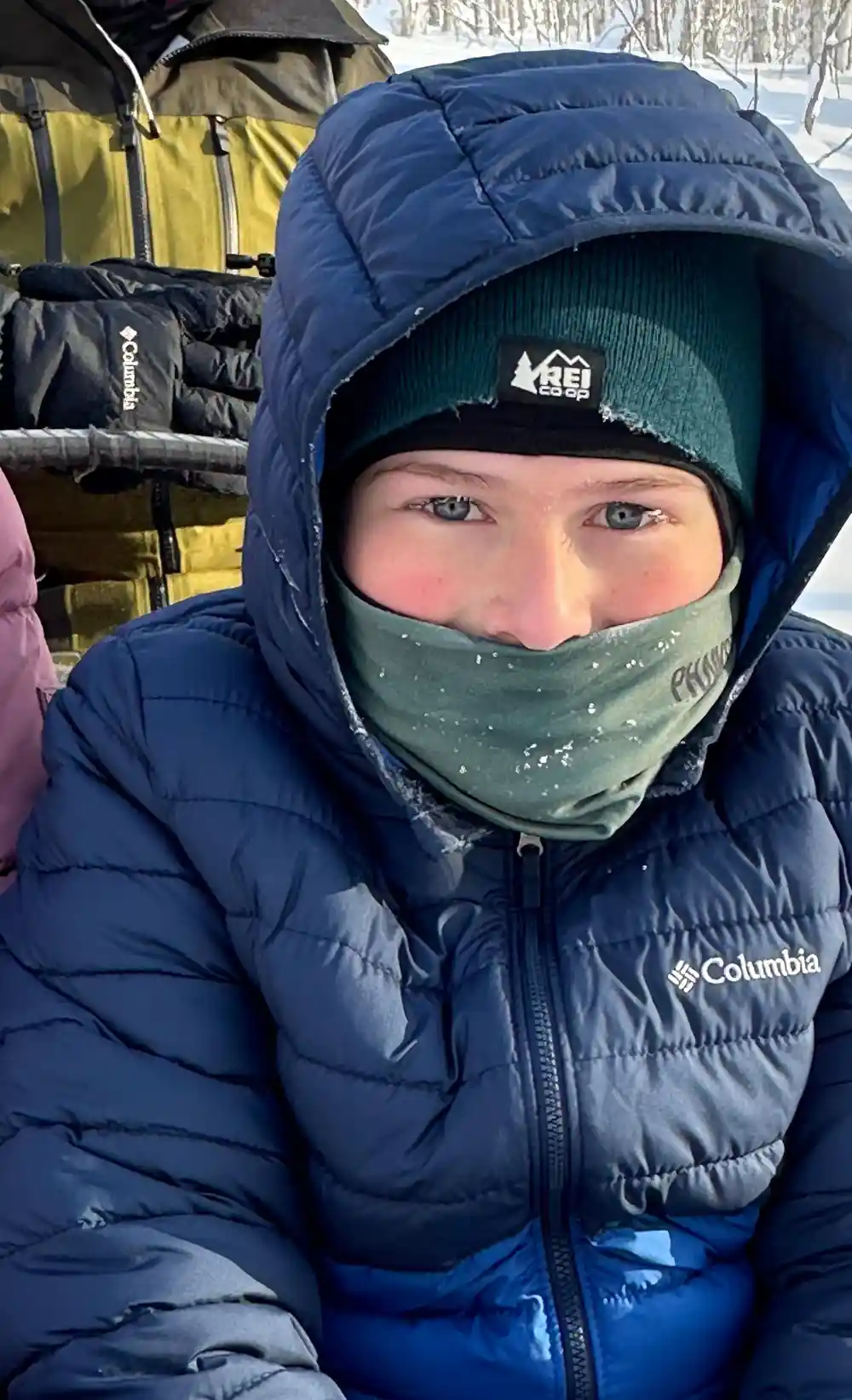
The thing to understand is that this is a different problem from a European winter, not a colder version of one. At minus twenty-five, exposed skin is on a clock. Cotton against the body becomes dangerous rather than merely uncomfortable. Batteries fail, zips stiffen, and anything tight enough to restrict circulation takes your fingers before anything else does.
It is also, and this surprises people, usually still. Interior Alaska sits in a basin with very little wind in winter, and minus thirty with no air moving is more bearable than minus ten in a Norwegian gale. The dogs, meanwhile, are entirely unbothered.
Mushing here is not a tourist invention
Before roads and before aircraft, dog teams were how the Interior moved. Mail, freight, medicine and people travelled by sled across country that had no other way through it, and the practice survived into living memory as work rather than sport.
Alaska made dog mushing its official state sport, which is not a marketing decision but an acknowledgement of what the animal did for the place. The 1925 serum run to Nome, in which relay teams carried diphtheria antitoxin six hundred and seventy miles in five and a half days, is the episode everyone half-knows, usually through the dog Balto.
Fairbanks sits inside that history rather than beside it. It is a start and finish city for the Yukon Quest, a thousand-mile race widely held to be harder than the Iditarod, and the guides at a kennel here are frequently people who have run it.
Getting here, and when to come
Fairbanks has its own international airport, code FAI, and most visitors reach it through Seattle or Anchorage. Driving is possible from the lower forty-eight and takes several days up the Alaska Highway, which is an expedition in its own right rather than a transfer.
The sled season runs roughly from November to March, with the most dependable snow between December and March. September and April are marginal at both ends and depend on the year.
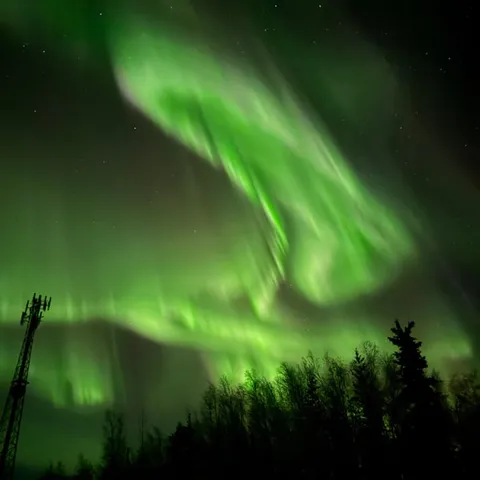
You do not need a car for this tour, which is the point of the hotel pickup. You may want one for the rest of a Fairbanks trip, particularly if the aurora is on your list, because the good viewing is outside town.
Who this suits, and who it does not
It suits anyone who wants a real sled run without organising anything, and anyone whose Fairbanks trip is built around the northern lights and needs something to do in the few hours of daylight. It suits families. It suits people without a car.
It suits it less well if you want to drive your own team for a long distance. One hour is a taste, and there are multi-day mushing schools in Alaska for people who want the other thing.
And it is a winter activity in a place with a serious winter. That is the appeal and it is also the warning: come dressed for Interior Alaska rather than for a European ski resort.