The essentials
- A vehicle collects you in town and returns you afterwards, so no car, no directions and no parking in the dark.
- Pickup, drive out, briefing, the run, then the yurt. The sled portion is a part of the hour rather than all of it.
- This is a ride rather than a self-drive course. Check the listing if driving your own team matters to you.
- A heated yurt with cocoa, coffee or tea, which at these temperatures is a functional part of the tour.
Being collected
The hour begins at your hotel. Somebody arrives, you get in, and the logistics of finding a kennel down an unlit road in an Alaskan January are not your problem. That is a larger share of the value than the listing makes it sound.
Hotel pickup and drop-off in town are included. Airbnb and private residences are excluded, which is worth checking if you have booked an apartment rather than a hotel.
Be ready early and be dressed before you come down. There is a group to collect and a schedule to keep, and the lobby is not the place to discover you have packed the wrong gloves.
The drive out
Fairbanks ends quickly. Within a few minutes the buildings stop and what replaces them is black spruce: thin, dark, slightly crooked trees standing in permafrost, which is the characteristic forest of the Alaskan Interior and looks like nothing in Europe.
In December this drive happens in twilight or dark. In March it happens in daylight and you can see the country properly. Either way the transition from town to wilderness is abrupt in a way visitors comment on.
The same vehicle takes you back afterwards.
It is worth looking at the trees rather than through them. Black spruce grows slowly in permafrost and a trunk no thicker than a wrist can be a century old, which is why the forest looks sparse and slightly unkempt rather than grand. It is one of the most distinctive landscapes in North America and almost nobody photographs it.
Arriving at the kennel
The first thing is the noise. A yard of working sled dogs that has just watched a vehicle arrive is extremely loud, and it is not distress: they have worked out that a run is about to happen and they want to be picked. It stops the instant the teams move.
The second thing is the smell of straw and the sight of dogs on chains beside individual houses, which some visitors find surprising. It is the standard arrangement for working kennels and it lets each dog have its own space, food and bedding without competition.
You will have time to walk the yard and meet the dogs, which is worth doing properly rather than heading straight for the sled.
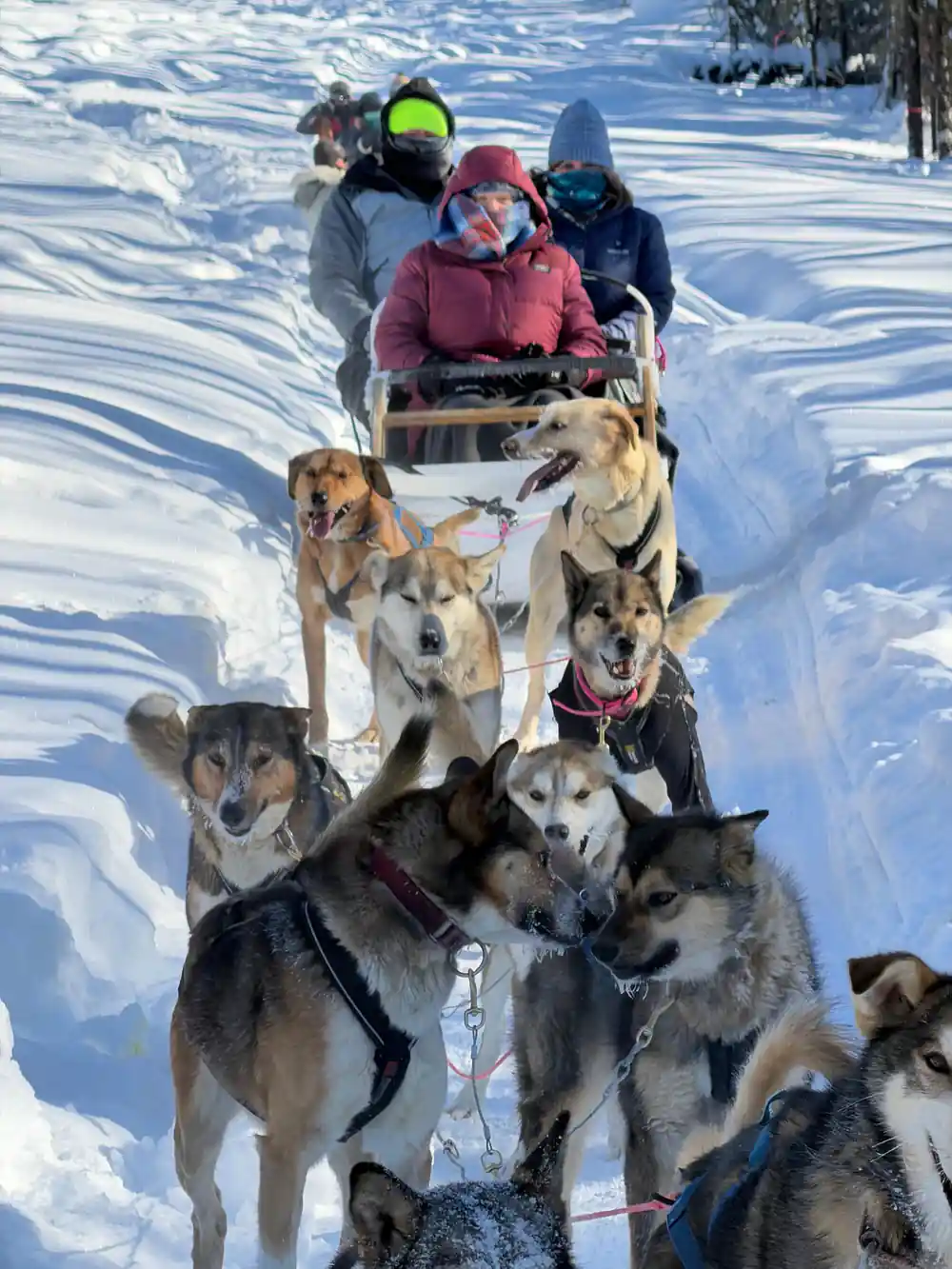
The team in harness in the kennel yard, a moment before the hook comes out
The briefing and the harnessing
Short and practical. Where to sit, what to hold, what not to do, and what will happen when the brake comes off. If children are riding there is usually a word about keeping hands inside.
Harnessing takes longer than people expect and is the best part of the operation to watch. You can see how the dogs are handled, which ones are eager and which are businesslike, and how routine the whole thing is to them.
The moment the last dog is clipped in, the noise peaks. Then the hook comes out of the snow.
The run
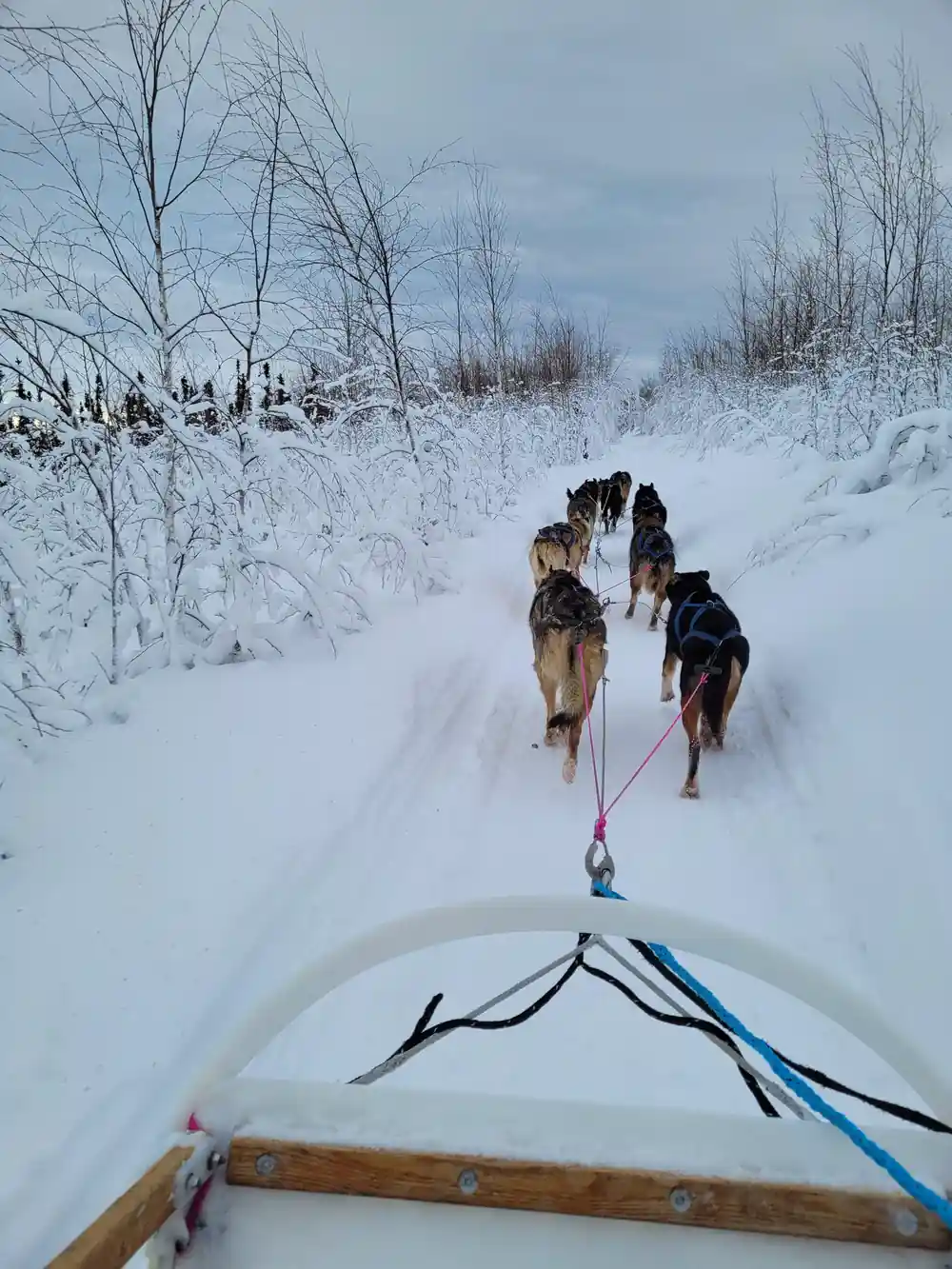
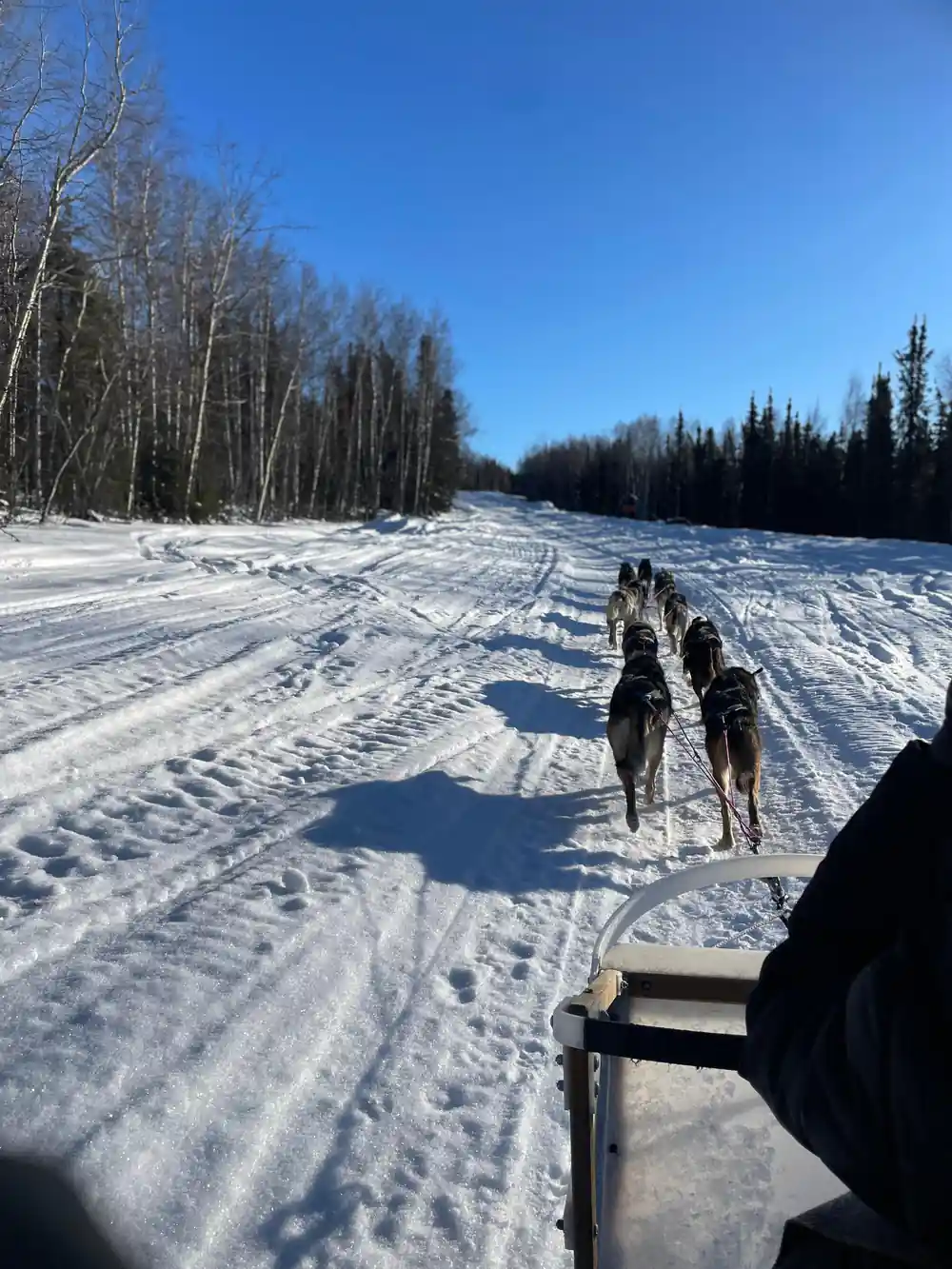
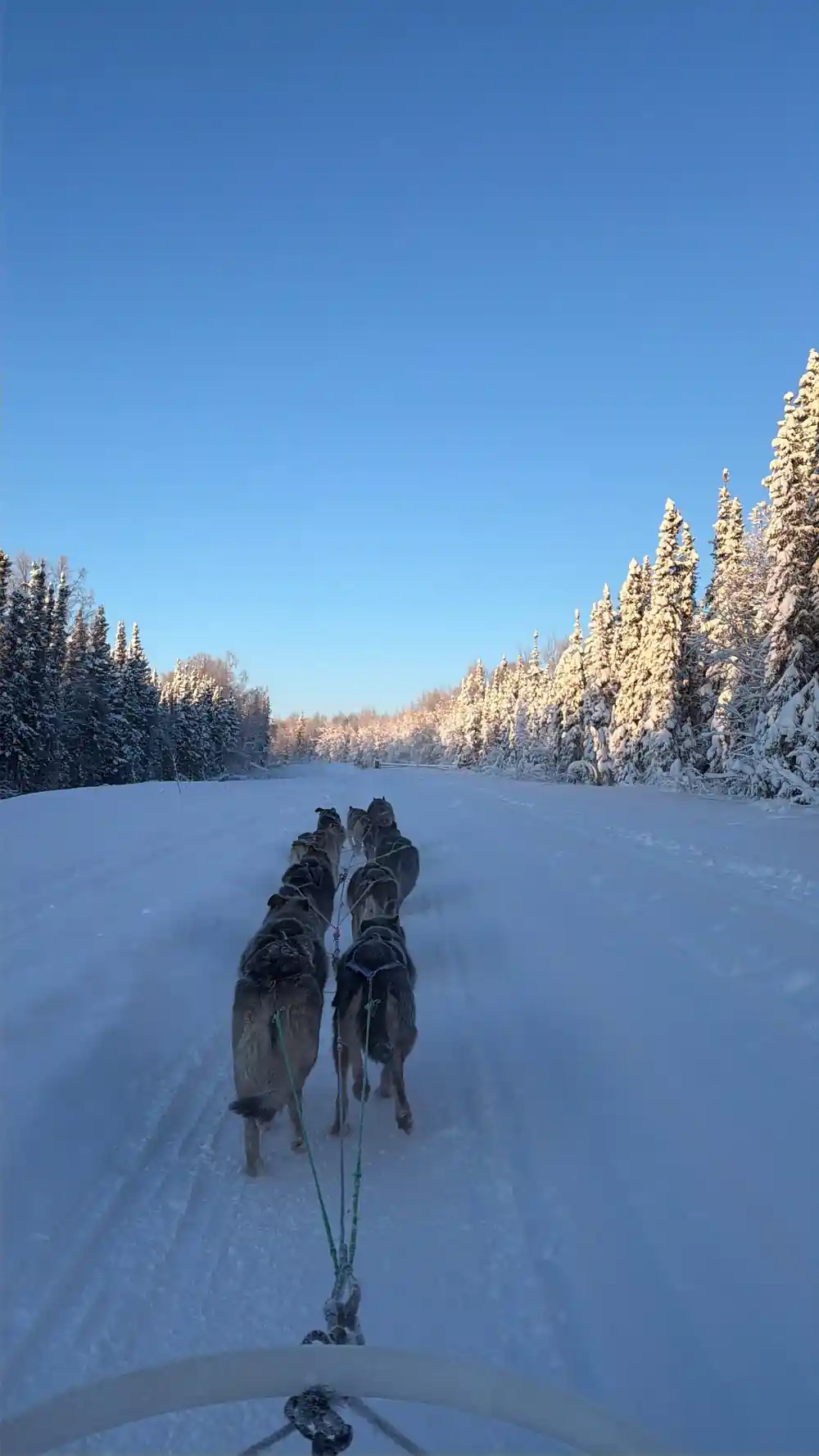
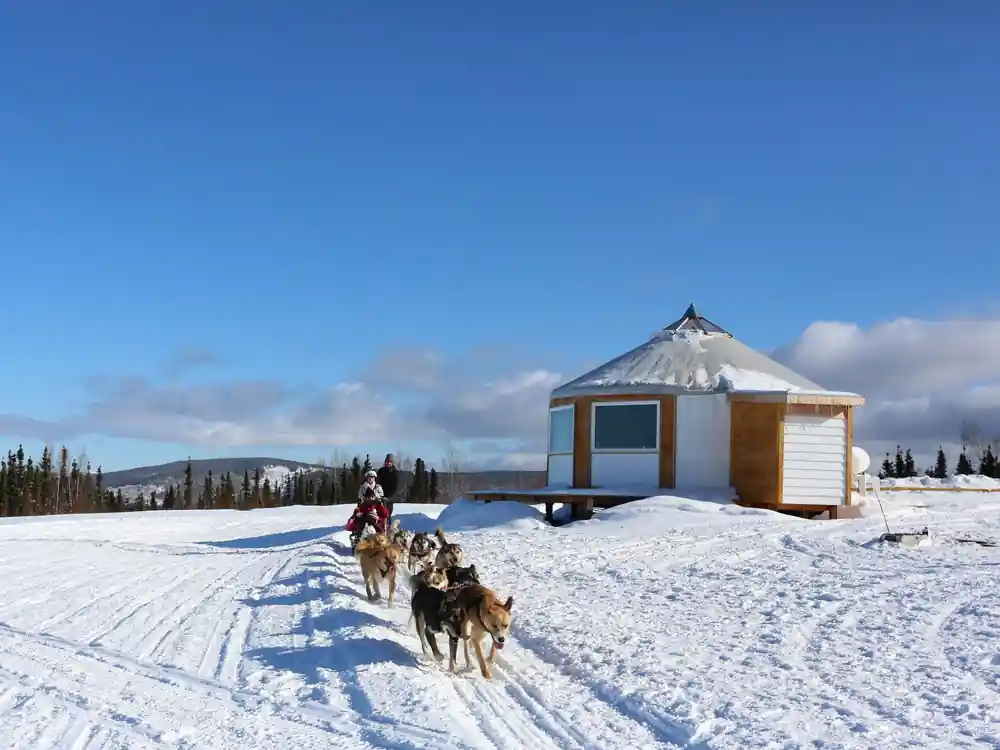
The first few hundred metres are fast, because the dogs start keen. After that the team settles into a working trot and the sound drops away almost completely. What is left is runners on packed snow and the occasional word from the musher.
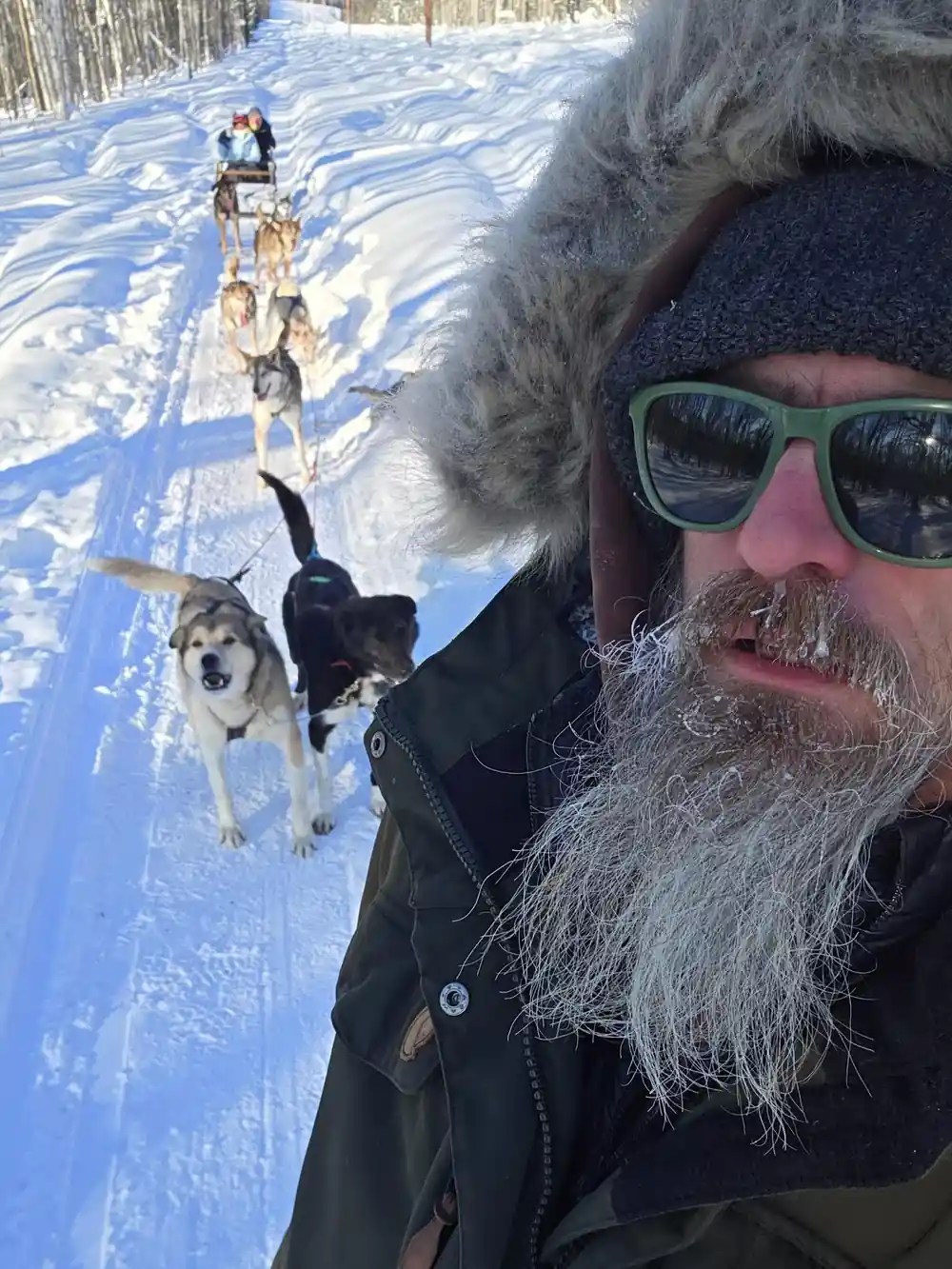
Sitting rather than driving changes the experience: you are low, wrapped up, and looking straight down the gangline at the dogs working. It is the view every photograph of dog sledding is taken from and it is better in person than in the photographs.
The trail runs through boreal forest on ground that is essentially flat. There is nothing technical about it and nothing frightening.
The other thing that surprises first-timers is the acceleration. A team of a dozen dogs applying themselves at once moves a loaded sled off the mark faster than the arithmetic suggests, and the sensation is closer to being towed than to being pulled. It settles within seconds and it is the moment most people remember.
The yurt
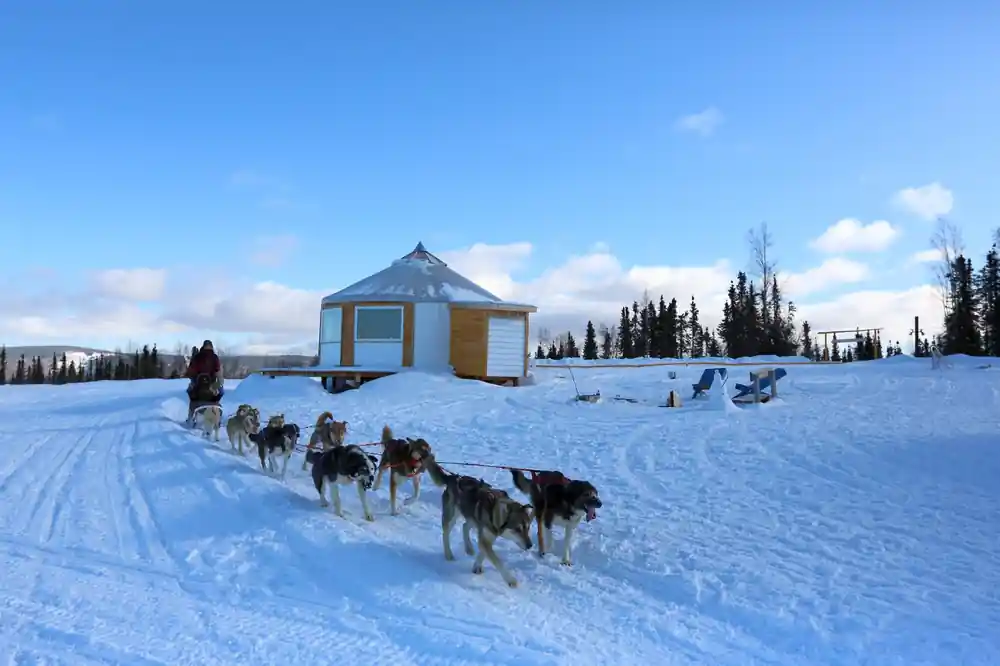
The ride ends at a heated yurt, and after even a short time at these temperatures the value of a warm round room is not something anyone has to be sold on. Cocoa, coffee or tea is included.
It is also where the talking happens. People who have just been on a sled for the first time have a great deal to say, and the guides are usually happy to answer questions about individual dogs, about racing, and about what a kennel year looks like.
Give it the time it is worth. It is not the part of the hour to rush.
Back to the hotel
The same vehicle returns you to where it collected you, roughly an hour after it started. There are twenty-two drop-off locations on the operator listing, which is a way of saying most hotels in town.
Because the whole thing sits inside an hour and starts and ends at your accommodation, it fits into a Fairbanks day without taking it over. That is the design, and for a visitor whose evenings are committed to aurora watching it is exactly the right shape.
Book it early in your stay rather than at the end, so that a change in conditions has somewhere to move to.
One small practical point: keep your camera or phone inside a jacket between shots rather than in an outer pocket. Batteries at minus twenty-five lose capacity quickly, and a device that reads eighty per cent when you leave the yurt can shut down before the ride is over.
One hour, hotel to hotel, with the sled in the middle
from US$175Reserve now & pay later
Quick answers
Does the tour pick you up?
How long is the ride itself?
Do you drive the sled?
Why are the dogs so loud at the start?
Why are the dogs on chains?
What is the yurt?
Can children ride?
When should I book it in my trip?
The hour, in order
Hotel pickup
Collected in town and returned afterwards. Airbnb and private residences are excluded, so check if you are not in a hotel.
The drive out
A few minutes and the town stops. What replaces it is black spruce standing in permafrost.
Meet the team
A loud yard, dogs on straw beside individual houses, and time to walk it before anything else happens.
Briefing and harnessing
Where to sit, what to hold, and what happens when the hook comes out of the snow.
The run
Fast for a few hundred metres, then a working trot and almost complete quiet.
The yurt, then home
A heated round room, a hot drink, and the same vehicle back to your hotel.