The essentials
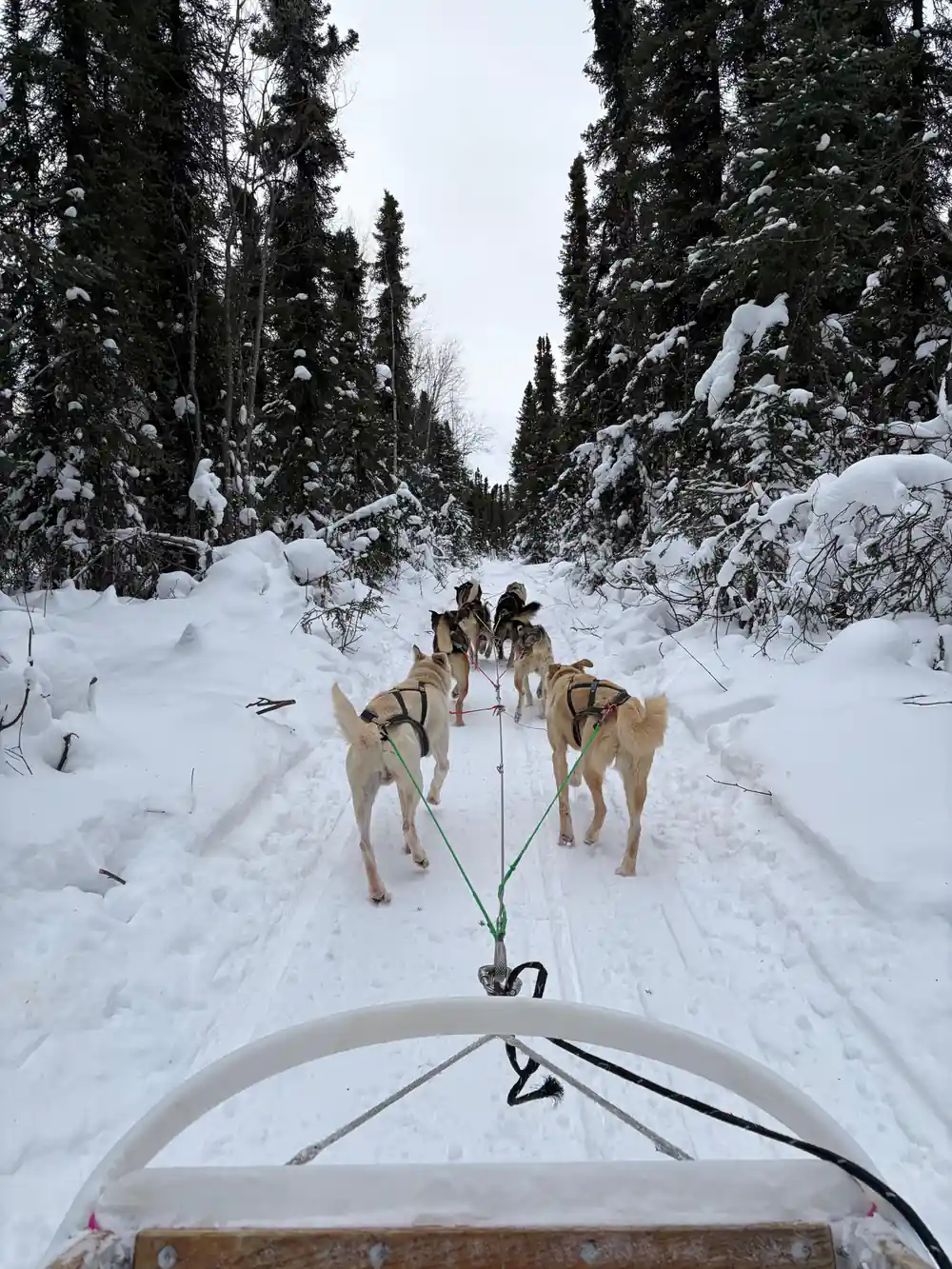
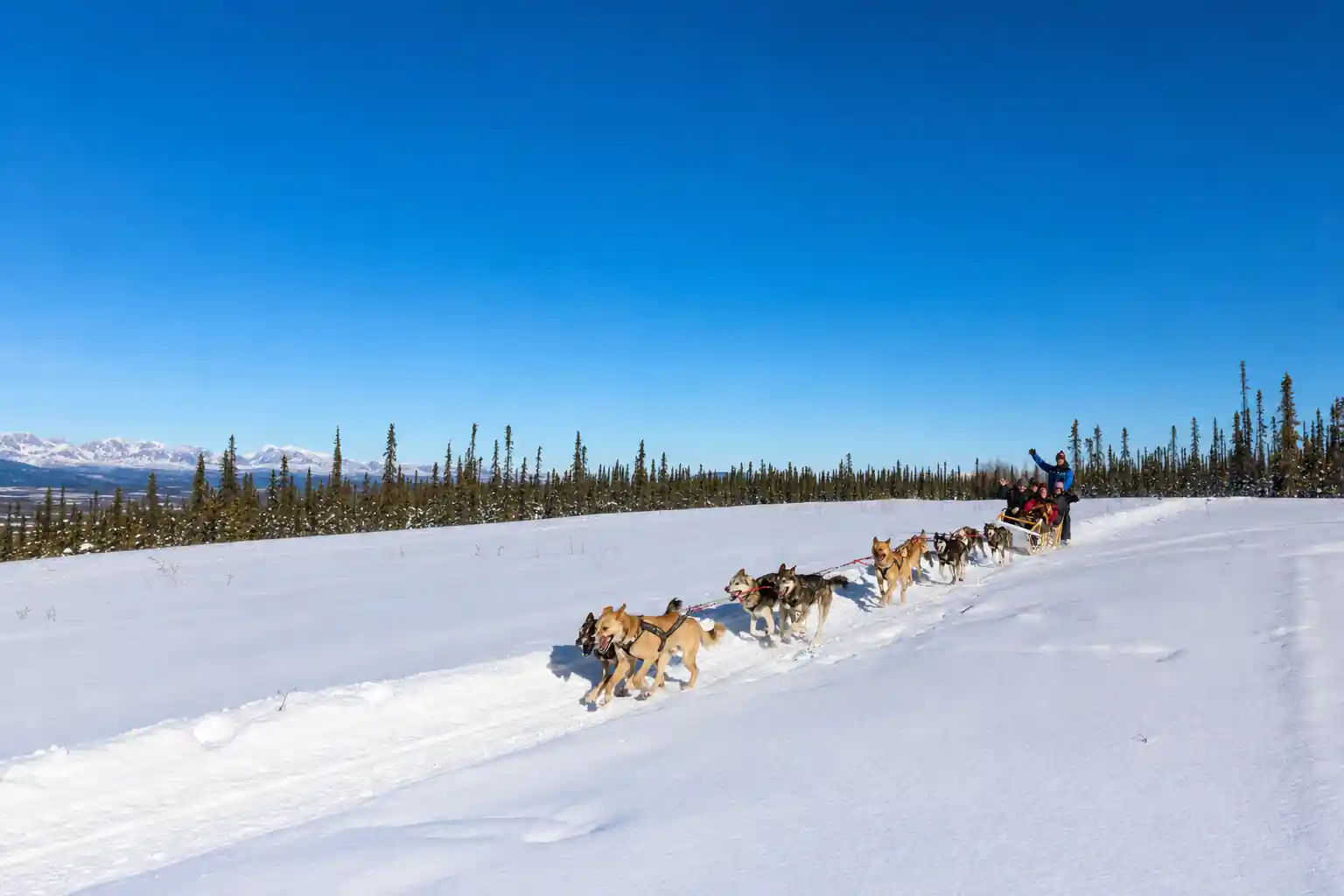
- The dependable window is December to March, with November and April depending entirely on the year.
- Sled dogs cannot work in twenty-one degree heat and no honest operator runs a sled on bare ground.
- From September the teams run on wheeled rigs as the temperature falls, which is real work rather than a substitute.
- Extreme cold, trail condition and daylight all shape what a given day looks like.
When the season actually runs
Roughly November to March, with December through March the part you can plan around. October freezes the ground but rarely delivers a usable trail; April softens what is left in the afternoons while the nights still freeze it hard.
That is a longer season than most European husky destinations manage, and it is a function of how cold and how dry the Interior is. Snow here does not thaw and refreeze through the winter. It arrives, and it stays until spring.
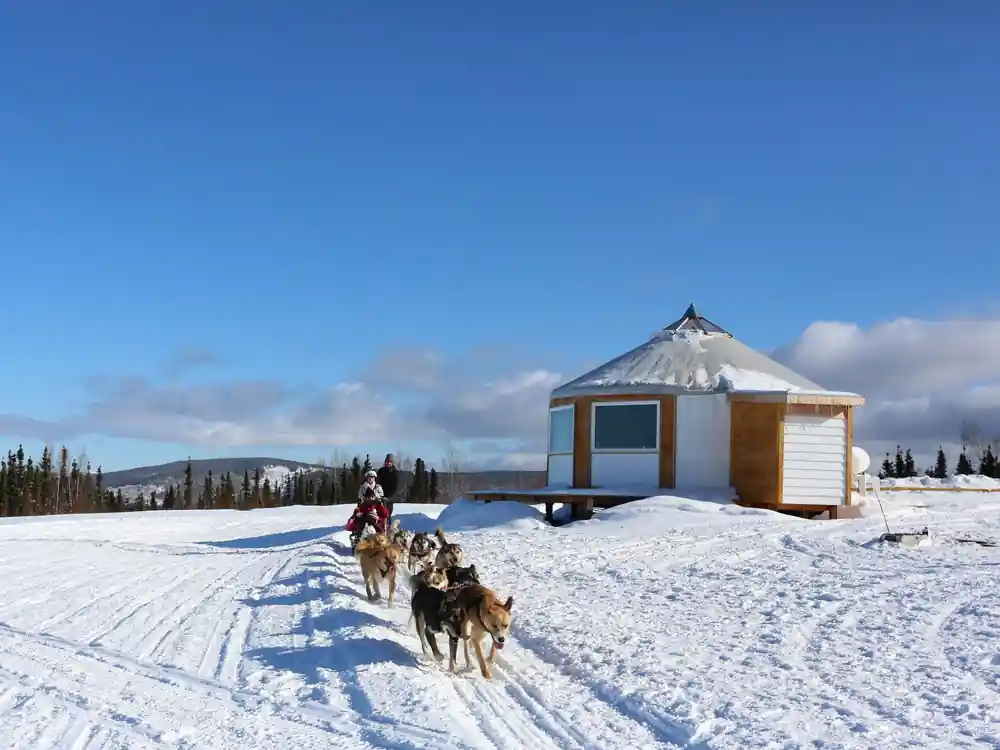
Within the window the differences are about light and temperature rather than about whether the tour runs. A January ride and a March ride are both real sled runs on real snow.
Why people ask about July
Because Fairbanks in July is a pleasant summer town with long light and a great many visitors, and dog sledding is what the place is known for. The two facts sit awkwardly together.
The answer is a firm no from any operator worth booking. July averages twenty-one degrees by day here and regularly exceeds twenty-five. A sled dog working in that heat is a dog in genuine danger, and there is no snow on the ground in any case.
What some operations offer in summer is a kennel visit: meeting the dogs, seeing the equipment, hearing about the sport. That is worthwhile and it is not a sled ride, and an operator that describes it accurately is telling you something good about itself.
Cart training, and what the dogs do in autumn
From roughly September, once the temperature has fallen enough for it to be safe, teams start running on wheeled rigs: a light metal frame with wheels, towed on gravel trails instead of snow. This is not a gimmick for visitors and not a substitute for the real thing. It is how a kennel builds fitness before the snow arrives.
The dogs treat it as work and enjoy it exactly as much as they enjoy sledding. Distances build gradually over the autumn, and by the time the first usable snow falls the team is conditioned rather than starting cold.
Some kennels let visitors watch or ride a cart in early autumn. If you are here in September or early October, that is the honest version of what is available and it is genuinely interesting.
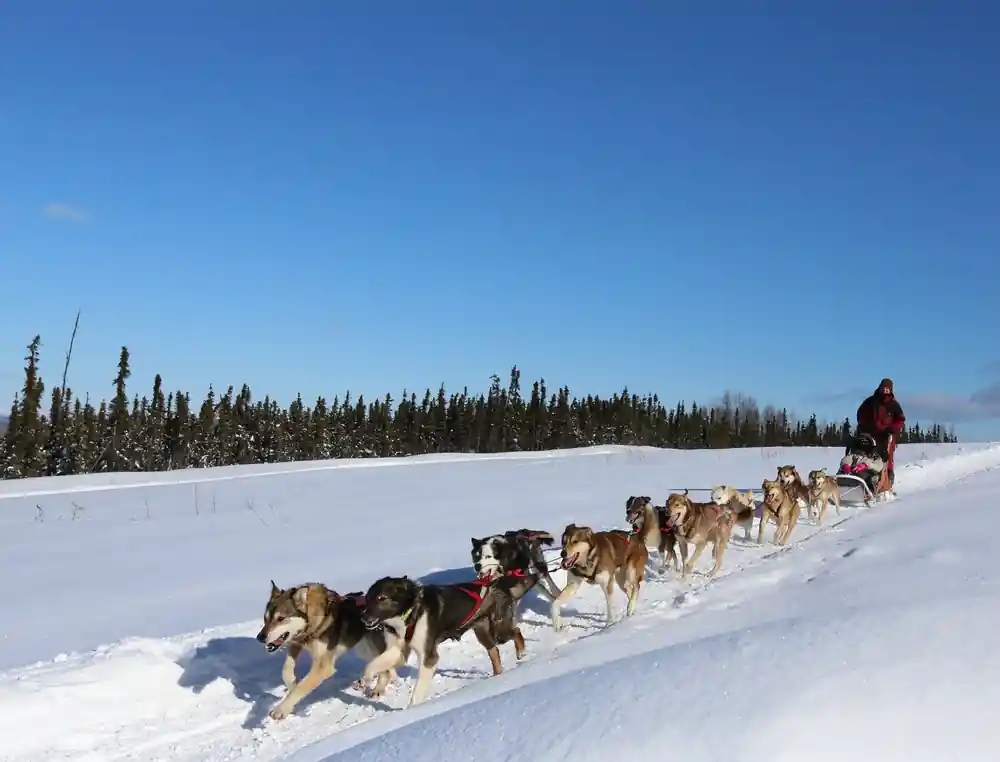
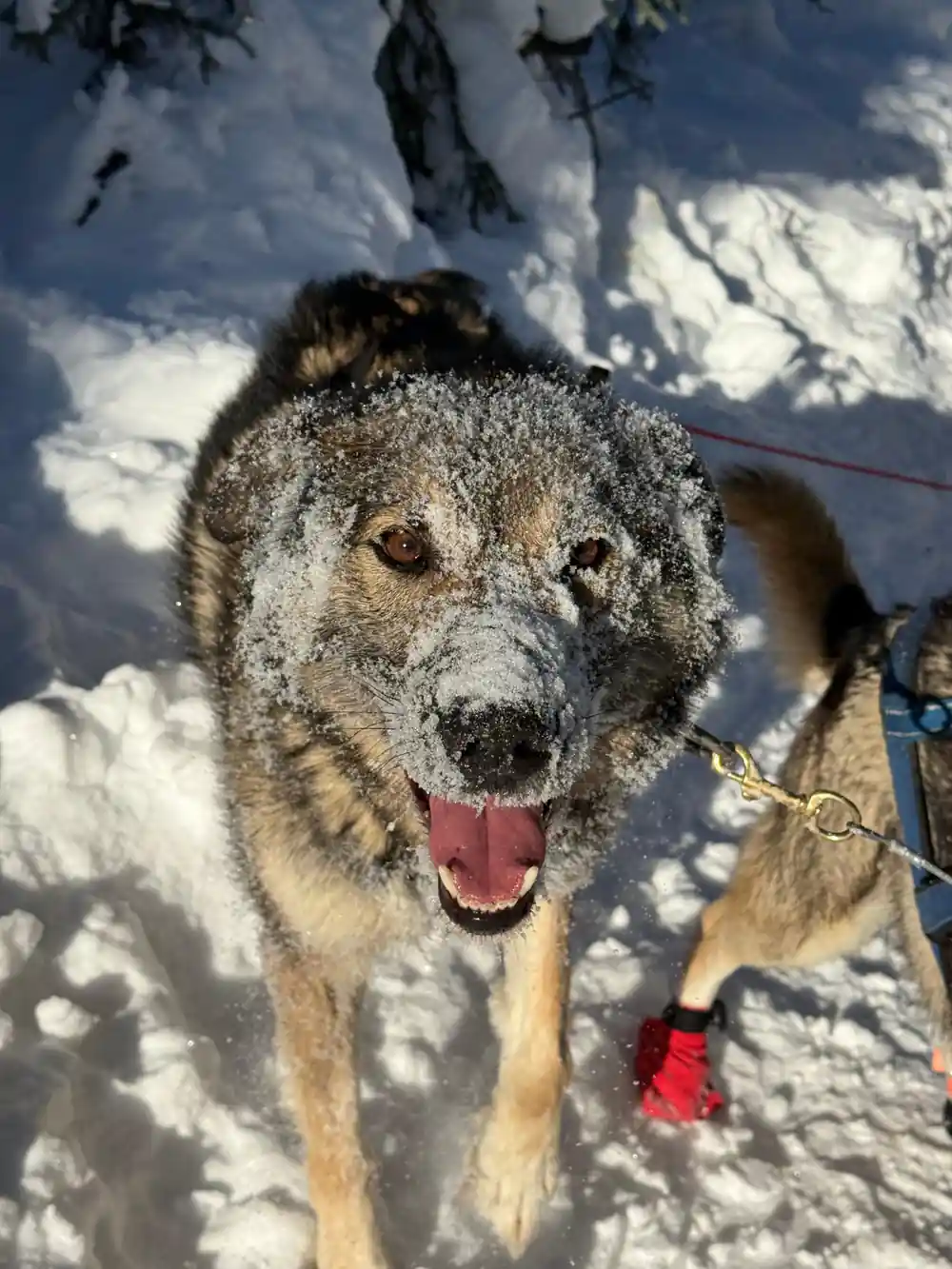
Early season snow on a trail, thin enough to still be a question
The summer half of a kennel year
Rest, mostly, and growth. Dogs shed their winter coats spectacularly, put on condition, and do very little. Puppies born in spring spend the summer growing and learning to be sociable, which is the earliest and most important part of their training.
It is also when everything gets fixed. Sleds, harnesses, ganglines, houses, fencing. A working kennel through an Alaskan winter is hard on equipment, and summer is when that is put right.
For the people it is the season of other jobs. A great many mushers do something else in summer, because a kennel does not earn between April and October.
What decides whether a day runs
Snow first: there has to be a workable trail. After that, trail condition, which is a separate question. A hard crust after a brief thaw can be worse for dogs than fresh cold snow, and operators pay more attention to the surface than to the thermometer.
Extreme cold is a factor but a smaller one than visitors assume. Operators do not generally cancel for temperature alone, and the animals cope with it far better than passengers do. Very extreme spells can change what is offered.
Daylight shapes the schedule rather than cancelling it. In December there are only so many hours in which a tour makes sense, so the timetable is tighter than in March.
There is also the question of what a tour is willing to do rather than able to do. A responsible operator will shorten a route, change a start time or move a booking rather than run a team on marginal ground, and the ones worth booking will tell you which of those has happened rather than presenting a reduced trip as the standard one.
Booking around the season
If your trip is in the December to March window, this is a dependable activity. If it is at the edges, treat it as conditional and book it early in your stay so that a cancellation can be retaken later.
If your trip is in summer, plan a kennel visit instead and enjoy it for what it is. Anyone selling you a July sled ride on snow in Fairbanks is selling you something that does not exist.
And check the operator listing for the exact dates each season, because they move with the year rather than sitting on a calendar.
The best weeks, if you have a choice
Late February and March. The snow is fully established, the daylight has returned enough to see the country, temperatures have come off their January floor, and the aurora season is still running.
January is the alternative if you want the extreme version: the deepest cold, the shortest days, the most complete sense of being a long way north. It is a different trip and some people prefer it.
Avoid building a whole visit around a single booking in the first half of November or the second half of April. Both are real parts of the season and neither is a promise.
One last consideration, which applies at both ends of the season: the further you sit from the dependable middle, the more it pays to have a second date available. Operators here are generally good about moving a booking rather than cancelling it outright, and that only helps if your trip has somewhere to move it to.
November to March, and December to March to be safe
from US$175Reserve now & pay later