The essentials
- Dog teams moved mail, freight, medicine and people across the Interior before roads and aircraft reached it.
- Alaska named dog mushing its state sport in 1972, which is an acknowledgement rather than a marketing decision.
- The Yukon Quest, a thousand-mile race across the Interior, starts or finishes here in alternate years.
- Relay teams carried diphtheria antitoxin to Nome in 1925, and the story reached the world through a dog called Balto.
Before there were roads
Interior Alaska is enormous, largely roadless even now, and frozen for half the year. Before aircraft and before highways, the practical way to move anything across it in winter was behind a team of dogs, and that was true for freight, for mail, for medicine and for people.
Rivers were the summer roads and they became the winter roads once they froze. Roadhouses stood along the routes at intervals a team could manage in a day. The whole apparatus of movement in this part of the world was built around what a dog team could do, which is a fact that is very easy to forget while sitting in a heated hotel in Fairbanks.
That system did not end in the distant past. It persisted into living memory, and the shift from dogs to aircraft and snowmachines happened across the middle of the twentieth century rather than at the start of it.
The gold rush and the mail
Fairbanks exists because of gold. A trading post established in 1901 became a boom town after a strike in the hills to the north, and the population that arrived needed supplying through winters that closed the rivers for months.
Mail contracts were the backbone. Teams ran fixed routes on schedules, and the drivers were professionals rather than adventurers. The trails they used are the origin of a good many of the routes that races follow now.
It is worth holding that image alongside a visitor ride: the same animal, the same country, the same season, doing what was once simply the way things got from one place to another.
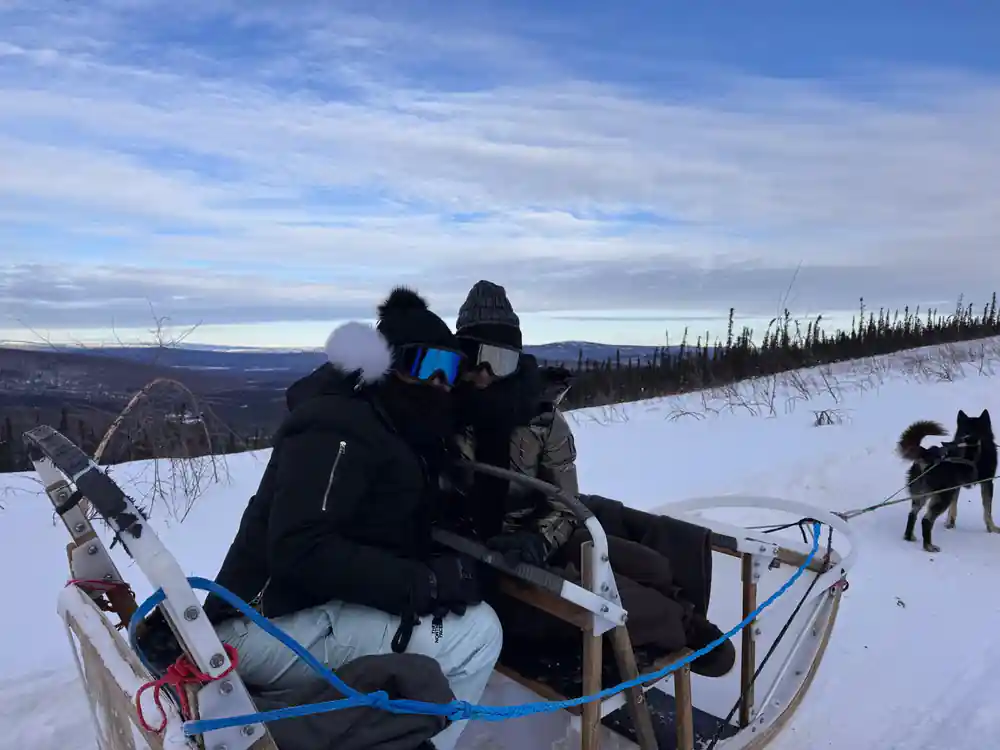
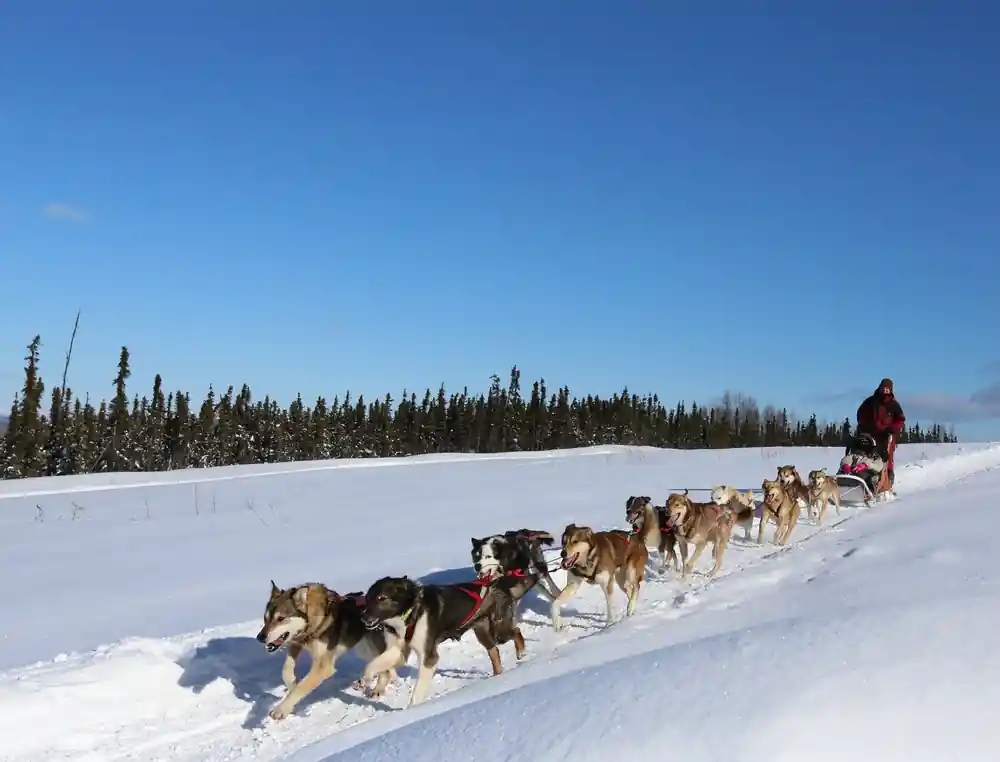
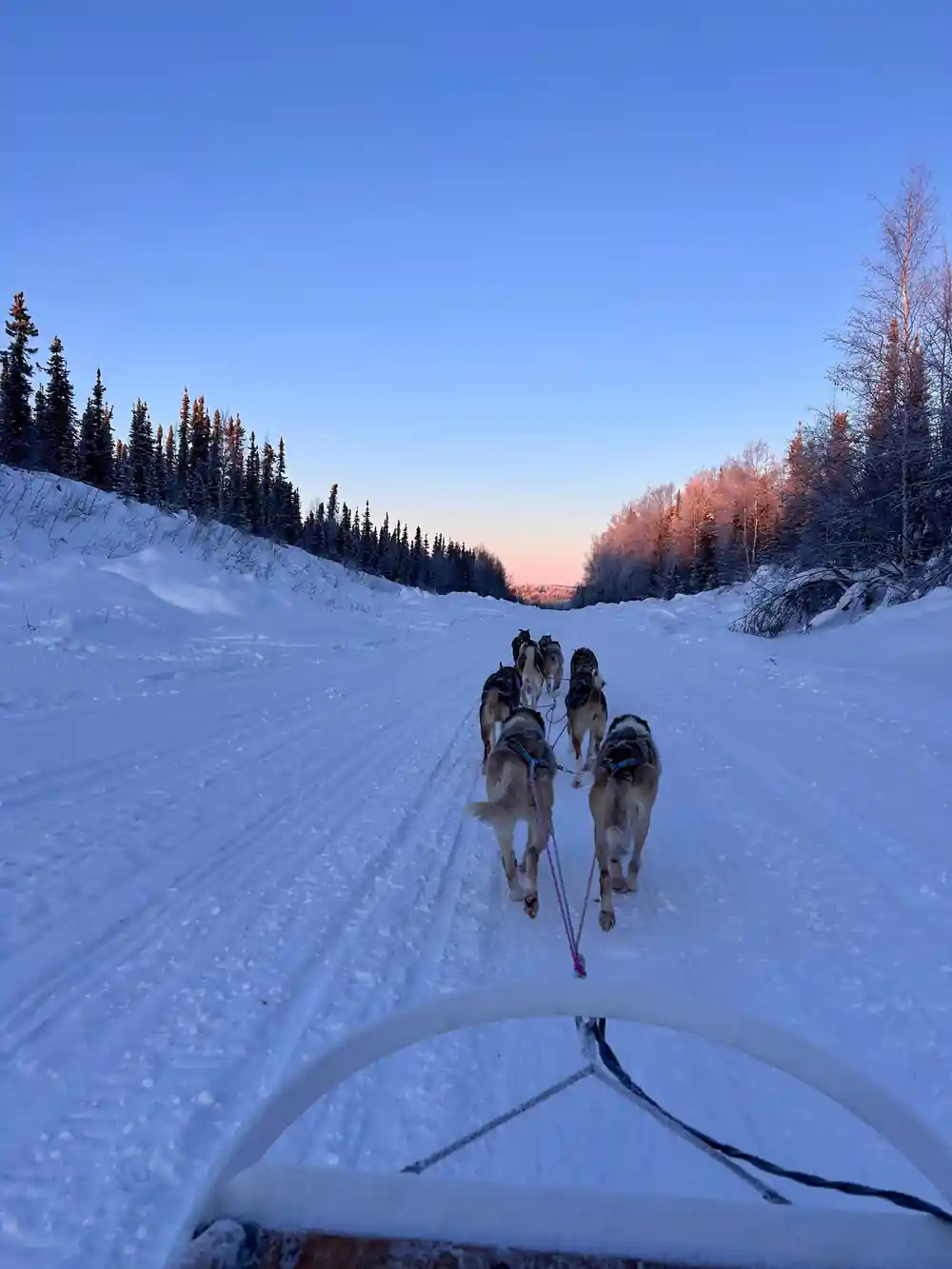
A team on an open trail in low light, the way the Interior has always moved in winter
The 1925 serum run
In January 1925 a diphtheria outbreak threatened Nome, on the west coast, at a season when the port was frozen and aircraft could not fly. The antitoxin was in Anchorage. It went by rail to Nenana, north of Fairbanks, and from there the only way west was by dog.
Twenty relay teams carried it six hundred and seventy-four miles in five and a half days through temperatures that reached minus fifty and worse. Leonhard Seppala and his lead dog Togo covered the longest and most dangerous leg, across the ice of Norton Sound. Gunnar Kaasen drove the final stretch, and his leader Balto became the name the world remembers.
The distribution of fame there is a small injustice that Alaskans will tell you about at length. Togo ran far further and through far worse, and there is a statue of Balto in Central Park.
From work to sport
As transport moved to machines, mushing survived as a sport, and Alaska formalised the connection by naming it the official state sport in 1972. That is not a tourist-board gesture. It is a state acknowledging what an animal did for its history.
The great distance races grew out of the same period. The Iditarod, run since 1973 from Anchorage to Nome, is the one most people have heard of. The Yukon Quest, run since 1984 between Fairbanks and Whitehorse, is the one mushers frequently describe as harder: a thousand miles with fewer checkpoints, longer gaps between them and four major summits.
Fairbanks is a Quest start or finish city in alternate years, and the race runs through the country you can see from the trail on this tour.
674 mi
The distance covered by twenty relay teams carrying diphtheria antitoxin to Nome in January 1925, in five and a half days, through temperatures below minus fifty.
What a working kennel looks like now
Some kennels race and some run visitors and a good many do both, because racing is expensive and tours pay for it. The guide harnessing your team may well have run the Quest, and if so is worth asking about it.
The year has a shape. Autumn is cart training on wheels as the temperature falls. Winter is running. Spring is racing season and then the thaw. Summer is rest, growth for the young dogs, and the maintenance of everything.
A visitor ride sits inside that as a small, deliberately gentle part of a kennel year that is otherwise about distance.
The Fairbanks connection
This town has a claim on the sport that goes beyond geography. The Alaska Dog Mushers Association, founded here in 1948, is among the oldest such organisations anywhere, and sprint racing in particular has deep roots in the Interior.
Sprint and distance are genuinely different sports with different dogs. A sprint team runs short, very fast heats; a distance team runs for days. The Interior produced world-class exponents of both.
Which is to say that the hour you spend behind a team here is happening in the middle of a living tradition rather than at a tourist reconstruction of one.
Why any of this matters to a ride
It changes what you are looking at. A dog team in Lapland is a good day out. A dog team in Interior Alaska is the surviving form of a technology that built the place you are standing in.
It also changes the questions worth asking. Not just how fast they go, but what the kennel races, how the year is structured, what a leader is chosen for, and whether the guide has run the Quest.
The answers are usually much more interesting than the ride description suggests, and they are free.
An hour inside a tradition that is still working
from US$175Reserve now & pay later